
Ballistic / Bullet Protection Glass Materials
Description
Ballistic or bullet protection glass materials are designed to resist penetration from bullets and other projectiles. These materials typically consist of multiple layers of glass and plastic composites that work together to absorb and dissipate the energy of an impact, preventing the projectile from passing through.
Working Principle
The working principle of ballistic protection glass involves a multi-layered structure that absorbs and disperses the energy of a projectile. When a bullet strikes the glass, the outer layers absorb the initial impact, causing the projectile to blunt and slow down. The subsequent layers further dissipate the energy through a process of micro-fragmentation and deformation, ultimately preventing penetration. This layered approach is crucial for rendering the projectile harmless and protecting the underlying area from damage .
Applications
Ballistic protection glass is used in a variety of applications where security and safety are paramount. Specific examples include:
- Military Vehicles: Used in windows and other transparent areas to protect against small arms fire and shrapnel .
- Buildings: Installed in government buildings, banks, and other high-security facilities to protect against armed attacks .
- Personal Protective Equipment: Incorporated into face shields and other protective gear for military and law enforcement personnel .
Advantages over other Glass Materials
Ballistic protection glass offers several advantages over traditional glass materials:
- Impact Resistance: It provides superior resistance to high-velocity impacts compared to standard glass.
- Weight Reduction: Advanced materials like transparent ceramics can significantly reduce the weight of protective glass while maintaining or enhancing its protective capabilities .
Limitations
Despite its advantages, ballistic protection glass has some limitations:
- Brittleness: The ceramic components used in some ballistic glass can be brittle, leading to shattering under certain conditions .
- Complexity and Cost: The multi-layered construction and specialized materials can make ballistic glass more expensive and complex to produce compared to standard glass.
Considerations
When considering ballistic protection glass, several factors should be taken into account:
- Initial Costs: The specialized materials and manufacturing processes involved can lead to higher initial costs compared to traditional glass.
- Durability: While highly durable against ballistic threats, the glass may require regular inspections and maintenance to ensure its integrity over time.
- Replacement and Maintenance Costs: Due to its complex structure, replacing or repairing ballistic glass can be more costly and time-consuming than standard glass.
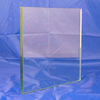
from Protective Structures, Ltd.
ShotShield ™ Bullet Resistant Glass-Clad Polycarbonate UL-752 Level 1 from Protective Structures, Ltd. is lighter than laminated glass and offers higher degree of protection with less weight. Bullet resistant glass clad polycarbonate Level 1 is a No-Spall product offering optimal protection in... [See More]
- Applications: Armor / Ballistic Protection
- Shape / Form: Plate / Board
- Glass Type: Glass; Polycarbonite
- Length: 12 to 60

from Abrisa Technologies
Description: Laminated glass is created by layering two or more pieces of glass together with a transpassive interlayer, such as PVB (polyvinyl butyral). When broken the interlayer holds the glass together, providing increased strength and safety. Laminated glass is used in automobiles,... [See More]
- Applications: Automobiles, Architecture; Armor / Ballistic Protection
- Shape / Form: Plate / Board
- Glass Type: Glass
- Features: Laminated; Safety / Tempered

from Protective Structures, Ltd.
ShotShield ™ Bullet Resistant Laminated Glass UL-752 Level 1 from Protective Structures, Ltd. is a multiply annealed glass laminated meeting Underwriters Laboratories (UL) Standard 752 for Ballistic protection, Level I (SPSA). [See More]
- Applications: Armor / Ballistic Protection
- Shape / Form: Plate / Board
- Glass Type: Glass; Poly Vinylbutyral
- Length: 12 to 60

from Abrisa Technologies
Description: SCHOTT Supremax ® Rolled Borosilicate is almost identical in its properties to Borofloat ® 33, it has slightly lower surface quality due to the rolled process. It is a versatile borosilicate glass with excellent thermal properties, chemical resistance, and good light... [See More]
- Applications: High Temperature Windows for Lighting, Filters, Mirrors; Chemical or material processing; Armor / Ballistic Protection; Optical Grade
- Shape / Form: Plate / Board
- Glass Type: Glass; Borosilicate
- Length: 90