
Specialty / Other Glass Materials
Description
Specialty glass materials are designed to perform specific functions that standard glass cannot. These materials are engineered to possess unique properties such as enhanced durability, chemical resistance, or optical clarity. They are often used in environments where traditional glass would fail, providing solutions for demanding applications.
Working Principle
Specialty glass materials work by leveraging their unique chemical compositions and structural properties to achieve desired performance characteristics. For example, borosilicate glass contains boron trioxide, which significantly reduces its thermal expansion, making it resistant to thermal shock. This property is crucial for applications involving rapid temperature changes. The inclusion of heavy elements like lead in lead glass increases its refractive index, enhancing its optical properties for use in lenses and prisms. These materials are useful because they can be tailored to meet specific requirements, such as high thermal resistance or superior optical clarity, which are not achievable with standard glass.
Applications
Specialty glass materials find applications in a wide range of industries. Borosilicate glass is commonly used in chemical laboratory ware and cookware due to its thermal shock resistance and chemical durability . Lead glass is utilized in optical applications such as prisms and lenses because of its high refractive index . Electronic glass is employed in the fabrication of electronic components like X-ray tubes and display devices . Opal glass is used to diffuse light uniformly, making it ideal for lighting applications .
Advantages over other Glass Materials
Specialty glass materials offer several advantages over traditional glass types. Borosilicate glass, for instance, provides superior thermal shock resistance and chemical durability compared to soda-lime glass, making it suitable for high-temperature and chemically aggressive environments . Lead glass, with its high refractive index, offers better optical performance for precision applications . These advantages make specialty glass materials indispensable in applications where standard glass would be inadequate.
Limitations
Despite their advantages, specialty glass materials have limitations. For example, lead glass, while offering excellent optical properties, is relatively soft and can be more prone to scratching compared to harder glass types . Additionally, the inclusion of heavy elements like lead can pose environmental and health concerns, necessitating careful handling and disposal.
Considerations
When selecting specialty glass materials, several considerations should be taken into account. Initial costs can be higher due to the specialized manufacturing processes and raw materials required. Operating expenses may also be influenced by the need for specific handling and maintenance procedures to preserve the material's unique properties. Durability varies depending on the type of specialty glass, with some offering excellent resistance to thermal and chemical stresses, while others may require more frequent replacement due to wear. Maintenance costs can be significant, especially for materials like lead glass, which may require special cleaning and handling protocols to prevent damage and ensure safety.
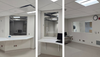
from MarShield
MarShield carries a variety of sizes and thicknesses of lead glass that is excellent in providing radiation shielding. The material is usually placed into a lead-lined frame built into a wall or door. Lead glass is used extensively in x-ray rooms, operating theatres, radiation therapy rooms, dental... [See More]
- Glass Type: Glass; Lead Glass
- Length: 8 to 48
- Shape / Form: Plate / Board
- Width / OD: 10 to 96

from Saint-Gobain Innovative Materials
For many years, Saint-Gobain NorPro has been known for its range of very low surface area macroporous alpha-alumina-based carrier materials. Inert to their environment in most circumstances, the carriers play a vitally active role in many catalytic reactions. Other low-surface area catalyst carrier... [See More]
- Glass Type: Glass; alpha/ Glassy Silica, Bauxite
- Width / OD: 0.1181 to 19.69
- Shape / Form: Hollow Shape or Stock (optional feature); Spray Dried Powder; Custom Shape
- Density: 0.6099 to 2

from Abrisa Technologies
This design is very standard and often uses for demanding telescope and other very high performance imaging applications. Reflectance may be specified for IR wavelengths. Metal mirror coatings are often used in systems where a very broadband reflector or beam splitter is needed. Metal coatings can... [See More]
- Glass Type: Glass; Silver Mirror
- Shape / Form: Plate / Board
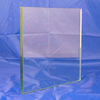
from Protective Structures, Ltd.
ShotShield ™ Bullet Resistant Glass-Clad Polycarbonate UL-752 Level 1 from Protective Structures, Ltd. is lighter than laminated glass and offers higher degree of protection with less weight. Bullet resistant glass clad polycarbonate Level 1 is a No-Spall product offering optimal protection in... [See More]
- Glass Type: Glass; Polycarbonite
- Length: 12 to 60
- Shape / Form: Plate / Board
- Width / OD: 12 to 96

from Monocrystal, Inc.
Undoped yttrium aluminum garnet is an Undoped yttrium aluminum garnet (YAG) optical material similar to sapphire. Undoped YAG is widely used in UV and IR optics due to its mechanical and chemical characteristics. Unlike other optical glasses with the tendency of absorption owing to strong water... [See More]
- Glass Type: Glass; Yttrium Aluminum

from Abrisa Technologies
SCHOTT offers B 270 ® crown glass in sheet glass form to meet a wide variety of different market demands, especially suitable for Biotech applications. It is manufactured using a special up-draw process developed by SCHOTT. B 270 ® i is highly resistant to solar radiation and offers high... [See More]
- Glass Type: Glass; Crown Glass
- Length: 66
- Shape / Form: Plate / Board
- Width / OD: 28

from Protective Structures, Ltd.
ShotShield ™ Bullet Resistant Laminated Glass UL-752 Level 1 from Protective Structures, Ltd. is a multiply annealed glass laminated meeting Underwriters Laboratories (UL) Standard 752 for Ballistic protection, Level I (SPSA). [See More]
- Glass Type: Glass; Poly Vinylbutyral
- Length: 12 to 60
- Shape / Form: Plate / Board
- Width / OD: 12 to 96