
Fabricated / Custom Shape Glass Materials
Description
Fabricated or custom shape glass materials are specialized glass products that are manufactured to meet specific design and dimensional requirements. These materials can be crafted into virtually any shape and size, offering a high degree of customization. The fabrication process involves various techniques such as encapsulation, extrusion, grinding, beveling, and heat shrinking, which allow for precise control over the glass's final form and finish. These materials are often used in applications where standard glass shapes and sizes are insufficient, providing tailored solutions for unique engineering and architectural needs.
Working Principle
The working principle of fabricated or custom shape glass materials involves manipulating the glass through various fabrication processes to achieve the desired shape and properties. Techniques such as extrusion or drawing are used to form fibers or specific cross-sectional profiles, while grinding and beveling provide smooth and precise finishes. Heat shrinking and machine forming allow for the creation of complex shapes and structures. These processes enable the glass to be tailored to specific requirements, enhancing its functionality and performance in various applications. The ability to customize glass shapes makes these materials particularly useful in industries where precision and specific design criteria are critical.
Applications
Fabricated or custom shape glass materials find applications in a wide range of industries. In the architectural sector, they are used for creating unique building facades and interior design elements. In the electronics industry, custom glass components are essential for manufacturing optical sensors and display technologies. The medical field utilizes these materials for labware and specialized equipment. Additionally, they are employed in the automotive and marine industries for OEM autoglass and other vehicular components. Specific examples include patterned glass for light control and low emissivity glass for energy-efficient windows.
Advantages over other Glass Materials
One of the primary advantages of fabricated or custom shape glass materials is their ability to be tailored to specific design and functional requirements, which standard glass materials cannot achieve. For instance, low iron soda lime glass can be coated with anti-reflection coatings to achieve high light transmission while maintaining clarity and colorlessness over time, unlike some plastic components that may yellow. The ability to fully heat temper these materials also enhances their thermal shock resistance and mechanical strength, making them more durable and reliable in demanding applications.
Limitations
Despite their advantages, fabricated or custom shape glass materials have certain limitations. The complexity of the fabrication processes can lead to higher production costs compared to standard glass materials. Additionally, the customization process may result in longer lead times, which can be a drawback for projects with tight deadlines. The specialized nature of these materials may also limit their availability, requiring collaboration with specific manufacturers or suppliers to obtain the desired products.
Considerations
When considering the use of fabricated or custom shape glass materials, several factors should be taken into account. Initial costs can be higher due to the specialized fabrication processes and the need for custom tooling. Operating expenses may also be impacted by the need for precise installation and handling to avoid damage. Durability is generally enhanced through processes like heat tempering, but the specific application and environmental conditions should be considered to ensure long-term performance. Maintenance and replacement costs can vary depending on the complexity of the glass shapes and the availability of replacement components. It is essential to work closely with experienced providers to ensure that the chosen materials meet the project's specific requirements and budget constraints.
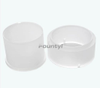
from Fountyl Technologies Pte. Ltd.
Mainly for semiconductor, optics, optical communication, photovoltaic, LED and other downstream industry customers, to provide the precision processing services for quartz glass products in various specifications. It has gradually become a quartz material supplier with great competitive advantages... [See More]
- Shape / Form: Custom Shape
- Glass Type: Glass; Quartz

from Saint-Gobain Innovative Materials
For many years, Saint-Gobain NorPro has been known for its range of very low surface area macroporous alpha-alumina-based carrier materials. Inert to their environment in most circumstances, the carriers play a vitally active role in many catalytic reactions. Other low-surface area catalyst carrier... [See More]
- Shape / Form: Hollow Shape or Stock (optional feature); Spray Dried Powder; Custom Shape
- Width / OD: 0.1181 to 19.69
- Glass Type: Glass; alpha/ Glassy Silica, Bauxite
- Density: 0.6099 to 2

from Robuster Quartz
Robuster Quartz Fused Silica Ceramics features excellent thermal reliability under high temperature (up to 1350 ˚C), resistivity to chemical corrosion and thermal shock; Our Silica ceramic products are widely used in chemical, medical and biology industries for chemical... [See More]
- Shape / Form: Quartz Tray; Custom Shape
- Length: 2.36 to 5.91
- Glass Type: Glass; Quartz
- Width / OD: 1.1 to 5.91

from VM Glass Co.
Glass Beads [See More]
- Shape / Form: Custom Shape
- Width / OD: 0.0394
- Glass Type: Glass

from San Jose Delta Associates, Inc.
Macor is a relatively easy material to machine using ordinary carbide drills, end mills, taps, etc. and doesn ’t require post machining firing. Macor-Machinable Glass Ceramic is also unique in that it can withstand 1000 °C, has low thermal conductivity and is a good electrical insulator. [See More]
- Shape / Form: Rod; Custom Shape
- Max Use Temperature: 1000
- Glass Type: Glass; GlassCeramic
- Thermal Conductivity: 1.46
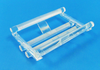
from Robuster Quartz
Quartz boat is a loader which can be inserted by silicon wafer. So it is applied in semiconductor area. The cleaning process for quartz boat is very strictly. The boat should be dipped in concentration of 4-5% HF solutions keeped for 4 hours. Then soaked in DI water for 1 hours. Quartz boat,... [See More]
- Shape / Form: Silicon Wafer Semiconductor Holder; Custom Shape
- Glass Type: Glass; Quartz