
Mechanical Parts (Fasteners, Hardware, etc.) Plating and Anodizing Equipment
Last Updated: April 1, 2025
Description
Plating and anodizing equipment is designed to apply a protective or decorative coating to mechanical parts such as fasteners and hardware. This equipment can perform various processes, including nickel plating, chrome plating, and gold plating, to enhance the surface properties of metal parts. The equipment is used to deposit a thin layer of metal onto a substrate, which can improve the part's appearance, durability, and resistance to corrosion.
Working Principle
Plating and anodizing equipment operates by using electrochemical processes to alter the surface of metal parts. In electroplating, the part to be plated is submerged in a solution containing metallic ions, and an electric current is passed through the solution. This causes the metal ions to deposit onto the part's surface, forming a thin, uniform coating. Anodizing, on the other hand, involves submerging the metal part in an electrolytic acid solution and applying a direct current. This process thickens the natural oxide layer on the metal surface, creating a hard, durable coating that is both decorative and corrosion-resistant. These processes are useful because they enhance the mechanical properties and longevity of the parts, making them suitable for various demanding applications.
Applications
Plating and anodizing equipment is used in a wide range of industries. In the automotive industry, nickel and chrome plating are commonly applied to steel car parts to improve their appearance and resistance to wear. Gold plating is often used in the production of jewelry for its aesthetic appeal. Additionally, anodizing is frequently employed for nonferrous metals like aluminum, magnesium, and titanium to create a corrosion-resistant finish. These processes are also used in the manufacture of electronic devices, where they provide both functional and decorative benefits.
Advantages over other Plating and Anodizing Equipment
One advantage of using specific plating and anodizing equipment is the ability to perform barrel plating, which allows for the plating of small objects without producing sharp edges. This is particularly beneficial for fasteners and small hardware components. Additionally, the use of rack plating enables precise control over the deposition process, ensuring uniform coating thickness and quality. These methods can offer superior corrosion resistance and aesthetic finishes compared to other surface treatment techniques.
Limitations
Despite their advantages, plating and anodizing equipment have limitations. For instance, the processes can be energy-intensive and require careful handling of chemicals, which can pose environmental and safety concerns. Additionally, not all metals are suitable for anodizing, as the process is typically limited to nonferrous metals. The initial setup and maintenance of the equipment can also be costly, which may be a barrier for smaller operations.
Considerations
When selecting plating and anodizing equipment, several factors should be considered. Initial costs can be significant, as the equipment requires precise controls and robust construction to handle the chemicals and processes involved. Operating expenses include energy consumption and the cost of consumables like chemicals and electrodes. Durability and accuracy are crucial, as the equipment must consistently produce high-quality coatings. Replacement and maintenance costs should also be factored in, as regular upkeep is necessary to ensure the equipment's longevity and performance.

from Technic, Inc.
Cleardep Chemistry. Cleardep is an electrocoating process which can be used on a variety of both plated and polished metal substrates. It produces a tough, resilient, drip4ree coating, which can reduce finish wear and improve tarnish resistance. The resin coating itself is colorless, but can be dyed... [See More]
- Application / Industry: Mechanical Parts (Fasteners, Hardware, etc.)
- Machinery Type: Dip Tank or Roll Coater Pan
- Process / Technology: Electroplating

from Technic, Inc.
Technic ’s MP300 offers many advantages over conventional hoist type plating systems. The MP300 ’s patented single piece flow automation reduces labor requirements, consumables as well as utilities costs, while providing high quality, repeatable performance. The MP300 delivers on lean... [See More]
- Application / Industry: Mechanical Parts (Fasteners, Hardware, etc.)
- Machinery Type: Continuous (Web, Reel , Roll)
- Process / Technology: Electroplating
from Technic, Inc.
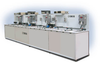
Technic's anodizing consoles provide quality construction and solid performance. Custom construction provides complete control and accommodations of equipment, integrated exhaust, plumbing and electrical. Single units or modular construction allow for future expansion and multiple configurations. [See More]
- Application / Industry: Electrical / Electronic Parts (Connectors, Pins, etc.); Mechanical Parts (Fasteners, Hardware, etc.); Medical Devices
- Machinery Type: Hoist / Conveyor
- Process / Technology: Anodizing

from Technic, Inc.
Basket sizes: 90 mm and 160 mm in diameter. Basket material in PP or PVDF. Manually variable frequency and amplitude controls. Manual transport from bath to bath – using standard feature handle. Maximal cathodic current = 25 Amp. Weight = 12lbs with basket [See More]
- Application / Industry: Mechanical Parts (Fasteners, Hardware, etc.)
- Machinery Type: Batch - Vibratory / Ultrasonic
- Process / Technology: Electroplating

from Technic, Inc.
Basket sizes: 90mm to 200 mm in diameter. Basket material in PP or PVDF. Transport from bath to bath – the vibration unit has to be fixed with a frame to the customer transport hoist. Can be used in an automatic line or transported with a manual hoist. Maximal cathodic current = 100 Amp. [See More]
- Application / Industry: Mechanical Parts (Fasteners, Hardware, etc.)
- Machinery Type: Batch - Vibratory / Ultrasonic
- Process / Technology: Electroplating
from Technic, Inc.
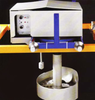
Basket sizes: 160 mm to 360 mm in diameter. Basket material in PP or PVDF. Transport from bath to bath – the vibration unit has to be fixed with a frame to the customer transport hoist. Can be used in an automatic line or transported with a manual hoist. Maximal cathodic current = 350 Amp. [See More]
- Application / Industry: Mechanical Parts (Fasteners, Hardware, etc.)
- Machinery Type: Batch - Vibratory / Ultrasonic
- Process / Technology: Electroplating

from Technic, Inc.
Basket sizes: 250 mm to 450 mm in diameter. Basket material in PP or PVDF. Transport from bath to bath – The vibration unit has to be fixed with a frame to the customer transport hoist. Can be used in an automatic line. Maximal cathodic current = 800 Ampere. Weight = 264.5 lb [See More]
- Application / Industry: Mechanical Parts (Fasteners, Hardware, etc.)
- Machinery Type: Batch - Vibratory / Ultrasonic
- Process / Technology: Electroplating