
Electrochemical Deposition (ECD) Plating and Anodizing Equipment
Last Updated: April 1, 2025
Description
Electrochemical Deposition (ECD) Plating and Anodizing Equipment is designed to deposit a metal coating onto a conductive surface. This equipment is used to create a surface covering by depositing metal ions onto a substrate, resulting in a metal layer that can enhance the surface properties of the material.
Working Principle
The working principle of ECD plating involves immersing the substrate in a container filled with a metallic salt solution. An electric current is passed through the solution, causing metal ions to move and deposit onto the substrate. This process is useful because it allows for precise control over the thickness and composition of the metal layer, which can improve the durability, corrosion resistance, and aesthetic qualities of the substrate. Anodizing, on the other hand, involves submerging the metal part in an electrolytic acid solution and applying a DC power source. This causes oxygen to form at the anode, creating a protective oxide layer on the metal surface, which enhances its durability and corrosion resistance .
Applications
ECD plating and anodizing equipment are used in a variety of applications. For example, they are employed in the manufacturing of printed circuit boards, where precise metal deposition is crucial for creating complex, high-resolution multilayer boards with narrow lines and small holes . Anodizing is commonly used for nonferrous metals such as aluminum, magnesium, and titanium to create decorative, durable, and corrosion-resistant finishes .
Advantages over other Plating and Anodizing Equipment
ECD plating offers advantages such as the ability to produce high-resolution multilayer boards with narrow lines and small holes, which are essential for modern electronic products . Additionally, the use of improved automatic, computer-controlled plating machines allows for precise control over the plating process, resulting in high-quality finishes .
Limitations
One limitation of ECD plating is the requirement for specialized equipment and electrolytes, which can increase the complexity and cost of the process . Additionally, each specific alloy type requires proper selection of electrolytic cleaning equipment and process parameters to avoid issues such as burning or roughening of the part's surface .
Considerations
When considering ECD plating and anodizing equipment, it is important to evaluate factors such as initial costs, operating expenses, and maintenance requirements. The equipment requires consumables like electrolyte chemicals, deionized water, and neutralizing solutions, which can add to the operating expenses . Additionally, the durability and accuracy of the equipment are crucial for achieving the desired surface properties, and regular maintenance is necessary to ensure optimal performance.

from ECSI Fibrotools
WHAT IT DOES: The Contact Electroplating Technology (CET) enables metallization of isolated electronic patterns by electroplating, without sacrificing the substrate real-estate for establishing direct contact to the power supply. The best way to form or deposit isolated microscopic and nano features... [See More]
- Process / Technology: Electroplating; Electrochemical Depostion (ECD)
- Machinery Type: Laboratory / Pilot System
- Application / Industry: Medical Devices; Semiconductor / Wafer
from ECSI Fibrotools
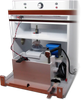
IKo ™ Jr. is a practical benchtop tool with the smallest footprint on the market capable of efficiently electroplating 4 ” wafers with just 1 gallon of solution. Designed for fast electroplating of high-resolution interconnects and fine metallic features on wafers and substrates. [See More]
- Process / Technology: Electroplating; Electrochemical Depostion (ECD); Nano Wire (NW), Seedless Electroplating (SL), Magnetic field (MG)
- Machinery Type: Batch - Vibratory / Ultrasonic; Laboratory / Pilot System
- Application / Industry: Medical Devices; Semiconductor / Wafer

from ECSI Fibrotools
The Slim version of IKo ™ CLASSIC ™ is designed to fit a fume hood. With the footprint of 17 ″ x 28 ″ it enables fitting up to 3 modules in a fume hood for multiple simultaneous operating sites within a single electroplating Station. The power supply is located in prefered... [See More]
- Process / Technology: Electroplating; Electrochemical Depostion (ECD); Nano Wire (NW), Seedless Electroplating (SL), Magnetic field (MG)
- Machinery Type: Batch - Vibratory / Ultrasonic; Laboratory / Pilot System
- Application / Industry: Medical Devices; Semiconductor / Wafer

from ECSI Fibrotools
The IKo ™ STATION ™ is a self-contained, complete plating system for MEMS and NANO fabrication – wafer installation, cleaning, activation, DI rinsing and electroplating – ideal for a wide range, 2 cm2 to 8 ″ odd shape substrates and wafers. Easily retrofitted to a... [See More]
- Process / Technology: Electroplating; Electrochemical Depostion (ECD); Nano Wire (NW), Seedless Electroplating (SL), Magnetic field (MG)
- Machinery Type: Batch - Vibratory / Ultrasonic; Laboratory / Pilot System
- Application / Industry: Medical Devices; Semiconductor / Wafer
from ECSI Fibrotools
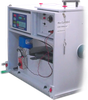
The original. The IKo ™ CLASSIC ™ is a practical benchtop tool with the smallest footprint for up to 8 ″ wafers on the market. It ’s designed simply to electroplate high-resolution interconnects and fine metallic features on wafers and substrates. Contamination Resistant. [See More]
- Process / Technology: Electroplating; Electrochemical Depostion (ECD); Nano Wire (NW), Seedless Electroplating (SL), Magnetic field (MG)
- Machinery Type: Batch - Vibratory / Ultrasonic; Laboratory / Pilot System
- Application / Industry: Medical Devices; Semiconductor / Wafer