
Printed Circuit Boards (PCB) Plating and Anodizing Equipment
Last Updated: April 1, 2025
Description
Printed Circuit Boards (PCB) Plating and Anodizing Equipment is designed to deposit a metal coating onto the surface of PCBs. This equipment is crucial in the manufacturing process of PCBs, as it ensures the conductive tracks are protected and maintain their solderability. The equipment can perform various plating processes, including electroless and electrolytic plating, to apply metals such as copper, nickel, and gold onto the boards.
Working Principle
The working principle of PCB plating equipment involves the deposition of metal onto the PCB surface through either electroplating or electroless plating processes. In electroplating, an electric current is passed through a metallic salt solution, causing metal ions to adhere to the conductive surface of the PCB. Electroless plating, on the other hand, uses a chemical reducing agent to deposit metal without the need for an external electrical source. These processes are essential for creating reliable electrical connections and protecting the PCB from corrosion and wear.
Applications
PCB plating and anodizing equipment is used in the production of single-sided, double-sided, and multi-layer printed circuit boards. Specific applications include the protection of copper tracks from oxidation and corrosion, ensuring solderability, and enhancing the wear resistance of edge connectors. This equipment is also utilized in the manufacture of high-density interconnect (HDI) boards, which require precise plating for small-hole and fine-line features.
Advantages over other Plating and Anodizing Equipment
PCB plating equipment offers several advantages over other types of plating equipment. It provides precise control over the thickness and uniformity of the metal coating, which is critical for the performance and reliability of PCBs. The equipment is capable of handling complex board designs, including those with high-aspect ratio plating and small-hole features, which are challenging for other plating methods. Additionally, the use of automated, computer-controlled systems enhances the accuracy and repeatability of the plating process.
Limitations
One limitation of PCB plating equipment is the potential for variations in plating thickness due to the geometry of the target metal and its location in the plating tank. This can affect the uniformity of the metal coating and, consequently, the performance of the PCB. Additionally, the equipment requires careful control of process parameters to avoid defects such as voids or uneven plating.
Considerations
When selecting PCB plating and anodizing equipment, several factors should be considered. Initial costs can be significant, as the equipment often involves advanced technology and automation. Operating expenses include the cost of chemicals, energy consumption, and maintenance. Durability and accuracy are critical, as the equipment must consistently produce high-quality coatings. Replacement and maintenance costs should also be factored in, as regular upkeep is necessary to ensure optimal performance and longevity of the equipment.

from Technic, Inc.
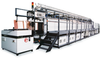
The Technic MP200 is an advanced VCP design for plating of thin substrates in panel, cut sheet or roll. The equipment can be adapted to seed layer plating as well as panel or pattern plating of copper, tin, nickel and or gold. The Technic MP200 perfects the VCP concept and provides: Effective... [See More]
- Application / Industry: Printed Circuit Boards (PCB)
- Machinery Type: Continuous (Web, Reel , Roll)
- Process / Technology: Electroplating
from Technic, Inc.
Technic has long been pioneer in the ongoing development of printed circuit board wet processing equipment and chemistry. Our ongoing commitment to application research and in-house product development has enabled us to continuously offer our customers the most advanced technology available for both... [See More]
- Application / Industry: Printed Circuit Boards (PCB)
- Machinery Type: Continuous (Web, Reel , Roll)
- Process / Technology: Electroplating

from Technic, Inc.
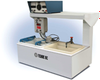
Designed for small scale testing of copper plating of PCBs plating. Mini Electroless Copper Line – Standard Features. Seven (7) polypropylene tanks 10 ½ ” x 6 ½ ” x 11 ” deep (3 gallon). One (1) Stainless steel tank 10 ½ ” x 6 ½ ” x 11... [See More]
- Application / Industry: Printed Circuit Boards (PCB)
- Machinery Type: Laboratory / Pilot System
- Process / Technology: Electroless
from Technic, Inc.
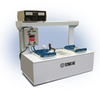
Technic ’s Mini Mods are self-contained plating units with a built-in utility shelf for rectifiers, meters and additional controls. Mini Mod 2 - Standard Features. Two (2) polypropylene tanks 11 ” x 15 ” x 11 ” deep (7 gallon). One (1) 1000 watt Teflon heater with digital... [See More]
- Application / Industry: Printed Circuit Boards (PCB)
- Machinery Type: Laboratory / Pilot System
- Process / Technology: Electroplating
from Technic, Inc.
Technic ’s Mini Mods are self-contained plating units with a built-in utility shelf for rectifiers, meters and additional controls. Mini Mod 3 - Standard Features. Three (3) polypropylene tanks 10 ½ ” x 6 ½ ” x 11 ” deep (3 gallon). One (1) 500 watt Teflon... [See More]
- Application / Industry: Printed Circuit Boards (PCB)
- Machinery Type: Laboratory / Pilot System
- Process / Technology: Electroplating