
Medical Devices Plating and Anodizing Equipment
Last Updated: April 1, 2025
Description
Medical devices plating and anodizing equipment is designed to apply a protective or decorative coating to the surface of medical device components. This equipment is used to deposit a thin layer of metal onto a substrate, enhancing the surface properties of the device. The equipment can perform various processes such as electroplating, electroless plating, and anodizing, which are essential for improving the durability, corrosion resistance, and aesthetic appeal of medical devices.
Working Principle
Plating and anodizing equipment operates by using electrochemical processes to modify the surface of a metal part. In electroplating, the substrate is immersed in a solution containing metallic ions, and an electric current is passed through the solution, causing the metal ions to deposit onto the substrate. Anodizing, on the other hand, involves submerging the metal part in an electrolytic solution and applying a direct current, which results in the formation of a protective oxide layer on the surface. These processes are useful because they enhance the mechanical properties, corrosion resistance, and appearance of the medical devices, making them more durable and reliable for medical applications.
Applications
Medical devices plating and anodizing equipment is used in various specific applications. For instance, anodizing is commonly employed to create a corrosion-resistant and durable finish on aluminum components used in surgical instruments and implants. Electroplating is used to apply a thin layer of metal, such as gold or nickel, to improve the conductivity and biocompatibility of electronic components in medical devices like pacemakers and defibrillators.
Advantages over other Plating and Anodizing Equipment
One of the advantages of using specialized medical devices plating and anodizing equipment is the ability to achieve precise control over the thickness and uniformity of the coating, which is crucial for ensuring the performance and safety of medical devices. Additionally, these systems can be tailored to meet stringent regulatory standards and quality requirements specific to the medical industry, such as ISO 9002 and military specifications, ensuring high-quality and reliable coatings.
Limitations
A limitation of medical devices plating and anodizing equipment is the potential for high initial costs associated with acquiring and setting up the equipment. Additionally, the processes require careful control and monitoring to prevent defects such as uneven coatings or contamination, which can compromise the performance of the medical devices.
Considerations
When selecting plating and anodizing equipment for medical devices, several considerations should be taken into account. Initial costs can be significant, so it is important to evaluate the long-term benefits and potential return on investment. Operating expenses, including energy consumption and maintenance, should also be considered. The durability and accuracy of the equipment are critical for ensuring consistent and high-quality coatings. Furthermore, replacement and maintenance costs should be factored into the decision-making process to ensure the equipment remains reliable and efficient over its operational lifespan.
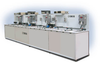
from Technic, Inc.
Technic's anodizing consoles provide quality construction and solid performance. Custom construction provides complete control and accommodations of equipment, integrated exhaust, plumbing and electrical. Single units or modular construction allow for future expansion and multiple configurations. [See More]
- Application / Industry: Electrical / Electronic Parts (Connectors, Pins, etc.); Mechanical Parts (Fasteners, Hardware, etc.); Medical Devices
- Machinery Type: Hoist / Conveyor
- Process / Technology: Anodizing

from ECSI Fibrotools
WHAT IT DOES: The Contact Electroplating Technology (CET) enables metallization of isolated electronic patterns by electroplating, without sacrificing the substrate real-estate for establishing direct contact to the power supply. The best way to form or deposit isolated microscopic and nano features... [See More]
- Application / Industry: Medical Devices; Semiconductor / Wafer
- Machinery Type: Laboratory / Pilot System
- Process / Technology: Electroplating; Electrochemical Depostion (ECD)
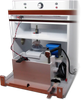
from ECSI Fibrotools
IKo ™ Jr. is a practical benchtop tool with the smallest footprint on the market capable of efficiently electroplating 4 ” wafers with just 1 gallon of solution. Designed for fast electroplating of high-resolution interconnects and fine metallic features on wafers and substrates. [See More]
- Application / Industry: Medical Devices; Semiconductor / Wafer
- Machinery Type: Batch - Vibratory / Ultrasonic; Laboratory / Pilot System
- Process / Technology: Electroplating; Electrochemical Depostion (ECD); Nano Wire (NW), Seedless Electroplating (SL), Magnetic field (MG)

from ECSI Fibrotools
The Slim version of IKo ™ CLASSIC ™ is designed to fit a fume hood. With the footprint of 17 ″ x 28 ″ it enables fitting up to 3 modules in a fume hood for multiple simultaneous operating sites within a single electroplating Station. The power supply is located in prefered... [See More]
- Application / Industry: Medical Devices; Semiconductor / Wafer
- Machinery Type: Batch - Vibratory / Ultrasonic; Laboratory / Pilot System
- Process / Technology: Electroplating; Electrochemical Depostion (ECD); Nano Wire (NW), Seedless Electroplating (SL), Magnetic field (MG)