
Automated System Plating and Anodizing Equipment
Last Updated: April 1, 2025
Description
Automated System Plating and Anodizing Equipment is designed to apply a metal coating or anodic oxide finish to a substrate. This equipment automates the process of depositing a metal layer or creating an anodized surface on various materials, enhancing their properties such as corrosion resistance, durability, and aesthetic appeal.
Working Principle
The working principle of automated plating and anodizing equipment involves the use of electrochemical processes to deposit a metal layer or create an anodic oxide finish on a substrate. In plating, the substrate is immersed in a solution containing metal ions, and an electric current is applied to deposit the metal onto the substrate. Anodizing, on the other hand, involves submerging the metal part in an electrolytic acid solution, where it acts as the anode. A DC power source is used to create an oxide layer on the surface. These processes are useful because they enhance the surface properties of materials, making them more resistant to corrosion and wear, and improving their appearance.
Applications
Automated plating and anodizing equipment is used in various industries for specific applications. In the automotive industry, nickel and chrome plating equipment is used to coat steel car parts, enhancing their durability and resistance to corrosion. In the electronics industry, plating equipment is used in the manufacture of computers and mobile phones to improve conductivity and protect components. Gold plating equipment is commonly used in the jewelry industry to provide a decorative finish. Anodizing is often applied to nonferrous metals like aluminum, magnesium, and titanium to create a durable, corrosion-resistant finish.
Advantages over other Plating and Anodizing Equipment
Automated systems offer several advantages over traditional plating and anodizing equipment. They eliminate the need for large dipping baths, reducing waste solution production and CO2 emissions, and resulting in a more compact process footprint and shorter plating time . Additionally, automated systems can provide more consistent and precise coatings, improving the quality and performance of the finished product.
Limitations
One limitation of automated plating and anodizing equipment is the potential for hydrogen embrittlement during certain processes, which can weaken materials if not properly managed . Additionally, these systems may require significant electrical power consumption and specialized monitoring equipment, which can increase operational complexity and costs.
Considerations
When considering automated plating and anodizing equipment, it is important to evaluate initial costs, which can be high due to the complexity and technology involved. Operating expenses may also be significant, particularly in terms of energy consumption and maintenance requirements. Durability and accuracy are critical factors, as they impact the quality of the finished product and the efficiency of the process. Replacement and maintenance costs should also be considered, as regular upkeep is necessary to ensure optimal performance and longevity of the equipment.

from Technic, Inc.
System Overview. The SEMCON 4000 is an automatic loading and unloading “wet bench ” type wafer Under Bump Metalization tool, designed with processes for Nickel and Gold metalization of silicon and Ga/As wafers with aluminum or copper seed layer. The Semcon 4000 tool is designed with... [See More]
- Machinery Type: Automated System
- Application / Industry: Semiconductor / Wafer; Solar / Photovoltaic
- Process / Technology: Electroplating
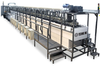
from Technic, Inc.
Vertical processing is widely acknowledged as the preferred method for achieving optimum side-to-side and edge-to-edge uniformity. Technic ’s MP200CS is an advanced roll-to-roll wet processing system that offers a variety of key benefits for today ’s flexible printed circuits, metal... [See More]
- Machinery Type: Automated System
- Application / Industry: Electrical / Electronic Parts (Connectors, Pins, etc.)
- Process / Technology: Electroplating