
Magnetoresistive Magnetic Field Instruments
Description
Magnetoresistive Magnetic Field Instruments are devices that measure electrical resistance as a function of the applied or ambient magnetic field. These instruments can be configured as magnetometers for detecting low-strength magnetic fields or as Gaussmeters for measuring stronger magnetic fields.
Working Principle
Magnetoresistive instruments operate based on the principle that the electrical resistance of certain materials changes in response to an external magnetic field. This change in resistance is used to determine the strength and direction of the magnetic field. The instruments can be built using different magnetoresistive effects, such as anisotropic magnetoresistance (AMR) and giant magnetoresistance (GMR). AMR depends on the angle between the electric current and the magnetization direction, while GMR involves layers of ferromagnetic metals separated by a non-magnetic spacer, where resistance changes based on the alignment of magnetic layers. These instruments are useful because they provide a sensitive and accurate means of measuring magnetic fields, which is essential in various scientific and industrial applications.
Applications
Magnetoresistive Magnetic Field Instruments are used in a variety of applications. For example, they are employed in geophysical surveys to detect anomalies in the Earth's magnetic field, which can indicate the presence of mineral deposits or other geological features. They are also used in medical diagnostics to measure the magnetic fields produced by physiological functions, such as brain or heart activity. Additionally, these instruments are utilized in industrial settings to detect metal defects or to read magnetic ink in security and identification applications.
Advantages over other Magnetic Field Instruments
Magnetoresistive instruments offer several advantages over other types of magnetic field sensors. They are typically smaller in size, consume less power, and are more cost-effective compared to traditional equipment like fluxgate magnetometers. The GMR technology, in particular, provides higher sensitivity and can be used in low-field applications where other sensors might struggle. This makes them ideal for portable and miniaturized applications where space and power consumption are critical considerations.
Limitations
Despite their advantages, magnetoresistive instruments have limitations. They can be sensitive to temperature variations, which may affect their accuracy and reliability. Additionally, they may require calibration to ensure precise measurements, especially in environments with fluctuating magnetic fields. The complexity of the materials and manufacturing processes involved in creating these sensors can also lead to higher initial costs compared to simpler magnetic field instruments.
Considerations
When considering the use of magnetoresistive magnetic field instruments, several factors should be taken into account. Initial costs can be higher due to the advanced materials and technology used in their construction. However, their low power consumption and small size can lead to reduced operating expenses over time. Durability and accuracy are generally high, but regular maintenance and calibration may be necessary to maintain performance. Replacement and maintenance costs should also be considered, as the specialized nature of these instruments may require specific expertise for servicing.

from MultiDimension Technology Co., Ltd.
Description. The AGV-TMR15XN is 16-channel NPN and PNP output magnetic guide sensor with 10 mm detection accuracy. It is available as standard with N pole, S pole and N/S pole magnetic operating modes including corresponding LED indicators. The AGV-TMR15XN is adaptive to installation height and tape... [See More]
- Technology: Magnetoresistive
- Measurement Range: 5.00E6 to 2.50E7
- Device Type: Magnetic Field Sensor
- Operating Temperature: -25 to 80

from MultiDimension Technology Co., Ltd.
Description. The AGV-TMR15XP is 16-channel NPN and PNP output magnetic guide sensor with 10 mm detection accuracy. It is available as standard with N pole, S pole and N/S pole magnetic operating modes including corresponding LED indicators. The AGV-TMR15XP is adaptive to installation height and tape... [See More]
- Technology: Magnetoresistive
- Measurement Range: 5.00E6 to 2.50E7
- Device Type: Magnetic Field Sensor
- Operating Temperature: -25 to 80
from MultiDimension Technology Co., Ltd.
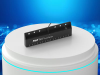
Description. AGV-TMR25LC is 16-channel digital output magnetic guide sensors that support RS-485, CAN, and customizable CAN protocol. Users can customize specifications using the RS-232 interface. It is available as standard with N pole, S pole and N/S pole magnetic modes including corresponding LED... [See More]
- Technology: Magnetoresistive
- Measurement Range: 5.00E6 to 2.50E7
- Device Type: Magnetic Field Sensor
- Operating Temperature: -25 to 80
from MultiDimension Technology Co., Ltd.
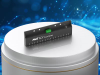
Description. AGV-TMR25X4 is 16-channel digital output magnetic guide sensors that support RS-485, CAN, and customizable CAN protocol. Users can customize specifications using the RS-232 interface. It is available as standard with N pole, S pole and N/S pole magnetic modes including corresponding LED... [See More]
- Technology: Magnetoresistive
- Measurement Range: 5.00E6 to 2.50E7
- Device Type: Magnetic Field Sensor
- Operating Temperature: -25 to 80
from MultiDimension Technology Co., Ltd.
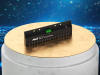
Description. AGV-TMR25XC is 16-channel digital output magnetic guide sensors that support RS-485, CAN, and customizable CAN protocol. Users can customize specifications using the RS-232 interface. It is available as standard with N pole, S pole and N/S pole magnetic modes including corresponding LED... [See More]
- Technology: Magnetoresistive
- Measurement Range: 5.00E6 to 2.50E7
- Device Type: Magnetic Field Sensor
- Operating Temperature: -25 to 80
from MultiDimension Technology Co., Ltd.
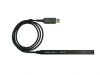
Magnetometer Documentation] Download: MDT_USB Magnetometer.rar. ( Custom compiled firmware for the USB Magnetometers is available upon request. Please contact jim.deak@dowaytech.com for information pertaining to USB magnetometer firmware. ). General Description:The MDT USB25103 is a... [See More]
- Technology: Magnetoresistive
- Axes: 3
- Device Type: Magnetometer
- Measurement Range: -2.00E10 to 2.00E10
from MultiDimension Technology Co., Ltd.
Magnetometer Documentation] Download: MDT_USB Magnetometer.rar. ( Custom compiled firmware for the USB Magnetometers is available upon request. Please contact jim.deak@dowaytech.com for information pertaining to USB magnetometer firmware. ). General Description:The MDT USB21023 is a... [See More]
- Technology: Magnetoresistive
- Axes: 3
- Device Type: Magnetometer
- Measurement Range: -1.00E8 to 1.00E8