
Digital Magnetic Field Instruments
Description
Digital Magnetic Field Instruments are devices designed to measure the strength and direction of magnetic fields. They provide precise and accurate readings of magnetic field intensity, which can be displayed digitally for easy interpretation and analysis.
Working Principle
Digital Magnetic Field Instruments operate based on various sensing technologies that detect and measure magnetic fields. These instruments can be classified into scalar and vector types. Scalar magnetometers measure the total strength of a magnetic field, while vector magnetometers measure both the magnitude and direction of the field. Technologies such as flux gate, magnetoinductive, and magnetoresistive sensors are commonly used. These instruments are useful because they provide critical data for applications requiring precise magnetic field measurements, such as navigation, geophysical surveys, and scientific research.
Applications
Digital Magnetic Field Instruments are used in a variety of specific applications. For example, they are employed in navigation systems on satellites and airplanes to map the Earth's magnetic field. They are also used by navies to detect submarines underwater. In the field of geophysics, surveyors use these instruments to locate boundary stakes that are buried or obscured by vegetation.
Advantages over other Magnetic Field Instruments
Digital Magnetic Field Instruments offer several advantages over traditional magnetic field measurement devices. They provide higher accuracy and resolution, allowing for more precise measurements. Additionally, digital outputs facilitate easier data analysis and integration with other digital systems. For instance, vector magnetometers can provide detailed directional information, which is crucial for navigation and orientation applications.
Limitations
Despite their advantages, Digital Magnetic Field Instruments have limitations. They can be sensitive to temperature variations, which may affect their accuracy. Additionally, the complexity of some technologies, such as SQUIDs, can lead to higher costs and maintenance requirements. These instruments may also require calibration to maintain accuracy over time.
Considerations
When selecting Digital Magnetic Field Instruments, several factors should be considered. Initial costs can vary significantly depending on the technology and specifications required. Operating expenses may include calibration and maintenance costs, which are necessary to ensure long-term accuracy and reliability. Durability is another important consideration, especially for field applications where the instruments may be exposed to harsh environmental conditions. Accuracy and resolution are critical specifications that should align with the intended application to ensure the instrument meets performance expectations.
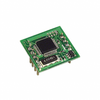
from DigiKey
MODULE DIGITAL COMPASS 2-AXIS [See More]
- Output: Other Digital
- Axes: 2
- Device Type: Digital Compass
- Measurement Range: 2.00E6

from PCE Instruments / PCE Americas Inc.
PCE-EM 30 is a digital portable 3-axis electromagnetic field (EMF) detector or meter used to measure electromagnetic radiation generated by electronic devices and electric installations. This triple-axis EMF meter provides greater precision than single-axis models as well as affords the ability to... [See More]
- Output: Other Digital
- Form Factor: Handheld
- Device Type: Magnetic Field Sensor; Radiation Meter
- Axes: 1

from Lake Shore Cryotronics, Inc.
A new approach to Hall measurement. The MeasureReady M91 is a revolutionary, all ‑in-one Hall analysis instrument that delivers significantly higher levels of precision, speed, and convenience to researchers involved in the study of electronic materials. Featuring Lake Shore ’s patented*... [See More]
- Output: Analog Voltage; Other Digital
- Technology: Hall Effect
- Device Type: Controller
- Form Factor: Desktop / Module

from PCE Instruments / PCE Americas Inc.
PCE-MFM 3000 is a handheld electromagnetic radiation meter or gauss meter that detects both static (DC) permanent (rare earth) magnetic and dynamic (AC) electromagnetic fields (EMFs) and displays measurement results in gauss (G) or milli Tesla (mT). This portable magnetic field measuring device... [See More]
- Output: Other Digital
- Form Factor: Handheld
- Device Type: Gaussmeter (Tesla Meter); Radiation Meter
- Axes: 1

from Lake Shore Cryotronics, Inc.
Features of the 8400 Series. Ideal for variable temperature measurement and mobilities from 1 to 106 cm2/V s. Optional AC field extends mobility measurement range down to 10-3 cm2/V s. Maximum DC fields to 1.67 T (8404) and 2.25 T (8407). Optional AC fields to 1.18 T... [See More]
- Output: Other Digital
- Technology: Hall Effect
- Device Type: Magnetic Field Sensor
- Form Factor: Desktop / Module
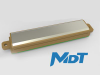
from MultiDimension Technology Co., Ltd.
General Description :The TMR6206D is a type of 6 channels magnetic pattern recognition sensor built-in the signal conditioner and SPI interface The TMR6206D consists of TMR magneto-resistance sensor, high-quality magnet, high-strength plastic base and durable non-magnetic stainless steel... [See More]
- Output: Other Digital
- Device Type: Magnetic Field Sensor
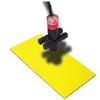
from B&Plus USA, Inc.
AGV Positioning Sensor. Digital ON/OFF [See More]
- Output: Other Digital
- Operating Temperature: -10 to 60
- Device Type: Magnetic Field Sensor