
Products & Services
See also: Categories | Featured Products | Technical Articles | More Information-
Supplier: Toray Industries (America), Inc.
Description: TORAYCON® PBT resin is a polyester-based thermoplastic resin developed by combining Toray's technological expertise in polyester polymerization and resin-reinforced composites. Featuring outstanding long-term heat-resistance, chemical-resistance, weather resistance and
- Industry: Automotive, Electronics
- Resins & Compounds: Molding Resin
- Chemical System: Polyester (PET, PBT)
- Features: Thermoplastic
-
Supplier: DuPont Plastics, Polymers & Resins
Description: Crastin® ST820 NC010 is an unreinforced, Super Tough polybutylene terephthalate resin for injection molding. DuPont™ Crastin® PBT thermoplastic polyester resins are based on polybutylene terephthalate. By making physical and technical modifications, a wide range of products are
- Coeff. of Thermal Expansion (CTE): 1.0555555555555556 µin/in-F
- Tensile Strength (Break): 3,045.77362650114 psi
- Tensile Modulus: 27.266925799153 ksi
- Elongation: 190 %
-
Supplier: DuPont Plastics, Polymers & Resins
Description: Crastin® S600F10 NC010 is an unreinforced, medium viscosity polybutylene terephthalate resin for injection molding. DuPont™ Crastin® PBT thermoplastic polyester resins are based on polybutylene terephthalate. By making physical and technical modifications, a wide range of
- Coeff. of Thermal Expansion (CTE): 1.1111111111111112 µin/in-F
- Tensile Modulus: 377.095782328712 ksi
- Water Absorption: 0.5 %
- Features: Other, Thermoplastic
-
-
Supplier: DuPont Plastics, Polymers & Resins
Description: Crastin® S600F40 NC010 is an unreinforced, low viscosity polybutylene terephthalate resin for injection molding. DuPont™ Crastin® PBT thermoplastic polyester resins are based on polybutylene terephthalate. By making physical and technical modifications, a wide range of products
- Coeff. of Thermal Expansion (CTE): 0.6666666666666666 µin/in-F
- Tensile Modulus: 377.095782328712 ksi
- Water Absorption: 0.4 %
- Features: Other, Thermoplastic
-
Supplier: DuPont Plastics, Polymers & Resins
Description: Crastin® S620F20 NC010 is an unreinforced, nucleated, medium viscosity polybutylene terephthalate resin for fast injection molding. DuPont™ Crastin® PBT thermoplastic polyester resins are based on polybutylene terephthalate. By making physical and technical modifications, a wide
- Coeff. of Thermal Expansion (CTE): 0.7222222222222222 µin/in-F
- Tensile Modulus: 377.095782328712 ksi
- Water Absorption: 0.4 %
- Features: Other, Thermoplastic
-
Supplier: Ensinger North America
Description: HYDEX® 4101 PBT black is a PBT polyester thermoplastic that can withstand higher impact than PET polyesters and thus carries reduced risk of part breakage in operation. It is a food grade plastic material that can meet most agency requirements for food contact compliance, and is ideal
- Deflection Temperature (@ 264 psi, 1.8 MPa): 200 to 310 F
- Coeff. of Thermal Expansion (CTE): 61 µin/in-F
- Tensile Strength (Break): 9,400 psi
- Tensile Modulus: 430 ksi
-
Supplier: Polyplastics USA, Inc.
Description: PBT is a linear thermoplastic saturated polyester containing ester bonds in its main chain. PBT stands for polybutylene terephthalate. The polymer belongs to the same family as PET resin. PBT possesses a high melting point and high crystallinity, while low water
- Deflection Temperature (@ 264 psi, 1.8 MPa): 393.8 F
- Coeff. of Thermal Expansion (CTE): 11.11111111111111 to 27.77777777777778 µin/in-F
- Tensile Strength (Break): 14,648.7207750769 psi
- Elongation: 1.1 %
-
Supplier: Celanese Corporation
Description: CELSTRAN PBT should in principle be predried. Because of the necessary low maximum residual moisture content the use of dry air dryers is recommended. The dew point should be =< -30°C. The time between drying and processing should be as short as possible
- Resins & Compounds: Molding Resin
- Features: Thermoplastic
- Filler: Unfilled
-
Supplier: Celanese Corporation
Description: CELSTRAN PBT should in principle be predried. Because of the necessary low maximum residual moisture content the use of dry air dryers is recommended. The dew point should be =< -30°C. The time between drying and processing should be as short as possible
- Resins & Compounds: Molding Resin
- Features: Thermoplastic
- Filler: Unfilled
-
Supplier: Port Plastics, Inc.
Description: TECADUR PBT UD blue (HYDEX 4101) has been specifically designed for the demanding environment of the food processing industry. This multi-detectable plastic with specially formulated fillers is detectable to both x-ray and metal detection systems, and its blue coloration is visible to optical
- Features: Other
-
Supplier: Ensinger North America
Description: HYDEX 4101 UD blue has been specifically designed for the demanding environment of the food processing industry. For several years, the industry has been moving towards materials used in equipment design that are detectable in some way; either visually, by metal or x-ray detection, in order to
- Deflection Temperature (@ 264 psi, 1.8 MPa): 275 to 393 F
- Coeff. of Thermal Expansion (CTE): 40.5 µin/in-F
- Tensile Strength (Break): 9,300 psi
- Tensile Modulus: 550 ksi
-
Supplier: Ravago Manufacturing Americas
Description: the best possible economics, offering the marketplace unsurpassed value in thermoplastic resins
- Tensile Strength (Break): 7,000 psi
- Resins & Compounds: Casting Resin
- Chemical System: Polycarbonate (PC)
- Features: Thermoplastic
-
Supplier: Pacific Materials
Description: PC Material
- Resins & Compounds: Pellets
- Chemical System: Polycarbonate (PC)
- Features: Thermoplastic
-
Supplier: Accuris
Description: POLYESTER MOLDING COMPOUND (PBT+PET), 40% GLASS/MINERAL FILLED, MOLDED-IN-COLOR, INTERIOR, 25% PCR RESIN CONTENT, 15% RECYCLED MATERIAL BY WEIGHT ***TO BE USED WITH FORD WSS-M99P1111-A***
-
Supplier: Celanese Corporation
Description: To avoid hydrolytic degradation during processing, Riteflex resins have to be dried to a moisture level equal to or less than 0.05%. Drying should be done in a dehumidifying hopper dryer capable of dewpoints <-40°F (-40°C) at 225°F (107°C) for 4 hours.
- Use Temperature: 212 to 230 F
- Melt Flow Index (MFI): 13.3 g / 10 minutes
- Resins & Compounds: Molding Resin
- Features: Other, Thermoplastic
-
Supplier: Ravago Manufacturing Americas
Description: the best possible economics, offering the marketplace unsurpassed value in thermoplastic resins
- Coeff. of Thermal Expansion (CTE): 28 µin/in-F
- Elongation: 4 %
- Water Absorption: 0.07 %
- Resins & Compounds: Casting Resin
-
Supplier: MCG - Performance Polymers Division
Description: MODIC™ offers two technologies designed to be used as a tie-resin or for peelable purposes: MODIC™ - ACID-GRAFTED POLYMER (TIE RESIN) MODIC™ tie-layer resin is acid grafted polyolefin forming a layer or a coating which provides adhesion between materials that have poor affinity.
- Industry: Automotive, Industrial, Medical / Food (FDA)
- Resins & Compounds: Extrusion Grade Resin, Film Grade Resin, Molding Resin
- Chemical System: Polycarbonate (PC), Polyester (PET, PBT), Polyethylene, Polypropylene (PP)
- Features: Thermoplastic
-
Supplier: Teknor Apex Company
Description: Terraloy BP-20001A is a Thermoplastics Starch/Biodegradable Copolyester ready-to-process compound that contains up to 40% of TPS renewable content and is 100% biodegradable. This compound is for blown film application as well as injection molded parts. Material Status Commercial: Active
- Tensile Strength (Break): 3,770 psi
- Resins & Compounds: Film Grade Resin, Pellets
- Chemical System: Polyester (PET, PBT)
- Features: Thermoplastic
-
Supplier: Celanese Corporation
Description: CELANEX should in principle be predried. Because of the necessary low maximum residual moisture content the use of dry air dryers is recommended. The dew point should be =< - 30° C. The time between drying and processing should be as short as possible.
- Use Temperature: 248 to 284 F
- Resins & Compounds: Molding Resin
- Chemical System: Polyester (PET, PBT)
- Features: Thermoplastic, UL Approved
-
Supplier: Eastman Chemical Company
Description: Eastman Tritan™ WX500 is a resin specifically developed for blow molded bottles. Extremely high melt strength makes the resin an excellent choice when manufacturing large bottles. This new-generation copolyester most outstanding features are excellent toughness, hydrolytic stability,
- Deflection Temperature (@ 264 psi, 1.8 MPa): 185 F
- Tensile Strength (Break): 7,541.91564657424 psi
- Elongation: 7 %
- Chemical System: Polyester (PET, PBT)
-
Supplier: Idemitsu Chemicals USA Corporation
Description: Material: Xarec N WA 7020, WA212 Better property retention after USCAR 3 & 4 vs. PBT. Lower hydraulic pressure, better flow than PBT. Better dimensional stability than PBT. Faster cycle time than PBT. Application Requirements: USCAR 2, 3 or 4 Good dimensional stability.
- Deflection Temperature (@ 264 psi, 1.8 MPa): 460.4 F
- Coeff. of Thermal Expansion (CTE): 16.666666666666668 µin/in-F
- Tensile Strength (Break): 21,030.3417067936 psi
- Tensile Modulus: 1,058.76892730754 ksi
-
Supplier: Port Plastics, Inc.
Description: Semitron® ESd 300 PET uses PET (Polyethylene terephthalate) is a polyester resin known for its toughness, chemical resistance and dimensional stability. By offering higher dimensional stability than products using POM / Acetal resin but at a lower cost than products using PEI / Ultem®
- Features: Anti-static, Thermoplastic
- Chemical System: Polyester (PET, PBT)
-
Supplier: Idemitsu Chemicals USA Corporation
Description: Material: Xarec WA210 Better humidity resistance than PBT or Nylon. Better dimensional stability than PBT or Nylon. Faster cycle time and easier flow in tools than PBT. Lighter weight than PBT. Application Requirements: USCAR Class 3 heat and humidity resistance.
- Deflection Temperature (@ 264 psi, 1.8 MPa): 417.2 to 453.2 F
- Coeff. of Thermal Expansion (CTE): 15 µin/in-F
- Tensile Strength (Break): 15,228.8681325057 psi
- Tensile Modulus: 1,058.76892730754 ksi
-
Supplier: Eastman Chemical Company
Description: Eastman Tritan™ copolyester GX100's strength, clarity and temperature resistance make it ideal for demanding applications. Extruded sheet is manufactured with Eastman's Tritan™ copolyester GX100 resin in a thickness range from 0.080" to 0.250". It is readily available in clear with colors
- Deflection Temperature (@ 264 psi, 1.8 MPa): 195.62 F
- Tensile Strength (Break): 6,671.69461043106 psi
- Elongation: 7 %
- Industry: Building / Construction, Electronics
-
Supplier: Eastman Chemical Company
Description: Eastar™ Copolyester EB062 is a resin specifically developed for extrusion blown bottles where aesthetics such as high clarity and gloss, coupled with design flexibility, drive demand. Compared to commonly used materials, Eastar™ copolyester EB062 runs on most standard processing equipment.
- Deflection Temperature (@ 264 psi, 1.8 MPa): 145.4 F
- Tensile Strength (Break): 6,961.76828914546 psi
- Elongation: 5 %
- Chemical System: Polyester (PET, PBT)
-
Supplier: Eastman Chemical Company
Description: Eastar™ CN005 copolyester is a high flow product. It is the first copolyester resin from Eastman that has been designed and engineered specifically for cosmetics packaging applications. With its unsurpassed color and clarity and an unmatched ability to mold thick parts with improved gate
- Deflection Temperature (@ 264 psi, 1.8 MPa): 145.4 F
- Tensile Strength (Break): 5,076.28937750189 psi
- Elongation: 4.5 %
- Chemical System: Polyester (PET, PBT)
-
Supplier: Port Plastics, Inc.
Description: an unreinforced, semi-crystalline thermoplastic polyester based on polyethylene terephthalate (PET-P). It is characterized as having the best dimensional stability coupled with excellent wear resistance, a low coefficient of friction, high strength, and resistance to moderately acidic solutions.
- Chemical System: Polyester (PET, PBT)
- Features: Thermoplastic
-
Supplier: Ensinger North America
Description: TECAPET black PET is the black pigmented version of our standard PET polyester. Among other excellent product features, Ensinger's TECAPET PET is also designed for improved machining properties. In addition, as a result of the black coloration, PET black also offers improved UV protection for
- Thermal Conductivity: 0.289898079 W/m-K
- Coeff. of Thermal Expansion (CTE): 39 µin/in-F
- Tensile Strength (Break): 10,000 psi
- Tensile Modulus: 470 ksi
-
Supplier: MCG - Performance Polymers Division
Description: industrial recycling / post consumer recycling). EXTENSIVE DESIGN POSSIBILITIES TEFABLOC™ offers chemical compatibility with many polymers including ABS, SAN, ASA, PC, PS, PP, PE, PCTA, PCTG, PET, PBT, PMMA, SMMA, DURABIO™, PA6, PA6.6, EPDM rubber. (DURABIO™ is high clarity bio-sourced
- Industry: Automotive, Electric Power, Electronics, Medical / Food (FDA)
- Features: Elastomer / Rubber, Flame Retardant (e.g. UL 94 Rated), Thermoplastic / TPE
- Resins & Compounds: Extrusion Grade Resin, Molding Resin
-
Supplier: Radwell International
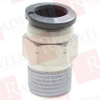
Description: DISCONTINUED BY MANUFACTURER, COMPACT HEX FITTINGS, MALE STRAIGHT, 150 PSI, 32`F TO 140`F, 29.5 INCH HG, NICKEL PLATED BRASS, PBT RESIN, NBR (BUNA-N), STAINLESS STEAL, ACETAL PLASTIC, COMPRESSED AIR /INERT GASES. FREE 2 YEAR RADWELL WARRANTY
- Geometry: Straight
-
Fabricated Plastic Parts and Semi-Finished Shapes - Fiberglass Structural Shapes and Plate -- EXTRENSupplier: Strongwell Corporation
Description: EXTREN® is a proprietary combination of fiberglass reinforcements and thermosetting polyester or vinyl ester resin systems. EXTREN® is produced in more than 100 standard shapes and all shapes have a surface veil to protect against glass fibers penetrating the resin surface in service
- Filler: Fiber Glass
- Chemical System: Polyester (PET / PBT)
- Features: Thermoplastic
-
Supplier: Radwell International
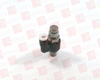
Description: VALVE, STANDARD, AIR, SPEED CONTROL VALVE, PBT RESIN, BRASS W/ NICKEL PLATING, NBR/HNBR RUBBER SEAL, 1/8-27 NPT, OPERATING PRESSURE 0.1-0.9 MPA, CRACKING PRESSURE 0.05 MPA, OPERATING TEMP. RANGE 0-60 C. FREE 2 YEAR RADWELL WARRANTY
-
Supplier: Ensinger, Inc.
Description: HYDEX 4101L natural is the lubricated version of HYDEX 4101 PBT polyester. Like its un-lubricated sister resin, HYDEX 4101L is a more impact resistant polyester that is better suited to many fast paced industrial and food processing environments than other lubricated PET polyesters
- Tensile Strength (Break): 6,600 psi
- Tensile Modulus: 350 ksi
- Elongation: 30 %
- Use Temperature: 221 F
-
Supplier: Saint-Gobain Innovative Materials
Description: Ekonol Polyester Resin is one of the first commercial liquid crystalline polymers, a family of materials known for their exceptional stiffness and thermal stability. This polymer was developed in the 1960™s and named after Dr. James Economy, who at the time was head of research at the
- Use Temperature: 500 to 750 F
- Coeff. of Thermal Expansion (CTE): 0.000033 µin/in-F
- Tensile Strength (Break): 5,500 psi
- Tensile Modulus: 1,000,000 ksi









Find Suppliers by Category Top
Featured Products Top
-
 molded from a chemical resistant PBT resin and the connector design features improved touch safety. Learn more about the SBE Connector Series. (read more)
Browse Power Connectors Datasheets for Anderson Power Products -
and confident operation. Built with durable PBT resin and silver-plated contacts, the S332R Toggle is designed for demanding environments, offering lasting reliability and high electrical capacity. It’s ideal for applications requiring dependable, long-term performance. For more details, contact New Yorker Electronics at 201-750-1171 or email sales@newyorkerelectronics.com. (read more)
Browse Toggle Switches Datasheets for New Yorker Electronics Co., Inc. -
UNISTOLE™ P is a unique line of liquid primers created to coat and bond engineering plastics and rubber materials that are otherwise difficult to coat and bond. Substrates including PP, TPO, TPE, EPDM, Nylon 6, RIM Urethane, PBT, FRP, ABS, EVA, Polyimide, Modified PPO and their blends (read more)
Browse Datasheets for Mitsui Chemicals America, Inc. -
runner systems, and thermal control are designed separately This becomes even more critical with medical-grade resins such as PP, PBT, POM, PC, and ABS. These materials have narrow processing windows, and small deviations in temperature or flow can generate subtle defects that only appear in (read more)
Browse Hot Runner Systems Datasheets for Husky Technologies™
Conduct Research Top
-
Polybutylene Terephthalate (PBT) Offers Alternative to Nylon in Components for Single-use Systems
The global supply chains for many raw materials and finished goods are experiencing unprecedented shortages and supply interruptions, in particular, the supply of plastic resins. Polyamide, more commonly known as nylon, is in the midst of a global supply shortage. This traces back to a scarcity
-
Case History: New Plant Incorporates Tried-and-True Feeders
to toll-process for various companies. The company produces polycarbonate resins (PCs), acrylonitrile-butadiene-styrenes (ABSs), polybutylene terephthalate (PBTs), and various polycarbonate alloys. These products, most of them proprietary compounds, are used in various applications in the automotive, consumer
More Information Top
 Indicates content that may require registration and/or purchase.

-
Thermoplastic Polyester Engineering Resins
12 Polybutylene Terephthalate ( PBT ) Resins ..............................................................................................
-
Butanediol, 1-4
The major uses are in the production of tetrahydrofuran (an intermediate of spandex and other performance polymer production) and polybutylene terephthalate ( PBT ) resins for engineering plastics.
-
Compounding of Engineering Thermoplastics
In the near future, higher-temperature PBT resins are expected to be used to increase the temperature resistance of blends with low PC content.
-
Engineering Plastics Handbook > Polybutylene Terephthalate (PBT)
PBT resins are high-performance engineering thermoplastics that can be used in a variety of applications, most commonly in functional components and structural parts that are formed by injection molding.
-
High Temperature Polymers
Major producers of PBT resins are General Electric, Hoechst-Celanese, BASF, Bayer, Toray, and Polyplastics.
-
Thermoplastic Polyesters
Unfilled PBT resins exhibit good tensile strength, toughness, low water absorption, and good chemical resistance, electrical properties, and frictional properties.
-
Polymer Blends Handbook
These PPE/PP blends are claimed to offer a balance of cost and performance between the TPOs and other higher-cost engineering ther- moplastics such as nylons, modified PET, and PBT resins .
-
Wireless powersupply
Aluminum (metal part) Active face ABS+ PBT ( resin part) Weight .
-
Polybutylene Terephthalate and Butanediol
Numerous applications are also being developed for higher molecular weight PBT resins in the extrusion area.
-
Polybutylene Terephthalate Resins
The electrical and electronics industry remains the largest market for PBT resins , accounting for 35% of consumption in 2009.