
-
Description: to PX/smaller recovery unit Low sensitivity to poisons (continuous regeneration) Ability to use ExxonMobil’s LPI process to further lower energy costs The EMTAM process The EMTAM process is a fluidized bed catalytic process that uses low-cost and readily available methanol to alkylate toluene
- Function: Catalyst
- Form & Features: Liquid / Solution
-
Description: ExxonMobil’s zeolite catalysts are the heart of the Badger Cumene process. Originally developed by Mobil Oil, the MCM-22 family of zeolite catalysts revolutionized the production of cumene. With their high activity and selectivity to cumene, ExxonMobil catalysts enable a simple,
- Function: Catalyst
- Form & Features: Liquid / Solution
-
Description: ExxonMobil’s MSDW™, MAXSAT™ and MWI™ catalyst technologies produce high-quality, high-performing lubes base stocks. These technologies incorporate proprietary ExxonMobil catalysts and deliver outstanding activity, yield, selectivity, run length and durability. Our MSDW catalyst
- Function: Catalyst
- Form & Features: Liquid / Solution
-
-
Description: Nebula® bulk metal hydroprocessing catalyst delivers up to two times the activity of traditional hydroprocessing catalysts. Jointly developed by ExxonMobil and Albemarle Corporation, pioneering Nebula catalyst technology provides exceptional hydrogenation power, increasing
- Function: Catalyst
- Form & Features: Liquid / Solution
-
Supplier: Accuris
Description: Standard Test Method for Determining Activity of Fluid Catalytic Cracking (FCC) Catalysts in a Fluidized Bed
-
Supplier: CoorsTek
Description: Applications Include: Fixed-bed reactors Slurry-bed reactors Shell-type catalyst Phthalic Anhydride (PA) catalyst supports Maleic Anhydride (MAN) catalyst supports Oxichlorination fixed bed catalyst supports LSA carriers HSA carriers
- Material: Aluminum Oxide, Ceramic, Silicon Carbide
- Features: Specialty / Other
-
Supplier: Saint-Gobain Innovative Materials
Description: MacroTrap® Guard Bed Media Protects Your Catalyst Saint-Gobain NorPro develops and manufactures the widest range of catalyst carriers, ceramic bed supports and guard bed media in the world. Saint-Gobain NorPro's MacroTrap® guard bed media protects your
- Diameter / OD: 0.1968505 to 0.5118113 inch
- Features: Aluminum Silicate / Sillimanite, Hollow, Specialty / Other
- Ball Type: Ceramic Balls
-
Supplier: Saint-Gobain NorPro
Description: MacroTrap® Guard Bed Media Protects Your Catalyst Saint-Gobain NorPro develops and manufactures the widest range of catalyst carriers, ceramic bed supports and guard bed media in the world. Saint-Gobain NorPro's MacroTrap® guard bed media protects your
- Diameter / OD: 0.1968505 to 0.5118113 inch
- Features: Aluminum Silicate / Sillimanite, Hollow, Specialty / Other
- Ball Type: Ceramic Balls
-
Supplier: Accuris
Description: Standard Test Method for Determining Activity of Fluid Catalytic Cracking (FCC) Catalysts in a Fluidized Bed - INCLUDES STANDARD + REDLINE (PDF)
-
Supplier: Saint-Gobain NorPro
Description: Saint-Gobain NorPro's new "micro" sized Accu® sphere catalyst carriers meet the industry's ever-growing demand for small diameter spherical catalyst carriers for catalytic systems with its 0.3mm to 4.0mm size range. This new size range provides high-geometric surface area, uniform
- Carrier Shape: Balls / Spheres
- Material: Silica / Glass, Titania, Zirconia
- Features: Specialty / Other
-
Supplier: ASTM International
Description: 1.1 This test method covers determining the activity and coke selectivity of either equilibrium or laboratory deactivated fluid catalytic cracking (FCC) catalysts. The activity is evaluated on the basis of mass percent conversion of gas oil feed in a fluidized bed reactor. The coke
-
Supplier: Saint-Gobain Innovative Materials
Description: materials include silica, alumina-silica, zirconia, titania, silica, and silicon carbide. Saint-Gobain NorPro also offers a range of attrition-resistant, porous, low-surface area fluidizable aluminas as the basis of active and stable fluid bed catalysts. Particle sizes from 50 to 120
- Specific Surface Area: 160 m²/g
- Pore Size: 11 nm
- Carrier Shape: Balls / Spheres, Extrudate / Pellet, Honeycomb / Structured Material, Rings
- Material: Silica / Glass
-
Supplier: Saint-Gobain NorPro
Description: premature fouling due to unwanted particulates accumulating on the catalyst, thus reducing its activity. Reduced catalyst activity could lead to an undesirable return on investment on the main catalyst bed. The "XPore 80" naming indicates that macropores account for ~80%
-
Supplier: Saint-Gobain NorPro
Description: materials include silica, alumina-silica, zirconia, titania, silica, and silicon carbide. Saint-Gobain NorPro also offers a range of attrition-resistant, porous, low-surface area fluidizable aluminas as the basis of active and stable fluid bed catalysts. Particle sizes from 50 to 120
- Specific Surface Area: 3 m²/g
- Pore Size: 160 nm
- Features: Specialty / Other
- Material: Titania
-
Supplier: Saint-Gobain Innovative Materials
Description: equipment or poison the catalyst. The special formulation of Denstone 99 media also provides maximum resistance to thermal shock and erosion. In fixed-bed catalyst reactors, its monolithic structure eliminates in-service spalling and delamination and prevents the incidence of
- Diameter / OD: 0.1181103 to 2.9527575 inch
- Features: Alumina, Specialty / Other
- Ball Type: Ceramic Balls
-
Supplier: Saint-Gobain Innovative Materials
Description: experienced in competing support media. Denstone support media ensure that your catalyst won’t suffer premature catalyst replacement. Dehydration/Desulfurization Units Saint-Gobain NorPro is a world-leader in providing high-technology ceramics used in the purification of natural gas
-
Supplier: ASTM International
Description: 1.1 This test method covers the determination of bulk crush strength of a bed of formed catalyst particles 1/32 to 3/16 in. (0.8 to 4.8 mm) in diameter and is intended to provide information concerning the ability of the catalyst material to maintain physical integrity. 1.2 The
-
Supplier: SAE International
Description: presents a novel morphological catalyst layer for DPFs, which is located in the surface of the inlet DPF channels and has been formed into a highly porous and three-dimensional meshwork shape. These features enhanced not only the prevention of deep bed filtration to reduce the pressure
-
Supplier: SAE International
Description: silver content (i.e., wt.% Ag 2 O) and reductant composition (i.e., simulated diesel fuel, simulated gasoline, ethanol, and ethanol/simulated gasoline mixtures) on the steady-state NO x reduction activity. A dual catalyst approach using a HC-SCR catalyst followed by an NH 3 -SCR
-
Supplier: SAE International
Description: The application of accelerated catalyst aging procedures on an engine dynamometer test bed for the purpose of demonstrating catalyst durability is examined. A proof-of-principle approach is followed using catalysts from vehicles certified to U.S. Tier 2 Bin 4 and
-
Supplier: Cole-Parmer
Description: The anodized aluminum occlusion bed swings open for quick loading of the two-stop tube sets. Wide occlusion angle prevents fluid backflow up to the rated pressure of the tubing. MAX button runs motor at full rpm to rapidly prime or flush tubing. Self-lubricating thermoplastic polyester
- Maximum Discharge Flow: 0.0036984087 GPM
- Power Source: AC Powered
- Pump Type: Peristaltic Pumps
-
Liquid Handling Pumps - Catalyst FH15 Compact Single-Channel Pump, 100 rpm, 115/230 V -- GO-77720-20Supplier: Cole-Parmer
Description: epoxy-based paint. The anodized aluminum occlusion bed swings open for quick loading of the two-stop tube sets. Wide occlusion angle prevents fluid backflow up to the rated pressure of the tubing. MAX button runs motor at full rpm to rapidly prime or flush tubing. Self-lubricating
- Maximum Discharge Flow: 0.02773806525 GPM
- Power Source: AC Powered
- Pump Type: Peristaltic Pumps
-
Supplier: SAE International
Description: Diesel aftertreatment systems configured with a diesel oxidation catalyst (DOC) upstream of an urea selective catalytic reduction (SCR) catalyst run the risk of precious metal contamination. During active diesel particulate filter (DPF) regeneration events, the DOC bed
-
Supplier: Spooner Industries Ltd.
Description: Spooner Anguil design and manufacture a range of catalytic oxidisers including; With a catalytic recuperative oxidiser, a catalyst bed is introduced into the combustion chamber. The catalyst oxidises the hydrocarbons to carbon dioxide and water vapour at significantly lower
-
Supplier: Automation Products, Inc.
Description: The Type CL-10DJI Dynatrol® Interface Level Detector has the unique ability to detect the interface: Between a liquid and a settled bed of solids. Between a liquid and a floating bed of solids. Between liquid phases of significantly different viscosities. Advantages Versatile: This
- Maximum Operating Pressure: 1,000 psi
- Material Temperature Range: 0 to 750 F
- Maximum Current: 2 amps
- Maximum AC Voltage: 240 volts
-
Supplier: AFC-HOLCROFT
Description: down ratio - VFD mixing pump produces only the gas needed by your furnace(s) - High-efficiency air-cooled heat exchanger stays undisturbed when servicing the retort - Heat exchanger has provision for soot removal without contaminating the catalyst bed - Dew point indicator to alert the
-
Supplier: Pollution Systems
Description: Catalytic Oxidizers are a good control option in applications that have consistent Volatile Organic Compounds (VOC's). By using a catalyst bed in the air treatment equipment, oxidation is accomplished at much lower temperatures compared to thermal oxidation. A catalytic oxidizer
- Oxidation Technology: Recuperative Thermal
-
Supplier: Cleaver-Brooks
Description: of reduced agent systems are availalbe: Anhydrous, Ammonia, Aqueous Ammonia and Urea Single integrated control system operates the boiler, burner and SCR Catalyst bed geometry is optimized and the highest quality corrugated catalyst is used with vanadium, titanium or tungsten
-
Supplier: Siemens Analytical Products
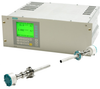
Description: and the gas temperature in furnaces and boilers. Surveillance and optimisation of flue gas cleaning systems by measuring the waste gas concentrations before and after gas cleaning steps. Internal combustion engines: Measuring the ammonia slip behind DeNOx catalysts in the waste gas system of
- Operating Temperature: 41 to 113 F
- Measurement Type: %Volume, Trace
- Gas Types: Ammonia (NH3), Carbon Dioxide (CO2), Carbon Monoxide (CO), Hydrogen Chloride (HCl), Hydrogen Fluoride (HF), Oxygen (O2), Toxic Gas
- Electrical Outputs: Analog Current
-
Supplier: Siemens Analytical Products
Description: and the gas temperature in furnaces and boilers. Surveillance and optimisation of flue gas cleaning systems by measuring the waste gas concentrations before and after gas cleaning steps. Internal combustion engines: Measuring the ammonia slip behind DeNOx catalysts in the waste gas system of
-
Supplier: Siemens Process Instrumentation
Description: and optimization of flue gas cleaning systems by measuring the waste gas concentrations before and after gas cleaning steps. Internal combustion engines: Measuring the ammonia slip behind DeNOx catalysts in the waste gas system of engine test beds Explosion safety: Immediate and 4.
- Gas Types: Ammonia (NH3), Carbon Dioxide (CO2), Carbon Monoxide (CO), Combustible Gas, Hydrogen Chloride (HCl), Hydrogen Fluoride (HF), Oxygen (O2), Toxic Gas, Water Vapor
- Instrument Type: Analyzer
- Display: Digital
- Number of Gases Monitored: Multi Gas
-
Supplier: Micromeritics
Description: divided by its volume where the volume includes that of its pore and small cavities. Envelope density information is useful in characterizing catalysts, structural foams, insulators, ceramics, powder metallurgy objects, and other manufactured goods. The GeoPyc follows a unique displacement
- Instrument Type: Density Instruments
- Technology Type: Digital Instrument, Other
- Display & Special Features: Laboratory Style (Benchtop or Handheld)
- Media Type: Solid














Find Suppliers by Category Top
Featured Products Top
-
 depending on the manufacturing needs, and they are often customized based on industry. For example, a molded blower housing for a popular cotton harvester would need to be abrasion-resistant and a louver for the same machine must be impact-resistant, whereas a part for a tanning bed would (read more)
Browse Datasheets for Osborne Industries, Inc.
More Information Top
 Indicates content that may require registration and/or purchase.

-
Handbook of Industrial Catalysts
Other problems can result from increasing pressure drop through the catalyst bed , if dust is entrained with process gas or if the catalyst itself slowly disintegrates.
-
Modeling and Simulation of Catalytic Reactors for Petroleum Refining
• Cooling the hydrogenation effluent and passing it through an isomeriza- tion reactor, where the isomerization reaction takes place in the catalyst bed .
-
Encyclopedia of Catalysis 6 Volume Set
With this catalyst the reaction is conducted in a fixed bed in which the CF3S03H component moves as a zone along the solid catalyst bed in the direction of the alkylation feed.
-
Technology Intelligence for Gas to Liquids Strategies
A fixed tube synthesis reactor catalyst bed separates product from catalyst, with little or no resulting product contamination.
-
TECHNOLOGY DEVELOPMENT FOR IRON AND COBALT FISCHER-TROPSCH CATALYSTS
The simplest approach to commercial operation is to maintain a constant catalyst bed .
-
Handbook of Petroleum Processing
The gases generated are combined with the remaining H2S and passed over a catalyst bed where almost complete conversion to elemental sulfur occurs.
-
Conventional Three-Phase Fixed-Bed Technologies
Specific Productivity of the Catalyst Bed . . . . . . . . . . . . . . .
-
Grid Enabled Remote Instrumentation
Two Successive Layers in Catalyst Beds ................................
-
Wiley Critical Content: Petroleum Technology 2 Volume Set Complete Document
The cycle of operations consists of (1) the flow of feedstock through the catalyst bed ; (2) the discontinuance of feedstock flow and removal of coke from the catalyst by burning; and (3) the insertion of the reactor back on-stream.
-
Hydrotreating
To absorb the heat of reaction produced by hydrotreating and hydrocracking reactions, the main feed stream is typically preheated to a temperature that is lower than the average catalyst bed temperature.