
Products & Services
See also: Categories | Featured Products | Technical Articles | More Information-
Supplier: ValueTronics International, Inc.
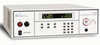
Description: The 7710 is a HiPot from Associated Research. HiPot, or high potential, is a class of electronic test equipment used to verify electrical insulation. Engineers use HiPot-testing instruments on cables, wires, circuit boards, appliances, electric motors, and transformers.
- Types of Measurements: AC Hipot, DC Hipot
-
Supplier: Kikusui America, Inc.
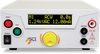
Description: Model TOS8030 is a hipot tester developed by KIKUSUI, an international brand in the field of electrical safety testers, and is designed specifically for use in production and inspection lines in factories and plants. While retaining the high levels of quality and reliability inherent to our
- AC Voltage: 50 to 3,000 volts
- AC Current: 0 to 0.01 amps
- Test Time: 0.4999999999999998 to 99 seconds
- Types of Measurements: AC Dielectric Strength, AC Hipot
-
Supplier: Slaughter Company (SCI)
Description: DC Hipot tester 295 – AC Hipot tester 296 – AC Hipot tester, DC Hipot tester 297 – AC Hipot tester, DC Hipot tester with Insulation Resistance measurements 298 – 500VA AC Hipot tester If you are looking for a rugged, portable and lightweight
- Types of Measurements: AC Dielectric Strength, AC Hipot
- Display: Digital Meter
- Testing Method: Manual
-
-
Supplier: Slaughter Company (SCI)
Description: DC Hipot tester 295 – AC Hipot tester 296 – AC Hipot tester, DC Hipot tester 297 – AC Hipot tester, DC Hipot tester with Insulation Resistance measurements 298 – 500VA AC Hipot tester If you are looking for a rugged, portable and lightweight
- Types of Measurements: AC Dielectric Strength, DC Hipot
- Display: Digital Meter
- Testing Method: Manual
-
Supplier: Slaughter Company (SCI)
Description: DC Hipot tester 295 – AC Hipot tester 296 – AC Hipot tester, DC Hipot tester 297 – AC Hipot tester, DC Hipot tester with Insulation Resistance measurements 298 – 500VA AC Hipot tester If you are looking for a rugged, portable and lightweight
- Types of Measurements: AC Dielectric Strength, AC Hipot, DC Hipot
- Display: Digital Meter
- Testing Method: Manual
-
Supplier: Microtest Corporation
Description: test time settings if no test is running now. Mounted 8/16 channels expansion box saving space for production line and increasing capacity. Features 2 Channels Graphic LCD Built-in programmable PLC remote control interface Built-in discharge circuit AC/DC hipot and insulation
- AC Voltage: 10 to 5,000 volts
- AC Current: 0.0000001 to 0.03099 amps
- DC Voltage: 10 to 6,000 volts
- DC Current: 0.0000001 to 0.00499 amps
-
Supplier: Microtest Corporation
Description: A hipot test checks for “goodisolation”and makes surety of no current will flow from one point to another point. In the past, hipot tester used OP amplifier method which is easy to be interfered by the variation of input voltage. HT7630 series use PWM amplifier method, the
- AC Voltage: 10 to 5,000 volts
- AC Current: 0.0000001 to 0.03099 amps
- DC Voltage: 10 to 6,000 volts
- DC Current: 0.0000001 to 0.00499 amps
-
Supplier: Vitrek Corporation
Description: Power & Versatility for your Most Demanding Electrical Safety Test Applications Vitrek built the 95X Series from the ground up with DSP technology – to bring you the safest, fastest, most capable, feature rich hipot testers available. The 95X Series combines high output power, with a
- AC Voltage: 20 to 10,000 volts
- DC Voltage: 20 to 15,000 volts
- Resistance Range: 50,000,000 to 4,000,000,000 kohms
- Current Leakage Range: 0 to 200 milliamps
-
Supplier: Ikonix USA
Description: a complete test system that will perform 500 VA AC Hipot and Ground Bond tests in a single DUT connection. It provides a simplified interface and the latest in technology & safety features. It is a perfect solution for entry level 500 VA AC Hipot testing applications.
- AC Voltage: 0 to 5,000 volts
- AC Current: 0 to 0.1 amps
- Resistance Range: 1,000 to 9,999,000 kohms
- Insulation Limits: 30 to 1 kilovolts
-
Supplier: Kikusui America, Inc.
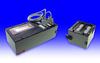
Description: The TOS5101 is designed exclusively for hipot testing of electronic equipment and components conforming to various safety standards. The use of a high luminance, large fluorescent display tube for the display enables data including measured values, status and judgment results to be extremely
- AC Voltage: 0 to 10,000 volts
- AC Current: 0 to 0.05 amps
- DC Voltage: 0 to 10,000 volts
- DC Current: 0 to 0.005 amps
-
Supplier: Ikonix USA
Description: to form a complete test system that will perform AC/DC Hipot and Ground Bond tests in a single DUT connection. It provides a simplified interface and the latest in technology & safety features. It is a perfect solution for entry level AC/DC Hipot testing applications.
- AC Voltage: 0 to 5,000 volts
- AC Current: 0 to 0.02 amps
- DC Voltage: 0 to 6,000 volts
- DC Current: 0 to 0.0075 amps
-
Supplier: Kikusui America, Inc.
Description: The TOS9200 Series has been developed to meet a wide diversity of customer needs. Including the refinement and enforcement of Kikusui's former Series, its specifications reflect the results of detailed study of our large database of user's requirements including special orders and modifying
- AC Voltage: 50 to 5,000 volts
- AC Current: 0 to 0.11 amps
- Resistance Range: 10,000 to 9,990,000 kohms
- Test Time: 0.3 to 998.9999999999999 seconds
-
Supplier: Marposs Corp
Description: DESCRIPTION Single station HV test for PEMFC SAM (Stack Assembly Module), Single Stack and Two Single Stacks, with manual loading/unloading. Principle of measurement: Insulation resistance and Dielectric strength (using High Voltage supply), by way of a Hipot tester. The bench provides
- Products Tested: Fuel Cells
- Test / Technique: Performance / Functional Test
- Form: Test Station / System
-
Supplier: Seaward Group USA
Description: The complete solution for manufacturers of lighting (luminaire) products who need to meet electrical safety standards. Providing all the required tests in an easy to use tester, that can be operated manually or automatically, this innovative tester can store up to 1,000 test results
- AC Voltage: 1,500 volts
- AC Current: 10 amps
- DC Voltage: 500 volts
- Resistance Range: 2,000 kohms
-
Supplier: Microtest Corporation
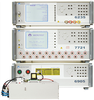
Description: Synchronous tests with multiple parameter settings Able to test 30 items per second under fastest test speed Optional Meter Mode function High accuracy and stability 7721 The fully programmable continuous test Measurement items include Area under curve comparison, Area
- Test Frequency Range: 1 MHz
- Test Parameters: Capacitance, Impedance Phase Angle, Inductance, Quality Factor, Turn Ratio
- Form Factor: Stand Alone / Bench
-
Supplier: ValueTronics International, Inc.
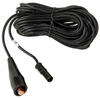
Description: The 02100A-13 is a test lead from Associated Research. Features: Return cable The Associated Research 02100A-13 is a blank return test lead for hipots. The 02100A-13 allows the hypothesis test voltage to return to the hipot tester. Compatible with the following
-
Supplier: Radwell International
Description: DISCONTINUED BY MANUFACTURER, SENTRY HIPOT TESTER, AC/DC/IR, 5 KV AC OUTPUT, 6 KV DC OUTPUT, 1 KV INSULATION RESISTANCE TEST. FREE 2 YEAR RADWELL WARRANTY
-
Supplier: Ikonix USA
Description: mA AC Hipot Tester7850 - 5 kV @ 30 mA AC Hipot, 6 kV @ 10 mA DC Hipot with Insulation Resistance Tester7800 - 500 VA, 5 kV @ 100 mA, 6 kV @ 10 mA DC Hipot with Insulation Resistance Tester
- AC Voltage: 5,000 to 6,000 volts
- AC Current: 0.1 to 0.01 amps
- Types of Measurements: AC Hipot, Insulation Resistance
- Display: Digital Meter, RS232
-
Supplier: Microtest Corporation
Description: The 6917 motor stator test system collocates the MT-6917 and the 6905 tester. Optional 6420 LCR Meter for testing inductor. It is provided with eight 4-line independent measurement test points and 17 channels. The testing projects include the DC resistance tests which may detect
- Operating Humidity: 20 to 90 % (non-condensing)
- Operating Temperature: 10 to 40 C
- Features: Data Storage
- Form Factor: Stand Alone / Bench
-
Supplier: SAE International
Description: voltage tester (hipot). This test is intended to aid in finding a breach in the wire insulation, and not for the identification of the resistance of the insulation. The test method defined herein is limited to equipment which ia able to control and limit the DC output to 1500
-
Supplier: Seaward Group USA
Description: The Sentinel hipot / flash tester provides simple affordable AC or DC Hipot/flash/dielectric withstand testing, ideal for the manufacturing or conformance lab test environment. Manual or automatic test sequences can be created with multiple test steps. This is a
- AC Voltage: 100 to 5,000 volts
- AC Current: 0.04 amps
- DC Voltage: 100 to 6,000 volts
- DC Current: 0.01 amps
-
Supplier: Hoyt Electrical Instrument Works, Inc.
Description: battery indication will beep the buzzer and lit the led shortly every 5 seconds. The Body-Prox is water proof and can be used in all weathers. It has no voltage selection and the user does not need to know how to operate complicated test equipment. It is designed to be simple to use. It only
- Types of Measurements: AC Hipot
- Display: LED Indicator
- Features: Other, Warning Indicator Light
- Testing Method: Semi-automatic
-
Supplier: Tradeport Electronics Group
Description: AC & DC Hipot plus Insulation Resistance and Ground Continuity in a single feature rich compact instrument AC/DC Hipot to 5Vk standard, 7 and 10k VDC optional Easy to use Full Menu Prompting, walks you through the test set-up Test Database stores 200 test steps for
-
Supplier: Tinsley Precision Instruments
Description: than 1mA, serves powerful ability of charging capacitive loads. Dust-proof and damp-proof construction suited for outdoor use. Provide with low battery sign function. Auto discharge of test object. Safety requirement meets IEC61010-1:2001.
- AC Voltage: 40 volts
- AC Current: 0.000001 amps
- Types of Measurements: DC Hipot, Insulation Resistance
- Display: Digital Meter
-
Supplier: Seaward Group USA
Description: The A203H/TL hipot/flash/dielectric withstand tester is a cost effective simple to use, rugged test system suited to manufacturing or laboratory environments. It can deliver a test voltage of 0 to 10 kV a.c. from an internal 250VA transformer source, and has displays that show
- AC Voltage: 0 to 10,000 volts
- AC Current: 0.005 amps
- Types of Measurements: AC Dielectric Strength
- Display: Analog Meter
-
Supplier: Hoyt Electrical Instrument Works, Inc.
Description: High quality Taut Band movement. Three insulation test voltages (DC) : 250V, 500V, 1000V. Two continuity test on low ohms : 500Ω & 3Ω Small and light weight. AC voltmeter with linear scale up to 600 Vac. 205mA continuity short circuit current. 1mA test current on insulation
- Resistance Range: 0 to 400,000 kohms
- Display: Analog Meter
- Types of Measurements: Insulation Resistance
- Testing Method: Manual
-
Supplier: Hoyt Electrical Instrument Works, Inc.
Description: Microprocessor technology ensure high performance accuracy and reliability. Four insulation test voltage(DC V). Insulation resistance auto ranging on all ranges. Bar-graph indicates test voltage,decay can be observed during discharge. Measures insulation test time. Display
- Resistance Range: 0 to 250,000,000 kohms
- Display: Digital Meter
- Types of Measurements: Insulation Resistance
- Testing Method: Manual
-
Supplier: Hoyt Electrical Instrument Works, Inc.
Description: the test button. EN 61010-1 CAT III 600V EN 61326-1
- Resistance Range: 0 to 200,000 kohms
- Display: Analog Meter
- Types of Measurements: Insulation Resistance
- Testing Method: Semi-automatic
-
Supplier: Sifam Tinsley UK
Description: Zeta 20 is the digital Insulation and continuity Tester is suitable for following: Features • Measurement of the insulation resistance on electrically dead equipment and systems with test voltage up to 1000V • For testing motors, transformers, generators, switchgears • For testing of house
- AC Voltage: 450 to 600 volts
- DC Voltage: 25 to 450 volts
- Resistance Range: 0.00000001 to 0.000999 kohms
- Insulation Limits: 1.2 kilovolts
-
Supplier: Sifam Tinsley UK
Description: Zeta 50 / 50K Is used for the non-destructive measurement of insulation resistance in electrical systems, at machines, transformers and cables. Features • Test voltages up to 5000V • Discharge of capacitive devices under taste • Measurement cables with heavy duty insulation and needle gauge
- AC Voltage: 100 to 5,000 volts
- Resistance Range: 10 to 100,000 kohms
- Insulation Limits: 2.2 kilovolts
- Display: Analog Meter
-
Supplier: Seaward Group USA
Description: The Elite test system is Clare's flagship product and features 11 powerful tests in one tester. These tests are: AC/DC flash/hipot, DC insulation resistance, earth/ground bond and leakage. The Elite is designed for automatic dual voltage (230V/115V, 50/60Hz) operation and
- AC Voltage: 100 to 5,000 volts
- AC Current: 0 to 26 amps
- DC Voltage: 200 to 6,000 volts
- DC Current: 0.01 amps
-
Supplier: Tinsley Precision Instruments
Description: Features Microprocessorcontrolled Insulation resistances up to 5TΩ Auto-range Digital & bargraph reading Automated tests: absorption index polarization index capacitance leakage current ac/dc voltmeter Chronometer up to 90 minutes Switchable filter to remove external noise interference Step
- AC Voltage: 10 to 1,000 volts
- DC Voltage: 10 to 1,000 volts
- Test Time: 0 to 5,400 seconds
- Types of Measurements: AC/DC Selectable, Insulation Resistance
-
Supplier: Cirris Systems Corp.
Description: Test Point Range: 128-1024 Test Voltage: 5VDC, 6mA max current Hipot Range: 1000: 50-1000VDC (50-700VAC optional) 1500: 50-1500VDC (50-1000VAC optional) Connection Resistance Range: 0.1-100KΩ, also 500KΩ, 1MΩ, 5MΩ Insulation Resistance Range: 5M-1000M ohm 4-Wire Resistance
- Test Points: 128 to 1,024
- Test Resistance: 0.1 to 1,000,000 ohms
- Maximum Voltage: 1,000 volts
- Maximum Current: 6 mA
-
Supplier: Radwell International
Description: COIL, HI-POT TESTED, 110V, 60HZ, 5.3 IN X 4.6 IN X 2.45 IN. FREE 2 YEAR RADWELL WARRANTY
- Transformer Category: Current Transformer
-
Supplier: Tradeport Electronics Group
Description: Hipot to 1500 VDC and 1000 VAC RMS All-in-1 Tester, R, C, IR, Hipot, O/S, and more... Easy to use, with auto-scan and auto-search modes Large menu driven graphic display High speed operation, 100mS per test RS-232 and PLC remote programmable Built-in statistics and printer port




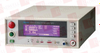
![TOS5000 Series [10kV AC/DC] Hipot Tester -- TOS5101](https://partimages.globalspec.com/32/3682/153682_medium.png "TOS5000 Series [10kV AC/DC] Hipot Tester -- TOS5101")







Find Suppliers by Category Top
Featured Products Top
-
 -196°C Hipot Testing 40KV Analog Read-Out Hipot Testing 20KV Digital Read-Out Production Leak Testing 1×10⁻⁹ cc/sec He Pressure Testing to 30,000 PSI Magnetic Permeability Testing < 1.01µ 100 (read more)
Browse Electrical Feedthroughs Datasheets for MPF Products, INC. -
100–240 VAC input, this supply delivers reliable and efficient power. It also offers protections against over-current (OCP), over-voltage (OVP), over-temperature (OTP) and short-circuit. Reliability features also include 100% high-potential (Hi-pot) tested and 100% burn-in. Cooling is done by a (read more)
Browse Switching Power Supplies Datasheets for TPS Elektronik GmbH -
multi-connection plates or specialized assemblies using materials such as stainless steel, aluminum, brass, and various plastics. All assemblies are factory leak-tested and hipot tested to customer specifications, ensuring dependable performance in demanding immersion-cooled data center applications. (read more)
Browse Feedthroughs Datasheets for Douglas Electrical Components -
Plate assemblies provide multiple feedthrough connections within a single flange, improving flexibility and simplifying feedthrough management. PortPlate assemblies are fully tested at the factory, including electrical verification, Hipot testing, helium leak testing, and final vacuum testing (read more)
Browse Feedthroughs Datasheets for Douglas Electrical Components -
ensures thermal stability and less noise. Full Electrical Protection: OCP, OVP, short-circuit, and resettable shutdown features to safeguard the system. Quality Assurance:100% Hi-Pot testing and MTBF rating of 100,000 hours at 25 °C ensure (read more)
Browse Computer Power Supplies Datasheets for TPS Elektronik GmbH -
, as well as a built-in redundancy diode for parallel and N+1 operation, are available on request. The DIO 120 converters are tested for corona (partial discharge) extinction at a minimum of 10kVrms and Hi-Pot tested for 20kVrms. The feedback system on the primary side employs a special (read more)
Browse DC-DC Converters Datasheets for ABSOPULSE Electronics Ltd. -
a wide range of high-voltage and safety-critical applications. In testing environments, it supports HiPot, insulation, PE conductor, and leakage current testing, ensuring reliable and repeatable results. In power electronics, it serves as a pre-charge relay in converter systems, and as a relay for (read more)
Browse High Voltage Relays Datasheets for Schaltbau GmbH -
durability, these PTFE test tubes provide: Chemical inertness, allowing safe handling of strong acids and reactive samples (read more)
Browse Test Tubes Datasheets for Shenzhen Dechengwang Technology Co., Ltd -
New miniature Test Point is the latest addition to their successful line of SMT Test Points. This new cost saving "mini pad" version is another way to (read more)
Browse Test Points Datasheets for Keystone Electronics Corp. -
Identification of test points in high density PCB packages is a key to greater PCB production testing and service troubleshooting. Keystone Electronics has developed a new series of (read more)
Browse Test Points Datasheets for Keystone Electronics Corp.
Conduct Research Top
-
Exploring the Benefits of New Hipot Testing Technology (.pdf)
Like many industries reliant upon technology, the electrical test and measurement field has progressed in leaps and bounds since its early days. Safety testing equipment is no different; Hipot testers have progressed far beyond the "transformer-in-a-box" design of the 1950's. These older models
-
Best Methods for Safe Hipot Testing (.pdf)
that there is a safe work environment for everyone involved in testing. It is important to understand that a Hipot tester generates voltages and currents that can cause harmful or even fatal electric shock. When setting up a work area to test products it is important to configure the workstation in a manner
-
Performing Low Voltage Continuity Tests With High Voltage Hipot Testers
Manufacturers of heating elements, cable harnesses, and aerospace cables must commonly perform point to point continuity tests and hipot tests as part of their routine production line tests. The linking of a continuity test and hipot test when voltages exceed. 1000 volts has previously only been
-
Hi-Pot Safety Certification - Understanding the Tests Required
technical support questions received by XP Power concerning hi-pot testing and relevant standards.
-
Production Line Tests for Medical Product Safety Evaluation
production line safety tests commonly required on medical devices. The first and most prevalent test is the Dielectric Voltage Withstand Test, commonly known as a "hipot" test. Hipot testing is the deliberate application of high voltage between current carrying and non-current carrying components
-
Hi-pot Type Testing Application Note
This Application Note was written to provide insight into the one time requirement for 'type' testing of power supplies by the safety agency or manufacturer. It will assist in the interpretation of requirements for this testing and provide broad guidelines on exactly what is required
-
Flash testing: Getting it right during manufacturing
The flash Test (also known as High Voltage (HV), Dielectric Strength or HiPot) is one of the more controversial electrical safety tests and has provoked a lot of discussion and debate in recent years. This article looks at new developments in flash testing for electronic product design applications
More Information Top
 Indicates content that may require registration and/or purchase.

-
Basic Facts about Electrical Safety Testing (.pdf)
General Hipot Test Considerations.............................................................
-
Stator winding hipot (high potential) testing
Abstract: Over-potential or hipot tests are frequently applied to machine stator windings to assure that the electrical insulation in windings is fit for service.
-
CR4 - Thread: Dielectric Withstand (Hi-pot) test spec?
IEEE 56 – MAINTENANCE AC HIPOT TEST .
-
TPX: Contractor preliminary design review. Volume 5, Manufacturing R&D
Table 5.9 -Failure Hipot testing in airfor TPX 1x2samples.
-
Recent important changes in IEEE motor and generator winding insulation diagnostic testing standards
… test standards, recommended prac- tices, and guides that are used by both manufacturers and users [1]–[6]: 1) IEEE 43-2000: insulation resistance and polarization index (new and aged windings); 2) IEEE 56-1977: ac hipot tests (aged windings); 3) IEEE …
-
Recent important changes in IEEE motor and generator winding insulation diagnostic testing standards
1) IEEE 43-2000: insulation resistance and polarization index (new and aged windings) 2) IEEE 56-1977: AC hipot tests (agedwindings) 3) IEEE 95-2001: DC hipot tests (ne* and aged windings) 4) IEEE 286-2000: power factor tip-up tests (new …
-
CR4 - Thread: hipot dc test
I was conducting a Hipot test on a 3 phase circuit consisting of 3 single core cables, 15kv ,120sqmm (250mcm) XLPE/PVC, with concentric neutral, 600m long , I was going to apply 64KV dc for 15 min ,I started with the red phase …
-
CR4 - Thread: Hipot AC Test
IEEE 56 – MAINTENANCE AC HIPOT TEST .
-
CR4 - Thread: When should a hipot test be performed?
When should a hipot test be performed?