
Products & Services
See also: Categories | Featured Products | Technical Articles | More Information-
Supplier: Accuris
Description: Intelligent transport systems - Mobility integration - Role and functional model for mobility services using low Earth orbit (LEO) satellite systems
-
Supplier: Accuris
Description: Intelligent transport systems \x97 Mobility integration \x97 Role and functional model for mobility services using low Earth orbit (LEO) satellite systems
-
Supplier: Accuris
Description: Intelligent transport systems \x96 Mobility integration \x96 Role and functional model for mobility using low earth orbit (LEO) satellite system
-
-
Supplier: Accuris
Description: Intelligent transport systems \x96 Mobility integration \x96 Role and functional model for mobility services using low Earth orbit (LEO) satellite systems
-
Supplier: CSA Group
Description: ISO 16164:2015 focuses on the post-mission disposal of spacecraft operating in, or crossing, Low Earth Orbit (LEO). The disposal of orbital launch stages operating in, or crossing, LEO is not dealt with in this International Standard. Post-mission disposal of an Earth-orbiting
-
Description: ISO 27852:2011 describes a process for the estimation of orbit lifetime for satellites, launch vehicles, upper stages and associated debris in LEO-crossing orbits. ISO 27852:2011 also clarifies the modelling approaches and resources for solar and geomagnetic activity modelling; the
-
Supplier: AENOR
Description: Satellite Earth Stations and Systems (SES);Mobile Earth Stations (MES) providing Low Bit Rate Data Communications (LBRDC) using LEO satellites operating below 1 GHz (Endorsed by Asociación Española de Normalización in January of 2023.)
-
Supplier: AENOR
Description: Satellite Earth Stations and Systems (SES); Mobile Earth Stations (MES) providing Low Bit Rate Data Communications (LBRDC) using Low Earth Orbiting (LEO) satellites operating below 1 GHz (Endorsed by AENOR in November of 2008.)
-
Supplier: AENOR
Description: Satellite Earth Stations and Systems (SES);Network Control Facilities (NCF) for Mobile Earth Stations (MES) providing Low Bit Rate Data Communications (LBRDC) using LEO satellites operating below 1 GHz (Endorsed by Asociación Española de Normalización in January of 2023.)
-
Supplier: AENOR
Description: Satellite Earth Stations and Systems (SES); Harmonized EN for Mobile Earth Stations (MES) providing Low Bit Rate Data Communications (LBRDC) using Low Earth Orbiting (LEO) satellites operating below 1 GHz covering essential requirements under article 3.2 of the RTTE
-
Supplier: Anokiwave
Description: compensation over temperature Temperature reporting Applications Flat Panel SATCOM systems using LEO/MEO/GEO satellites.
- Operating Frequency: 27,500 to 30,000 MHz
- Supply Voltage: 1.2 V
- Device Type: Beamformers, Transmitter
- Features: Dual Polarity, Ka-Band, Other
-
Supplier: Anokiwave
Description: compensation over temperature Temperature reporting Applications Flat Panel SATCOM systems using LEO/MEO/GEO satellites.
- Input Frequency: 27,500 to 30,000 MHz
- Supply Voltage: 1.2 volts
- Technology: ASIC
- Applications: Communication
-
Supplier: Anokiwave
Description: compensation over temperature Temperature reporting Applications Flat Panel SATCOM systems using LEO/MEO/GEO satellites.
- Operating Frequency: 17,700 to 20,200 MHz
- Supply Voltage: 1.2 V
- Device Type: Beamformers, Receiver
- Features: Dual Polarity, K-Band, Other
-
Supplier: Anokiwave
Description: over temperature Temperature reporting Applications Flat Panel SATCOM systems using LEO/MEO/GEO satellites.
- Operating Frequency: 13,750 to 14,500 MHz
- Supply Voltage: 1.2 V
- Device Type: Beamformers, Transmitter
- Features: Dual Polarity, Ku-Band, Other
-
Supplier: Smiths Interconnect, a Molex company
Description: cable types with space orbit qualifications and are well-suited for Satellite Payloads (GEO/MEO and LEO constellations), Deep Space Probes, Ground Antenna Networks and Space Robotic Systems. Features & Benefits DC to 18 GHz Hand-formable & High Isolation Polyolefin Jacket
- Application: RF
-
Supplier: Smiths Interconnect, a Molex company
Description: space orbit qualifications and are well-suited for Satellite Payloads (GEO/MEO and LEO constellations), Deep Space Probes, Ground Antenna Networks and Space Robotic Systems. Features & Benefits Mode Free Operation 60 to 65 GHz Superior Shielding Effectiveness Phase Matched Sets
- Application: RF
-
Supplier: Smiths Interconnect, a Molex company
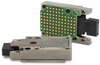
Description: to system board with 1.55 mm LGA interposer Applications High-throughput communication satellites LEO satellite constellations GEO satellites (with extended lifetime option) Board-to-board and payload-to-payload connections High I/O density, high BW communication
- Wavelength: 850 nm
- Data Rate: 10.3125 Gbps
- Operating Temperature: -40 to 185 F
- Cable Type: Multimode
-
Supplier: Smiths Interconnect, a Molex company
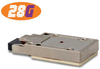
Description: satellites LEO satellite constellations GEO satellites Board-to-board and payload-to-payload connections High I/O density, high BW communication link
- Wavelength: 850 nm
- Data Rate: 28 Gbps
- Operating Temperature: -40 to 185 F
- Cable Type: Multimode
-
Supplier: Micross Components, Inc.
Description: military aircraft, missiles, smart munitions, weapon systems, launch vehicles, LEO/MEO satellites, and GEO satellites. Micross Hi-Rel Power Solutions’ steady thrust in crafting the best in technology with the best in technique for the industry has resulted in highly
- Type: DC/DC Converter



Find Suppliers by Category Top
Featured Products Top
-
 coverage gaps by integrating low Earth orbit (LEO) satellite links with existing NB-IoT networks. Using detailed simulations of rugged terrain, atmospheric effects, and satellite elevation angles, the study demonstrates how LEO augmentation dramatically improves signal quality, coverage reliability (read more)
Browse Communications Software Datasheets for Remcom (USA) -
Non-terrestrial wireless networks (e.g., satellite constellations or high altitude platforms) have unique advantages—wide area service coverage and long-term reliability—which make them important components in the heterogeneous 5G global system of networks. Non (read more)
Browse Communications Software Datasheets for Remcom (USA) -
is a premium on orbital space. Yet there is also exponential growth in demand for faster, more reliable communications on earth. Optical technologies using interconnected satellite arrays are the logical solution. However, the increasing complexity of onboard electrical systems mandates diligent (read more)
Browse Datasheets for Mid-Mountain Materials, Inc. -
-suited for mission critical applications including Satellite Payloads (GEO/MEO and LEO constellations), Deep Space Probes, Ground-based Antenna Networks, Satellite Integration and Space Robotic Systems. (read more)
Browse Electrical Connectors Datasheets for Smiths Interconnect, a Molex company -
minimize internal reactance and maintain a flat Z/R curve across a wide frequency range. The CHA series withstands demanding AEC-Q200 tests while maintaining excellent stability. Engineers can rely on these resistors for ADAS, LIDAR, 4D radar, drones, LEO satellites, and RF systems. The (read more)
Browse Resistors Datasheets for New Yorker Electronics Co., Inc. -
Stability Designed for cryogenic and high-temperature conditions in space Applications of Ultra-Lightweight Mirrors Our mirrors are ideal for: Satellite imaging payloads (LEO, GEO) Cube (read more)
Browse Optical Mirrors Datasheets for Avantier Inc. -
military aircraft, missiles, smart munitions, weapon systems, launch vehicles, LEO/MEO satellites, and GEO satellites. Micross Hi-Rel Power Solutions’ steady thrust in crafting the best in technology with the best in technique for the industry has resulted in highly reliable solutions rich (read more)
Browse DC-DC Converters Datasheets for Micross Components, Inc. -
Smiths Interconnect’s response to the increasing demand for high-reliability connectivity in commercial space programs, particularly GEO/MEO and LEO satellites. Learn More (read more)
Browse RF Attenuators Datasheets for Smiths Interconnect, a Molex company -
include: Adhesive performance needs for LEO satellite, missile, and spacecraft electronics MIL STD 883 compliance with operating range from –65°C to +125°C Rapid UV curing in seconds without racking or (read more)
Browse UV Curing Adhesives Datasheets for Dymax -
launched drones and capture UAV images while remaining out of harm’s way. On thesame field-pads, strategic communications are sent to and from the battle-management center via the same satellite. Somewhat larger but significantly advanced airborne systems are being used (read more)
Browse Electrical Connectors Datasheets for Omnetics Connector Corporation
Conduct Research Top
-
Marking Tests to Certify Part Identification Marking Processes for Use in Low Earth Orbit (LEO)
Prior to the Space Shuttle Program, space-borne vehicles launched into space were expended; consequently their part identifiers were applied using marking processes designed for use in ground operations. With the advent of reusable space transportation vehicles and retrievable satellites, NASA
-
Flat-Panel Phased-Array Antennas: Enabling Scalable & Affordable SATCOM Solutions
Phased array antennas, or AESAs, are changing the way in which we communicate with SATCOM networks as SATCOM enters a new era. LEO satellite launches are accelerating and GEO satellites continue to update performance to better connect mobile users. Working together, these new SATCOM systems
-
A Quick Understanding of Low-orbit Satellite System
Communication satellites can be classifieds into low earth orbit (LEO), medium earth orbit (MEO), and geostationary equatorial orbit (GEO) depending on the satellite 's orbit different heights to them. The LEO at altitudes between 500 to 2000km, the MEO at altitudes between 2000 to 36000km
-
Satellite Test Solutions for Tactical & Disaster Management
Welcome to another March 2019 issue of GL Communications' newsletter providing information and insight into our Satellite Test Solutions for Data Communication, Tactical and Disaster Management in Mobile, Low Earth Orbit (LEO), Geostationary Equatorial Orbit (GEO) satellite networks
More Information Top
 Indicates content that may require registration and/or purchase.

-
Global Mobile Satellite Communications
In addition, compared to the little LEO systems, big LEO satellite systems are expected to be bigger and to have more power and bandwidth to provide different services to their subscribers.
-
Resource Management in Satellite Networks
The RTDmax characteristics for LEO satellite systems are described in Figure 1.3.
-
QoS handover management for multimedia LEO satellite networks
Abstract Low earth orbit ( LEO ) satellite systems gained considerable interest towards the end of the previous decade by virtue of some of the appealing features that are endowed with, such as low propagation delay and the ability to communicate with handheld terminals.
-
http://dspace.mit.edu/bitstream/handle/1721.1/17759/56525152-MIT.pdf?sequence=2
This framework is applied to evaluate the impact of infusing four new technologies into LEO satellite systems .
-
http://epublications.bond.edu.au/cgi/viewcontent.cgi?article=1006&context=theses
losses occur in LEO satellite systems but continuous changes in shadowed areas occurred since LEO satellites are moving .
-
Handbook of Satellite Applications
In short, a LEO satellite system requires a long lead time and a very large investment to build and launch many dozens of satellites.
-
http://dspace.bracu.ac.bd/bitstream/handle/10361/694/Performance%20Analysis%20of%20Low%20Earth%20Orbit.pdf?sequence=1
Big LEO Satellite Systems 1.2.2.1 .
-
Assessment of interference between LEO satellite constellation and fixed service
In the LEO satellite system , interference is strongly off-axis angle dependent.
-
Handover schemes in satellite networks: state-of-the-art and future research directions
National Aeronautics and Space Administration (NASA) and its enterprises are aiming to build the future space communi- cation architecture based on LEO satellite systems [5].
-
Satellite Network Robust QoS-aware Routing
2007) A dynamic routing alrotithm in LEO satellite systems estimating call blocking probabilities.