
-
Supplier: Accuris
Description: LIQUID POLYMER, POLYSULFIDE
-
Supplier: Accuris
Description: POLYSULFIDE, POLYMER, LIQUID (FOR ROCKET MOTOR, 3.0 INCH, MARK 32 MOD 0)
-
Supplier: Accuris
Description: CALKING COMPOUND (LIQUID POLYMER POLYSULFIDE SYNTHETIC RUBBER, FORMULA NO. 112, FOR METAL ENCLOSURES)
-
-
Supplier: Master Bond, Inc.
Description: Master Bond Polymer Adhesive EP21TPLV is a two component low viscosity, exceptionally tough epoxy polysulfide composition formulated to cure quickly at ambient temperature and even more rapidly at elevated temperatures with a noncritical, user-friendly one-to-one mix ratio, weight or
- Viscosity: 5,000 to 6,000 cP
- Thermal Conductivity: 0.288 to 0.432 W/m-K
- Coeff. of Thermal Expansion (CTE): 39 to 50 µin/in-F
- Tensile Strength (Break): 3,000 psi
-
Supplier: Master Bond, Inc.
Description: Master Bond Polymer Adhesive EP21TPND is a two component polysulfide/epoxy based adhesive/ sealant formulated to cure at room temperature or more rapidly at elevated temperatures, with a 100 to 100 mix ratio (A/B) by weight. It readily develops a high bonding strength of more than 1000
- Use Temperature: -60 to 250 F
- Thermal Conductivity: 0.288 to 0.432 W/m-K
- Coeff. of Thermal Expansion (CTE): 39 to 50 µin/in-F
- Tensile Strength (Break): 3,200 psi
-
Supplier: Master Bond, Inc.
Description: Master Bond Polymer Adhesive EP21TP-2 is a two component polysulfide/epoxy based adhesive/sealant formulated to cure at room temperature or more rapidly at elevated temperatures, with a 100 to 100 mix ratio (A/B) by weight. It readily develops a high bonding strength of more than lOOO
- Viscosity: 5,000 to 6,000 cP
- Use Temperature: -100 to 300 F
- Thermal Conductivity: 0.288 to 0.432 W/m-K
- Coeff. of Thermal Expansion (CTE): 39 to 50 µin/in-F
-
Supplier: Master Bond, Inc.
Description: Master Bond Polymer System EP21TDC-2AO is a two component highly flexible epoxy resin compound for high performance bonding sealing, coating, and encapsulation. It is formulated to cure fully at ambient temperature or more quickly at elevated temperature with a convenient one to three mix
- Use Temperature: -300 to 250 F
- Thermal Conductivity: 1.297 W/m-K
- Coeff. of Thermal Expansion (CTE): 50 to 56 µin/in-F
- Tensile Strength (Break): 1,070 psi
-
Supplier: ELANTAS North America LLC
Description: ELANTAS PDG, Inc., founded in 1919 and based in St. Louis, Missouri, is a premier global supplier of specialty resins for applications in the electrical and electronic industries. ELANTAS Electrical Insulation companies are respected as the market leaders in the development and manufacturing of
- Use Temperature: 311 F
- Thermal Conductivity: 0.3 to 0.35 W/m-K
- Coeff. of Thermal Expansion (CTE): 41.666666666666664 to 138.88888888888889 µin/in-F
- Tensile Strength (Break): 2,900 psi
-
Supplier: ELANTAS North America LLC
Description: ELANTAS PDG, Inc., founded in 1919 and based in St. Louis, Missouri, is a premier global supplier of specialty resins for applications in the electrical and electronic industries. ELANTAS Electrical Insulation companies are respected as the market leaders in the development and manufacturing of
- Use Temperature: 266 F
- Thermal Conductivity: 0.5 to 0.6 W/m-K
- Coeff. of Thermal Expansion (CTE): 22.22222222222222 to 108.33333333333333 µin/in-F
- Tensile Strength (Break): 5,640 psi
-
Supplier: Celanese Corporation
Description: FORTRON should in principle be predried. Because of the necessary low maximum residual moisture content the use of dry air dryers is recommended. The dew point should be =< - 30° C. The time between drying and processing should be as short as possible.
- Use Temperature: 266 to 284 F
- Deflection Temperature (@ 264 psi, 1.8 MPa): 509 F
- Tensile Strength (Break): 24,000 psi
- Elongation: 1.5 %
-
Supplier: Celanese Corporation
Description: FORTRON should in principle be predried. Because of the necessary low maximum residual moisture content the use of dry air dryers is recommended. The dew point should be =< - 30° C. The time between drying and processing should be as short as possible.
- Use Temperature: 230 to 248 F
- Deflection Temperature (@ 264 psi, 1.8 MPa): 220 F
- Tensile Strength (Break): 12,500 psi
- Dielectric Constant: 3
-
Supplier: Rieke Metals, Inc.
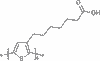
Description: Poly [3-(6-carboxyhexyl)thiophene-2,5-diyl] regioregular
- Features: Electrically Conductive Compound, Specialty / Other
- Industry: Electronics, Semiconductor / IC's
- Form / Shape: Liquid
- Type: Thermoplastic
-
Supplier: Polyplastics USA, Inc.
Description: As was mentioned in the history column, commercial production of polyphenylene sulfide (PPS) was commenced in 1973 by U.S. company Phillips Petroleum. Demand has expanded over the years on account of the resin's high heat resistance. However, the material came to be known as a brittle one because
- Deflection Temperature (@ 264 psi, 1.8 MPa): 527 F
- Coeff. of Thermal Expansion (CTE): 5.555555555555555 to 16.666666666666668 µin/in-F
- Tensile Strength (Break): 18,854.7891164356 psi
- Elongation: 1.1 %
-
Supplier: Performance Polymers Group
Description: The ChronoFlex AR and ChronoFlex AR-LT product lines are polycarbonate urethanes designed for molding, casting and dip coating applications. These unique materials are fully synthesized in liquid providing superior strength & elongation while maintaining the inherent polycarbonate advantage
- Tensile Strength (Break): 3,000 to 10,000 psi
- Elongation: 500 to 1,200 %
- Viscosity: 100 to 50,000 cP
- Features: Biocompatible
-
Supplier: 3M Advanced Materials Division
Description: In 1969, astronauts boarded the Apollo 11 spacecraft wearing boots containing 3M™ Dyneon™ Fluoroelastomers. Today, these synthetic elastomeric materials are used in some of the toughest environments on earth. From hot-running automotive engines to harsh chemicals of semiconductor manufacturing and
- Tensile Strength (Break): 1,522.88681325057 to 2,581.65574055811 psi
- Tensile Modulus: 0.5801473574287881 to 1.2328131345361701 ksi
- Elongation: 170 to 350 %
- Industry: Aerospace, Automotive, Building / Construction, Electric Power, Electronics, Energy Conversion (Battery/Fuel Cell/PV), Industrial, Marine, Medical / Food (FDA), Military / Government (MIL-SPEC), Semiconductor / IC's
-
Supplier: Performance Polymers Group
Description: ChronoSil is a family of polycarbonate based silicone elastomers. These biocompatible materials maintain the inherent benefits of polycarbonate-based urethanes, including high pressure resistance, tensile-strength and superior chemical resistance combined with silicone’s industry recognized
- Tensile Strength (Break): 3,300 to 10,000 psi
- Elongation: 350 to 650 %
- Melt Flow Index (MFI): 2 to 26 g / 10 minutes
- Water Absorption: 0.59 to 0.62 %
-
Supplier: Port Plastics, Inc.
Description: Furthermore, this PPS polymer combines excellent mechanical properties with a very high heat and chemical resistance to an optimized Semicon plastic.
- Features: Other, Polysulphide (PPS)
- Type: Thermoplastic
-
Supplier: MCA - Advanced Materials Division
Description: ultra high strength carbon fiber + PPS injection molding compound” No stock shapes offered, only injection molding pellets.
- Tensile Strength (Break): 39,000 psi
- Tensile Modulus: 4,300 ksi
- Elongation: 1.4 %
- Filler: Carbon / Graphite
-
Supplier: Port Plastics, Inc.
Description: Techtron® PPS offer the broadest resistance to chemicals of any advanced engineering plastic. They have no known solvents below 392°F (200°C) and offer inertness to steam, strong bases, fuels and acids.
- Use Temperature: 392 F
- Features: Polysulphide (PPS)
- Type: Thermoplastic
-
Supplier: Epoxy Technology
Description: Thermally Conductive Adhesives (TCAs) are electrically insulating materials that conduct heat as an adhesive or encapsulant. These products are typically oven cured or set at room temperature and are available in a range of viscosities. Our TCAs are well known for resisting hostile environments,
- Use Temperature: 617 F
- Thermal Conductivity: 1.7 W/m-K
- Coeff. of Thermal Expansion (CTE): 15 to 75.55555555555556 µin/in-F
- Dielectric Constant: 3.73
-
Supplier: Georgia-Pacific Chemicals LLC
Description: GP® 486G34 phenolic resin is used in conjunction with GP® 4826 catalyst for the manufacture of FRP. Specifically developed for hand layup and RTM, the system is also suitable for other FRP processes including filament winding. By varying the amount of the catalyst mixture in the GP 486G34 resin,
- Viscosity: 350 to 750 cP
- Industry: Industrial
- Form / Shape: Liquid
- Chemical System: Phenolics (Melamine, Furan)
-
Supplier: Hapco, Inc.
Description: Flexible, 45, 65 and, 95 shore A hardness, potting and encapsulating systems. Flame retardant (FR), accelerated 3 minute (-3) gel time, and black or unpigmented versions are available.
- Use Temperature: 158 F
- Thermal Conductivity: 0.21634185 W/m-K
- Tensile Strength (Break): 125 psi
- Elongation: 25 %
-
Supplier: Bluestar Silicones USA Corp.
Description: Resin - Polyaddition heat curing - Translucent Solventless, Quick curing, Good release properties, Good bath stability Outstanding thermal stability, High adhesion to many substrates, Engine fluids resistance (Lubricant, Cooling liquid, …) Properties Viscosity 8500 Description Varnishing of
- Industry: Automotive
- Form / Shape: Liquid
- Chemical System: Silicone
- Type: Thermoset
-
Supplier: Real Seal Company
Description: strength. Polyurethanes are also unique in that they have a number of serviceable forms, from low strength liquids to highly cross-linked thermoplastics. Real Seal commonly handles the two most often used in the sealing industry; Thermosetting and Thermoplastic. Although Real Seal is known
- Tensile Strength (Break): 5,130 psi
- Tensile Modulus: 0.88 ksi
- Elongation: 632 %
- Industry: Automotive, Building / Construction, Industrial, Tooling / Molds
-
Supplier: Georgia-Pacific Chemicals LLC
Description: A waterborne resin developed for use in the manufacture of FRP, specifically for honeycomb and prepreg that meets the requirements of Military Specification MIL-R-9299C. The product is formulated to provide low smoke generation, flame resistance and strength as well as fire resistance.
- Viscosity: 100 to 200 cP
- Industry: Industrial
- Form / Shape: Liquid
- Chemical System: Phenolics (Melamine, Furan)
-
Supplier: Real Seal Company
Description: strength. Polyurethanes are also unique in that they have a number of serviceable forms, from low strength liquids to highly cross-linked thermoplastics. Real Seal commonly handles the two most often used in the sealing industry; Thermosetting and Thermoplastic. Although Real Seal is known
- Tensile Strength (Break): 6,121 psi
- Tensile Modulus: 3.63 ksi
- Elongation: 422 %
- Industry: Automotive, Building / Construction, Industrial, Tooling / Molds
-
Supplier: Epoxy Technology
Description: EPO-TEK® medical grade (or biocompatible) epoxy adhesives are used extensively throughout the healthcare and biotech industries. Device manufacturers making cardiac, ophthalmic, skeletal and neurological implants rely on our adhesives for protection, while the endoscopy camera market requires
- Use Temperature: 545 F
- Coeff. of Thermal Expansion (CTE): 32.77777777777778 to 74.44444444444444 µin/in-F
- Index of Refraction: 1.5193
- Light Transmission: 95 to 98 %
-
Supplier: Hapco, Inc.
Description: DI-COAT R-4721 / DI-COAT R-4721 LV (lower viscosity) Shore 90 D, room temperature curing, medium to high thixotropic coating for dielectric insulating applications. DI-COAT R-4721 is ideal for use on vertical or sloping surfaces where flow or drain-off cannot be tolerated. DI-COAT R-4721 is easy to
- Use Temperature: 325.4 F
- Thermal Conductivity: 0.41826091 W/m-K
- Tensile Strength (Break): 7,000 psi
- Elongation: 0.6 %
-
Supplier: Epoxy Technology
Description: spectrometer and fiber-optic circuitry. Additionally, they ruggedize and toughen LCD touch panels as the transparent adhesive for plastic lamination. Through liquid injection molding, our optical epoxies form the plastic cap over LEDs. More recently, solar cells require our UV curing resin
- Use Temperature: 572 F
- Coeff. of Thermal Expansion (CTE): 33.888888888888886 to 100 µin/in-F
- Dielectric Constant: 3.8
- Index of Refraction: 1.5318
-
Supplier: Georgia-Pacific Chemicals LLC
Description: A high temperature phenolic resin developed for use in the manufacture of fiber-reinforced polymer (FRP) that meets the requirements of Military Specification MIL-R-9299C, Type II, Class 2. The product is formulated to provide low smoke generation, flame resistance and strength as well as
- Viscosity: 400 to 800 cP
- Industry: Aerospace, Military / Government (MIL-SPEC)
- Form / Shape: Liquid
- Chemical System: Phenolics (Melamine, Furan)
-
Supplier: Real Seal Company
Description: strength. Polyurethanes are also unique in that they have a number of serviceable forms, from low strength liquids to highly cross-linked thermoplastics. Real Seal commonly handles the two most often used in the sealing industry; Thermosetting and Thermoplastic. Although Real Seal is known
- Tensile Strength (Break): 8,622 psi
- Tensile Modulus: 1.041 ksi
- Elongation: 532 %
- Industry: Automotive, Building / Construction, Industrial, Tooling / Molds
-
Supplier: Epoxies Etc...
Description: 70-3810 is a low viscosity, aluminum filled epoxy casting and tooling resin. This system is used for making heat resistant cast tools or parts that require high heat resistance and thermal conductivity. 70-3810 utilizes a new polymer resin that offers better heat resistance than most
- Use Temperature: -103 to 572 F
- Thermal Conductivity: 1.80284875 W/m-K
- Coeff. of Thermal Expansion (CTE): 2.5 µin/in-F
- Tensile Strength (Break): 14,500 psi
-
Supplier: Georgia-Pacific Chemicals LLC
Description: GP Chemicals offers ready-to-use adhesive formulations which can be adjusted to accommodate the differences in customers’ processes. Our plywood ready-to-use and laminated veneer lumber (LVL) ready-to-use mix adhesives are supplied in liquid form. They can be used with most hardwood and
- Industry: Industrial
- Form / Shape: Liquid
- Chemical System: Phenolics (Melamine, Furan)
- Type: Thermoset
-
Supplier: Real Seal Company
Description: strength. Polyurethanes are also unique in that they have a number of serviceable forms, from low strength liquids to highly cross-linked thermoplastics. Real Seal commonly handles the two most often used in the sealing industry; Thermosetting and Thermoplastic. Although Real Seal is known
- Tensile Strength (Break): 5,800 psi
- Elongation: 380 %
- Industry: Automotive, Building / Construction, Industrial, Tooling / Molds
- Features: Elastomer / Rubber, Thermoset (Crosslinked / Vulcanized)












Find Suppliers by Category Top
Featured Products Top
-
 encapsulation applications. EP21LSCL-2Med is specially formulated to have minimal non-yellowing tendencies. This system features a high glass transition temperature (Tg), good resistance to steam and water, liquid sterilants and EtO sterilization. The service temperature range is from -60°F to (read more)
Browse Industrial Adhesives Datasheets for Master Bond, Inc.
More Information Top
 Indicates content that may require registration and/or purchase.

-
Handbook of Adhesives and Sealants, Second Edition > OTHER THERMOSETTING ADHESIVES
The liquid polysulfide polymer can be transformed from a liquid state into a solid elastomer, even at low temperatures.
-
Polysulfide sealant compositions. II. Interactions between elemental sulfur and organosulfur compounds
When the procedure was applied to polysulfide liquid polymers , products with substantial levels of tri‐ and tetra‐sulfide links were formed.
-
Characterization of cured polysulfide polymers by thermal degradation: Pyrolysis‐GC and thermogravimetric studies
Abstract Polymers prepared by curing thiol‐terminated liquid polysulfide polymer [HS(RS2)nRSH, R = CH2CH2OCH2OCH2CH2] with p‐quinonedioxime, PbO2, and MnO2 were studied by pyrolysis‐GC and thermogravimetry.
-
http://repositories.lib.utexas.edu/bitstream/handle/2152/21169/SAMARAS-DISSERTATION-2013.pdf?sequence=1
Polysulfide liquid polymer compound is applied as exterior coating to protect sensors installed in harsh environments.
-
Adsorption of polysulphide sealants onto organosilane‐coated aluminium and aluminium substrates
Sealants based on polysulphide liquid polymers are exten- sively employed for many applications such as aircraft use requiring high flexibility, good adhesion and chemical resistance.1 Polysulphide sealants are currently also estab- lished as sealants for aircraft fuel tanks.
-
Polysulfide Rubber
ABSTRACT: The chemistry of Thiokol LP® liquid polysulfide polymers and their ambient temperature vulcanization to rubbery products is presented.
-
Polysulfide Elastomers
A number of liquid polysulfide polymers have been commercialized and these are supplied in a range of viscosities, molecular weights and functionalities.
-
Thiol modification of difunctional castor oil and its utility as room temperature setting elastomeric material
Elastomeric products have been obtained from CODT alone and in combination with liquid polysulfide polymer LP‐33 by oxidative cure with manganese dioxide.
-
Effect of curing agents on some properties of a polysulfide sealant
Sealants based on polysulfide liquid polymers are widely used in aircraft industry, construction, shipbuilding, and gas main sealing.