
Products & Services
See also: Categories | Featured Products | Technical Articles | More Information-
Supplier: Evident Scientific
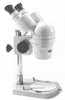
Description: The SZX7 stereo microscope, features a 7:1 zoom ratio and built in Electro Static Discharge protection, uses an advanced Galilean optical system, providing brilliant highly resolved images with easy access controls for comfortable viewing at an affordable price.
- Total Magnification: 4 to 336 X
- Grade: Benchtop
- Eyepiece Style: Binocular, Trinocular
- Microscope Type: Compound, Stereomicroscope
-
Supplier: Nikon Metrology
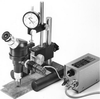
Description: Nikon's new MM-200 Measuring Microscope is compact and lightweight with an affordable price for all who require precision and accuracy for measuring a variety of metal, plastic, and electronic parts in all industries; especially automotive and electronics. This powerful new
- Total Magnification: 1 to 10 X
- Grade: Benchtop
- Remote Interface: Computer Interface
- Application: Measuring / Toolmaker
-
Supplier: Titan Tool Supply, Inc.
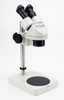
Description: respectively. Extra objectives can be purchased as optional extras to allow for a magnification range from 6X to 80X. The microscope is an excellent value for its purchase price. It is ruggedly constructed and can be used in a shop environment. The microscope body is rotatable
- Total Magnification: 6 to 80 X
- Field of View: 2.793998491240815 to 25.653986146847483 mm
- Working Distance: 31.495982992169186 to 229.99687580168708 mm
- Grade: Benchtop
-
-
Supplier: WDI Wise Device Inc.
Description: The LSCM has the advantages of a confocal laser scanning microscope with the size and price of an IR camera. The combination of high contrast imaging, infrared capabilities, extremely small size and low cost enables many new applications.
- Application: Biological / Life Science, Semiconductor Inspection
- Remote Interface: Computer Interface
- Features: Digital Display, Other
- Microscope Type: Laser / Confocal
-
Supplier: Titan Tool Supply, Inc.
Description: in .0001" or (2 Micron) divisions. The indicator is set and zeroed in the top of the Microscope and their displacement is recorded as the focusing is done from Point A to Point B. (This indicator is not furnished nor included in the price of the Microscope). The bracket provided
- Total Magnification: 100 to 400 X
- Grade: Benchtop
- Application: Measuring / Toolmaker
- Features: Monocular
-
Supplier: Mad City Labs, Inc.
Description: The MCL-MOTNZ is a value priced positioning system for use with inverted optical microscopes. The MCL-MOTNZ combines a stepper motor XY linear motion stage with a closed loop, high resolution, Z-axis piezo nanopositioning system. The micropositioning stage provides 25 mm of travel per axis
- Maximum X-Distance: 25 mm
- Maximum Y-Distance: 25 mm
- Minimum Step Size (Resolution): 0.095 µm
- Stage Type: Motorized Stage, Z-Axis Stage
-
Supplier: Nikon Metrology
Description: Ideal as an educational microscope or for routine laboratory use for biology, geology and industry, the Eclipse E200 POL incorporates Nikon's acclaimed CFI60 infinity optical system to provide a high quality, compact and easy-to-use polarizing microscope at a modest price.
- Grade: Benchtop, Student
- Eyepiece Style: Binocular, Trinocular
- Application: Biological / Life Science
- Features: Digital Display, Fine Focus, Mechanical Stage
-
Supplier: Parco Scientific Company
Description: A precision-built, tamper-proofed microscope uniquely designed incorporating high resolution flat field objectives with wide-angle viewing. This quality, full-size oil immersion microscope is offered at a great price. This Parco model features a low position graduated mechanical
- Eyepiece Style: Binocular
- Application: Biological / Life Science
- Grade: Student
-
Supplier: Parco Scientific Company
Description: The BMT inclined microscope has a great reputation and is a classroom favorite. Known for durability and versatility this instrument can be used effectively for most classroom studies. Offers advanced microscope features at an affordable price. Suitable for grades 8 to 12.
- Application: Biological / Life Science
- Grade: Student
-
Supplier: Titan Tool Supply, Inc.
Description: This Extra Wide Field Stereo Microscope features unusually long Focal Lengths and great Depths of Field in the Lower Magnifications. The accompanying larger fields of view offer greater versatility than most Stereo Microscopes available for Medical or Industrial Applications. Ideal for
- Total Magnification: 5 to 40 X
- Field of View: 7.010396214386045 to 66.92896385835951 mm
- Working Distance: 85.08995405142481 to 511.1747239656491 mm
- Grade: Benchtop
-
Supplier: Parco Scientific Company
Description: The SBH-6100 series is engineered to meet the state of the art needs of progressive laboratories and classrooms. This microscope features many control functions to allow precise optical clarity. It has rugged construction and high optical standards at an affordable price. Limited
- Eyepiece Style: Binocular
- Application: Biological / Life Science
- Grade: Student
-
Supplier: Parco Scientific Company
Description: The Parco PSC-90 Series student microscope is ruggedly designed, durable and made from metal. This series meets the standard essential teaching requirements for use by junior and high school students, yet is economically priced for those on limited budgets. These full size microscopes
- Application: Biological / Life Science
- Grade: Student
-
Supplier: Teledyne FLIR IIS
Description: Whether you are shopping for the best price-to-performance microscopy camera to include with your new microscope setup, or you are looking to retrofit and older microscope to make it useful again, there is just the right INFINITY microscopy camera to meet your needs. Using the
- Monochrome / Color: Color
-
Supplier: Cole-Parmer
Description: • Excellent optical clarity and image brightness at an affordable price This microscope features a rotating 10x eyepiece with revolving pointer and DIN achromatic 4x, 10x, and 40x retractable objective lenses. The head rotates 360
. The built-in LED illuminator has a 5-watt bulb - Total Magnification: 400 X
- Microscope Type: Compound
- Features: Monocular
-
Supplier: Titan Tool Supply, Inc.
Description: not a stereo microscope lens reapplied, but rather is designed especially for video applications. Using this approach, we are able to offer more features that broaden the System's application range, make it easier to use and lower the retail price. The Zoom Lens is available with a
- Total Magnification: 0.35 to 2 X
- Features: Digital Display, Monocular
- Application: Measuring / Toolmaker
-
Supplier: JENOPTIK Optical Systems, Inc.
Description: for easy operation included Easy and fast installation Excellent price-performance ratio Reach your goal faster with >SpeedXT core - technology – faster installation, faster focussing, faster capture – in proven Jenoptik CCD quality!
- Horizontal Resolution: 2,080 lines
- Maximum Frame Rate: 17 fps
- Width / Diameter: 3.3070884 inch
- Height: 3.6614193 inch
-
Supplier: Cole-Parmer
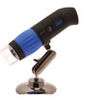
Description: • Digital magnification at an affordable price • Metal stand is included for easy microscope positioning • Rubberized coating provides a non-slip, durable grip Ideal for laboratory research, printing inspection, textile inspection, quality control, and more! Eight white LEDs provide
- Total Magnification: 50 X
- Features: Other
-
Supplier: Zaber Technologies, Inc.
Description: Compatible with a wide variety of objectives up to 250 g and 35 mm barrel diameter. The objective turret is a modular add-on for the MVR and MSR series of automated microscopes. Use our Microscope Configurator to select the modules you need for your application. High-speed focus
- Features: Other
-
Supplier: Prior Scientific, Inc.
Description: Key features: Suitable for most major brand microscopes. 7µm or better repeatability Economic and robust Wide range of sample holders. The ES107 OptiScan™ stage for inverted microscopes offers the optimum compromise between price and performance. The ES107 has been designed to
- Maximum X-Distance: 115 mm
- Maximum Y-Distance: 77 mm
- Minimum Step Size (Resolution): 1 µm
- Stage Type: Motorized Stage
-
Supplier: Prior Scientific, Inc.
Description: Key features: Suitable for most major brand microscopes. 5µm or better repeatability (when used with Prior OptiScan™ Controller) Economic and robust Wide range of sample holders. The ES111 OptiScan™ stage for upright microscopes offers the optimum compromise between price and
- Maximum X-Distance: 126.00000000000001 mm
- Maximum Y-Distance: 76 mm
- Minimum Step Size (Resolution): 0.09999999999999999 µm
- Stage Type: Motorized Stage
-
Supplier: Chroma Technology Corp.
Description: Microscopes: Filter cube mounting options are available when adding to cart. Listed price applies to sizes up to either 25mm diameter or 26x38mm, in 1mm thickness, to fit standard microscope manufacturer filter cubes.
- Diameter, Square Side, or Rectangular Length: 25 mm
- Filter Shape: Circular, Rectangular
- Filter Type: Hot Mirrors
- Features: Infrared (IR), Ultra-Violet (UV), Visible (VIS)
-
Supplier: Chroma Technology Corp.
Description: Microscopes: Filter cube mounting options are available when adding to cart. Listed price applies to sizes up to either 25mm diameter or 26x38mm, in 1mm thickness, to fit standard microscope manufacturer filter cubes.
- Diameter, Square Side, or Rectangular Length: 25 mm
- Thickness: 1 mm
- Filter Shape: Circular, Rectangular
- Features: Other
-
Supplier: Chroma Technology Corp.
Description: Microscopes: Filter cube mounting options are available when adding to cart. Listed price applies to sizes up to either 25mm diameter or 26x38mm, in 1mm thickness, to fit standard microscope manufacturer filter cubes.
- Wavelength Range: 325 to 1,200 nm
- Transmittance: 0 to 75 %
-
Supplier: Chroma Technology Corp.
Description: Microscopes: Filter cube mounting options are available when adding to cart. Listed price applies to sizes up to either 25mm diameter or 26x38mm, in 1mm thickness, to fit standard microscope manufacturer filter cubes.
- Diameter, Square Side, or Rectangular Length: 26 to 50 mm
- Filter Shape: Circular, Rectangular
- Filter Type: Hot Mirrors
- Features: Infrared (IR), Ultra-Violet (UV), Visible (VIS)
-
Supplier: JEOL USA, Inc.
Description: objective lens, thus providing a substantial improvement in image contrast of frozen-hydrated specimen. Manufacturing of the HFPP uses a unique methodology resulting in robust and reliable performance at reasonable prices. Auto focus, auto coma-free alignment, auto parallel-beam illumination
-
Supplier: Park Systems, Inc.
Description: The XE-100 is our flagship AFM with reduced drift rate and the Step-and-Scan Automation that provides the ultimate AFM/SPM performance in Non-Contact nanoscale metrology. It is a mid-priced system for materials science, polymers, electrochemistry and other applications in nanoscience and
- Total Magnification: 160 to 1,500 X
- Resolution: 1,000 nm
- Field of View: 0.36000000000000004 to 0.48000000000000004 mm
- Lateral Resolution: 1,000 nm
-
Supplier: Edmund Optics Inc.
Description: Ideal for Brightfield, Darkfield, or Fluorescence Microscopy Excellent Price-to-Performance Ratio Suitable for Introductory and Advanced Optical Microscopy Applications Additional Olympus Infinity-Corrected Objectives Available Olympus Plan Achromatic Objectives are designed for clinical
- Magnification: 100 X
- Numerical Aperture: 1.25 NA
- Working Distance: 0.15000000000000002 mm
- Lens Type: Objective Lens
-
Supplier: Edmund Optics Inc.
Description: Ideal for Brightfield, Darkfield, or Fluorescence Microscopy Excellent Price-to-Performance Ratio Suitable for Introductory and Advanced Optical Microscopy Applications Additional Olympus Infinity-Corrected Objectives Available Olympus Plan Achromatic Objectives are designed for clinical
- Magnification: 20 X
- Numerical Aperture: 0.4 NA
- Working Distance: 1.2000000000000002 mm
- Lens Type: Objective Lens
-
Supplier: Edmund Optics Inc.
Description: Ideal for Brightfield, Darkfield, or Fluorescence Microscopy Excellent Price-to-Performance Ratio Suitable for Introductory and Advanced Optical Microscopy Applications Additional Olympus Infinity-Corrected Objectives Available Olympus Plan Achromatic Objectives are designed for clinical
- Magnification: 40 X
- Numerical Aperture: 0.65 NA
- Working Distance: 0.6000000000000001 mm
- Lens Type: Objective Lens














Find Suppliers by Category Top
Featured Products Top
-
 Specially-designed lens option for high-resolution imaging of small light source and display features The Radiant Vision Systems Microscope Lens enables high-resolution imaging of extremely small components and features, such as individual LEDs, display pixels, and (read more)
Browse Datasheets for Radiant Vision Systems -
Microscope XY Stage Democratizes Piezo Motor Advantages: Low Profile, 10nm Resolution, High (read more)
Browse Linear Slides and Linear Stages Datasheets for PI (Physik Instrumente) L.P. -
Vibration Isolation Table Vibration Control for Optical Microscopes and Precision Balances Using NonBuren, with its excellent vibration damping and shock absorption, we’ve achieved a level of vibration control that goes beyond conventional rubber (read more)
Browse Vibration Isolators and Machine Mounts Datasheets for Links-Japan, LLC -
EOL is a world leader in the development and manufacture of leading edge, high performance, high stability Transmission Electron Microscopes (TEM). JEOL introduced its first TEM over 70 years ago and has been developing and producing TEMs (read more)
Browse Electron Microscopes Datasheets for JEOL USA, Inc. -
Microscope objectives are designed to magnify an object by a specific factor, ranging from 4x (a scanning objective) to 40x (a high-power objective), and even up to 100x for an oil immersion lens. To maximize flexibility, microscopes are often equipped with up to four objectives mounted on a (read more)
Browse Microscope Lenses and Objectives Datasheets for Avantier Inc. -
Cutting edge technology support by THK-NM1 MRI Scanner Electron Microscope NMR Spectrometer Electron Beam Lithography System Learn More (read more)
Browse Roller Bearings Datasheets for THK America, Inc. -
inVia Raman Microscope from Renishaw Renishaw's inVia Raman microscopes are high-sensitivity systems with integrated research grade microscopes, enabling high resolution confocal measurements (read more)
Browse Raman Spectrometers Datasheets for Renishaw -
Vacuum Evaporator The IB-29510VET Vacuum Evaporator facilitates specimen preparation for electron microscopes. Evaporation of carbon thin films (read more)
Browse Evaporators Datasheets for JEOL USA, Inc. -
What are the applications of fused silica domes? UV applications: UV laser systems, UV spectrometers, UV microscopes. High temperature environments: high temperature imaging, laser processing, high temperature sensors. (read more)
Browse Optical Lenses Datasheets for Changchun Yutai Optics Co., Ltd. -
Want to detect smaller defects? Looking for sharper, clearer inspection images? In semiconductor inspection and failure analysis, improving electron microscope resolution is a constant challenge. However, even with a high (read more)
Browse Power Supplies Datasheets for Daitron Co., Ltd.
Conduct Research Top
-
Understanding Microscopes
Compound microscopes differ from simple magnifiers in that there are two separate magnification steps that occur instead of one. The objective lens is nearest the subject under observation and provides a magnified real image. The eyepiece magnifies the real image provided by the objective
-
How to Choose a Microscope
If you're out to buy a microscope and are confused, you're not alone. There are many different types of microscopes out there to choose from, but I believe the easiest way to narrow down your choices is by determining what you are going to use the microscope for.
-
Choosing the Correct Microscope
Choosing is simply a question of getting the right tool for the job. Since microscopes are put to such a wide range of uses, there are naturally many types of microscopes and specialized accessories. This is a brief guide to the types of microscopes that Meiji Techno offers and the applications
-
Fine Positioning of a Surgical Microscope
Surgical procedures require a perfect view of the operating area. Here, the surgeon is often supported by a surgical microscope. To enable the surgeon to best position the microscope and to give the surgical team more room to move, the microscope optics are mounted to long arms on a stand.
-
What Is a Digital Microscope?
If you†TMve ever worked in a lab, you know an optical microscope uses an eyepiece and objective to magnify a small object. But as technology continues to advance, digital microscopes are becoming more popular. Today†TMs blog post will share what a digital microscope is, explore how it works
-
Introduction to Microscopes and Objective Lenses
Microscopes magnify objects and reveal hidden details. They consist of lenses, filters, polarizers, and beamsplitters. Magnification and resolution are the two main specifications of a microscope. Magnification enlarges the image, while resolution determines how far apart two points must
-
Is a DIY Microscope For You?
This article helps readers determine whether a do-it-yourself (DIY) microscope is the appropriate solution for their application. It then details how to procure an instrument that meets both current and future application needs while remaining cost effective.
-
Basic Principles of Laser Scanning Microscopes
microscope is gathering attention as the device of choice for easy three-dimensional surface profile measuring in air, without touching the sample. Covered within are the basic principles of and the features and applications of Olympus industrial laser scanning microscopes, with primary focus
More Information Top
 Indicates content that may require registration and/or purchase.

-
Equipment components and system board for an automated microscopy system
This element causes a 10 30% increase in the microscope price (with motor driven screw of fine focusing), but sig nificantly increases efficiency of mass scale dialog analy sis of thick preparations or volume objects.
-
Microscopes, New and Used Microscopes For Sale | LabX Classifieds & Auctions
Make: OLYMPUS BX51 Fluorescence Phase Microscope Price : 14,500.00 .
-
Low-price optical microscope for school science education
By these reasons, this apparatus is low-price (less than microscope price ) so that it is one of the best candidates for science education application in schools.
-
Electron Microscopes | New & Used SEM's, TEM's For Sale | LabX Classifieds
Make: JEOL JSM-5800 Scanning Electron Microscope Price : Please Call .
-
The role of the haemocytes of Clitumnus extradentatus in haemolymph coagulation
Because of difficulties in identifying the haemocyte types of C. extradentatus in the electron microscope ( Price , 1974), the general morphology of the cystocytes and granular cells is first described.
-
Apatite Chlorine Concentration Measurements by LA ‐ ICP ‐ MS
For analysis, fission tracks are enlarged using a standardised chemical etching process so they can be observed under an optical microscope ( Price and Walker 1962).
-
A three‐dimensional model of membrane ruffling from transmission and scanning electron microscopy of cultured monkey kidney cells (LLCMK 2 ) *
Preliminary observations of thin sections of ruffled membrane with the electron microscope ( Price , 1968) gave some indication of the structure involved in this activity, and suggested that more information about the role of ruffling in cell movement and endocytosis could be obtained …
-
USA | New York | New | Used | Surplus Equipment | Page 4
Make: JEOL JSM-5800 Scanning Electron Microscope Price : Please Call .