
Products & Services
See also: Categories | Featured Products | Technical Articles | More Information-
Supplier: Terra Universal, Inc.
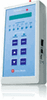
Description: internal battery enhances versatility of operation This compact, economical Laser Particle Counter allows convenient, accurate, and reliable airborne particle counting in a wide variety of critical applications. Though it is barely larger than a television's remote control,
- Particle Size Range: 0.5 to 25 µm
- Sample Type: Aerosol / Gas (Droplets / Dust)
- Technology: Blockage / Attenuation
- Display & Special Features: Computer Interface / Networkable, Process Line / Continuous, Video / Graphic Display
-
Supplier: Hach
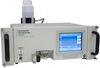
Description: The Hach model 2200 PCX is the first particle counter designed specifically to meet the unique requirements of water treatment. The model 2200 PCX can be integrated into your plant control system, used with our water quality software products, or both in parallel. Collected data can be
- Particle Size Range: 2 to 750 µm
- Measurement Type: Count, Size
- Technology: Diffraction / Scattering
- Display & Special Features: Digital Readout, Process Line / Continuous
-
Supplier: PCE Instruments / PCE Americas Inc.
Description: The particle counter PCE-RCM 12 is used for indicative testing of environmental parameters. The particle counter PCE-RCM 12 enables the measurement of CO2, fine dust, temperature and relative humidity. The bright display of the particle counter provides
- Sample Temperature: 32 to 122 F
- Sample Type: Aerosol / Gas (Droplets / Dust)
- Measurement Type: Count
- Display & Special Features: Digital Readout
-
-
Supplier: TSI Incorporated
Description: Ultrafine particles are omnipresent in our atmosphere, and their number concentration can be very strongly influenced by weather and local particle sources, such as traffic. The Model 3783 Environmental Particle Counter was developed especially for near-freeway
- Measurement Type: Count
-
Supplier: KANOMAX USA, INC.
Description: No Description Provided
- Particle Size Range: 0.1 µm
- Display & Special Features: Analog Meter
- Measurement Type: Count
- Sample Type: Powder / Solid Particles
-
Supplier: Accuris
Description: Surface Particle Counters
-
Supplier: Cubic Sensor and Instrument Co.,Ltd.
Description: PM5000 laser particle sensor module is based on laser scattering technology, which can accurately detect and calculate the number of suspended particles with different particle sizes in the air per unit volume. The built-in new patented technology intelligent identification of
- Operating Temperature: -22 to 158 F
- Electrical Output: Analog Current, Analog Voltage
- Input Power: DC Power
- Computer Interface: Other
-
Supplier: KANOMAX USA, INC.
Description: No Description Provided
- Particle Size Range: 0.3 to 5 µm
- Display & Special Features: Computer Interface / Networkable, Digital Readout
- Measurement Type: Count
- Sample Type: Powder / Solid Particles
-
Supplier: PCE Instruments / PCE Americas Inc.
Description: This Particle Counter Device has many functions. With the Particle Counter Device it is possible to determine the number of particles in the size of 0.3, 2.5 and 10 µm. In addition to measuring the particles, the Particle Counter Device can
- Sample Temperature: 32 to 122 F
- Sample Type: Aerosol / Gas (Droplets / Dust)
- Measurement Type: Count
- Display & Special Features: Digital Readout, Handheld / Field
-
Supplier: InspectorTools
Description: LED display. The user is able to monitor particle concentration changes as they occur, and allows individual pollution sources to be tracked down by using the ParticleScan® as a “particle sniffer”. Additionally, ParticleScan® Instruments can identify single particles from 0.3
-
Supplier: InspectorTools
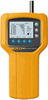
Description: Model Includes: Certificate of Calibration (NIST) Windows-compatible software download utility DB9 to RS-232 adapter and cable Isokinetic probe Zero count filter High purity tubing 1/8 in. hose barb adapter Power supply Operation manual Hard molded plastic case The new Fluke 983 Particle
-
Supplier: TSI Incorporated
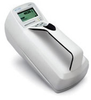
Description: Mobile instruments like this Condensation Particle Counter (CPC) are designed to measure particle concentrations in the field. This Handheld CPC can be used to assess concentrations or emissions in larger buildings or areas, such as schools, workplaces, hospitals and other
- Measurement Type: Count
-
Supplier: TSI Incorporated
Description: The gold standard in nanoparticle counting for many decades is now updated with newly extended size and concentration range. TSI Condensation Particle Counters (CPCs) are the most referenced, backed up by 40+ years of experience. The 4th generation makes the best CPCs even better:
- Measurement Type: Count
-
Supplier: Newark, An Avnet Company
Description: HANDHELD PARTICLE COUNTER
-
Supplier: KANOMAX USA, INC.
Description: No Description Provided
- Particle Size Range: 0.015 to 1 µm
- Display & Special Features: Computer Interface / Networkable, Video / Graphic Display
- Measurement Type: Count
- Sample Type: Powder / Solid Particles
-
Supplier: TSI Incorporated
Description: This Condensation Particle Counter (CPC) is the long-standing reference for counting ultrafine particles down to 2.5 nm. TSI CPCs are the most referenced Condensation Particle Counters, backed up by 40+ years of experience. The 4th generation makes the best CPCs
- Measurement Type: Count
-
Supplier: Analytical Technology, Inc.
Description: ATIs Model C10/77 Particle Counter is designed to provide valuable particle data by continuously monitoring particle counts in raw water, filter influent, or filter effluent. Based on a laser light blocking principle, this sensor will provide particle count data
-
Supplier: InspectorTools
Description: of contamination Verify particle concentrations within seconds Test the integrity of HEPA filter banks Track down contamination sources Establish a particle concentration profile Monitor and log particle concentrations for record keeping and reporting Optimize contamination
-
Supplier: Accuris
Description: LIQUID AUTOMATIC PARTICLE COUNTERS & CONTAMINATION
-
Supplier: Accuris
Description: Aerosol particle number concentration - Calibration of condensation particle counters
-
Supplier: Accuris
Description: Light Scattering Automatic Particle Counter
-
Supplier: PCE Instruments / PCE Americas Inc.
Description: PCE-PCO 1 is a laser particle counter, or dust measuring device, for measuring the concentration of particles in the air. The PCE-PCO 1 dust measuring device is ideal for monitoring clean rooms, indoor air quality, exposure to exhaust, smoke and other harmful air pollutants, and
- Particle Size Range: 0.3 to 10 µm
- Sample Temperature: 32 to 122 F
- Sample Type: Aerosol / Gas (Droplets / Dust)
- Display & Special Features: Computer Interface / Networkable, Handheld / Field, SPC Software / Capability, Video / Graphic Display
-
Supplier: InspectorTools
Description: The Model GT-521 Hand-Held Optical Particle Counter with built-in temperature/relative humidity probe. The GT-521 is a full-feature laser particle counter, sized right for your hand, priced right for your budget. With user-programmable sizes, the GT-521 meets the
-
Supplier: Suzhou Jiujon Optics Co., Ltd
Description: innovation in laser particle counting technology - plano-concave mirrors for laser particle counters. This revolutionary accessory is designed to increase the accuracy and sensitivity of any laser particle counter, regardless of make or model. Plano-concave mirrors
- Surface Quality: 60-40 Scratch / Dig
- Features: Other Mirror Material
- Mirror Coatings: Protected Gold
- Mirror Shape: Round
-
Supplier: Terra Universal, Inc.
Description: Lightweight and compact portability allows measuring in hard-to-reach areas Reliable solid-state laser sensor provides a long, trouble-free service life Isokinetic probe is built into processor housing Two available models, with sensitivity ranges of 0.3µm to 5µm or 0.5µm to 5µm Rechargeable
- Particle Size Range: 0.3 to 5 µm
- Sample Type: Aerosol / Gas (Droplets / Dust)
- Technology: Blockage / Attenuation
- Display & Special Features: Computer Interface / Networkable, Handheld / Field, Process Line / Continuous, Video / Graphic Display
-
Supplier: CSA Group
Description: particle number concentration, the particle size, and the particle composition. The particle sizes covered by the methods described in this International Standard range from approximately 5 nm to 1 000 nm. The methods can therefore be used both to determine a CPC
-
Supplier: AMETEK Spectro Scientific
Description: allows reliability professionals to make informed decisions on the maintenance of their critical assets. Key Features ASTM D7596 - Standard Test Method for Automatic Particle Counting and Particle Shape Classification of Oils Using a Direct Imaging Integrated Tester Particle
-
Supplier: ASTM International
Description: Automatic Particle Counter Size Setting Method (Withdrawn 1983)
-
Supplier: SAE International
Description: Technical Standard
-
Supplier: ASTM International
Description: Method for Determining the Quality of Calibration Particles for Automatic Particle Counters (Withdrawn 1990)
-
Supplier: ASTM International
Description: spherical particles. The practice is also directed towards determination of the counting accuracy of an automatic particle counter for spherical particles that have entered the sampling inlet of that particle counter. Consideration of sampling efficiency
-
Description: size distribution of particles in various liquids. The measured particle size using the LSLPC depends on the refractive index of particles and medium; therefore the measured particle size is equivalent to the calibration particles in pure water. The following are
-
Description: ISO 21501-3:2007 describes a calibration and verification method for a light extinction liquid-borne particle counter (LELPC), which is used to measure the size and particle number concentration of particles suspended in liquid. The light extinction method described in
-
Supplier: Eaton
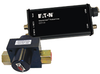
Description: Contamination class transmitter (CCT 01-Set) with an integrated, three-channel particle counter, combined with the particle flow sensor (PFS 01 laser sensor). Features: Particle counter with the PFS 01 laser sensor for hydraulic and lubrication fluids Consists of
-
Supplier: SAE International
Description: This Aerospace Recommended Practice covers the calibration and verification of automatic liquid-borne particle counter for the determination of the concentration by number and size distribution of particles in aerospace liquids. This method is intended for the standardization of









Find Suppliers by Category Top
Featured Products Top
-
 Particle Counter, Wear Particle Classifier, Ferrous Monitor Particle Analyzer The LaserNet 200 Series allows reliability professionals to quickly and (read more)
Browse Particle Analyzers Datasheets for AMETEK Spectro Scientific -
camera counts and classifies the particles from the image data. This technique provides the user with a very reliable and accurate particle counter that can tolerate a wide range of dirty and clean samples, with varying viscosities. The capability of the LaserNet Fines to (read more)
Browse Particle Analyzers Datasheets for AMETEK Spectro Scientific -
Particle counter Leveler Machine Vision LiDAR Biomedical equipment Color Projector Visible Light Communication Follow us on: (read more)
Browse Lasers Datasheets for World Star Tech -
Complete oil analysis lab with 4 technologies integrated into a small case – X-Ray Florescence (XRF) spectrometer for elemental analysis – Filter Particle Quantifier (FPQ) pore blockage particle counter – Infrared (IR) spectrometer – Kinematic viscometer (read more)
Browse Oil Sensors and Analyzers Datasheets for AMETEK Spectro Scientific -
Lab 40 model includes a particle counter which provides critical analysis for cleanliness of hydraulic oils and gear oils to determine the health of those oils and mechanical condition of those components. Monitoring equipment and oil health with oil analysis The (read more)
Browse Oil Sensors and Analyzers Datasheets for AMETEK Spectro Scientific -
leading consumer and industry magazines. Conveniently packaged in self-displaying cartons, Simichrome can be placed on your counter or shelf and it simply sells itself. Once your customers try it, they’ll keep coming back for more (read more)
Browse Abrasive Compounds and Abrasive Slurries Datasheets for Competition Chemicals, Inc. -
OKW has extended its range of electronic enclosures and tuning knobs for HVAC, climate control and environmental technology. The specialist enclosure manufacturer offers IP-rated housings for applications including wind turbine control, air quality metering, Geiger counters, agricultural (read more)
Browse NEMA and IP Enclosures Datasheets for OKW Enclosures, Inc. -
How does Simichrome work? Simichrome is specially-formulated using the finest micron particle size abrasive of any polish available combined with special cleaning agents. Because the abrasive particles are so fine, Simichrome will not harm (read more)
Browse Abrasive Compounds and Abrasive Slurries Datasheets for Competition Chemicals, Inc. -
brass, aluminum, chrome, stainless steel, and more How does Simichrome work? Simichrome is specially-formulated using the finest micron particle size abrasive of any polish available combined with special cleaning agents. Because the abrasive (read more)
Browse Abrasive Compounds and Abrasive Slurries Datasheets for Competition Chemicals, Inc. -
How does Simichrome work? Simichrome is specially-formulated using the finest micron particle size abrasive of any polish available combined with special cleaning agents. Because the abrasive particles are so fine, Simichrome will not harm (read more)
Browse Abrasive Compounds and Abrasive Slurries Datasheets for Competition Chemicals, Inc.
Conduct Research Top
-
Particle Counters for Oil Analysis: Design and Specifications
When implementing machine condition monitoring for machinery lubricating oils, typically the first strategy you implement is contamination control. Particle counting is the method used to monitor the solid contamination of new and in-service fluids. Solid contamination sources include solid oxides
-
Air Particle Counter Sensors Use Lasers to Detect PM2.5
Particulate matter like dust, pollen, mold, smoke, and even metals are in the air we breathe. Too much particulate matter in the air reduces the lungs ability to utilize oxygen. Over time this leads to difficulty breathing, lung disease and even death.
-
Guide to Measuring Particles in Oil
Laser light blocking particle counters, or optical particle counters (OPC†TMs) are the traditional instruments used for in-service oil analysis. The working principle of traditional light blockage particle counters is depicted below. A light source, typically a laser, passes through a sample
-
Lasernet Fines Q200 - A Solution to Oil Analysis Including Particle Count and Particle Shape Classification
The focus of this paper is to provide details on how the LNF operates and how its method of particle counting and optical image analysis compares to laser style particle counters and traditional analytical ferrography. Finally, two cases studies, one for an Engine Test Cell and one for a Gearbox
-
How to Design a Kanban Scheduling System
New Vaccine Breakthroughs for Deadly Infectious Diseases Selecting An Aseptic Fill/Finish Contract Manufacturer: Avoiding the Most Common Mistakes MET ONE 3400 Series Portable Airborne Particle Counters On the Cutting Edge of Lean: The Visual Workplace/Visual Thinking From Underperformance
-
Ending the Paper Chase
Processing in Pharmaceutical Manufacturing MET ONE HHPC-2 Handheld Particle Counter From Underperformance to Overachieving: Culture Change at Bayer Berkeley Aseptic Blow-Fill-Seal Technology
-
Alumina is Harder than Zirconia, So It Must be More Wear Resistant?
Although it's commonly accepted that hardness equates with wear resistance, it's not always the case. In sliding wear environments, hard counter faces that do not interact with each other are an advantage. The engineering grades of Alumina are typically 25-50% harder than zirconia grade so
More Information Top
 Indicates content that may require registration and/or purchase.

-
Aerosol Measurement: Principles Techniques and Applications 3rd Edition Complete Document
17 Condensation Particle Counters .
-
Fundamentals of Air Cleaning Technology and Its Application in Cleanrooms
17.1.3 Particle Counting Method with Light Scattering Particle Counter . . . . . . . . . . . . . . . . . . . . . . . . . . .
-
Aerosols: Science and Technology
… 205 Optical Methods in Particle Measurements 206 Short Overview of Light Scattering Theories 208 Classification of Optical Instruments for Particle Measurements 213 Multi-Particle Instruments 213 Single-Particle Instruments 214 Development of Airborne and Liquid-borne Particle Counters and Sizers 215 Development …
-
Contamination and ESD Control in High Technology Manufacturing
Class: in the traditional U.S. federal standards, the airborne particle concentration limit, such as class 100 and class 10,000, as monitored using airborne optical particle counters .
-
Semiconductor Manufacturing Handbook > PARTICLE MONITORING IN SEMICONDUCTOR MANUFACTURING
Think of how nice it would be to not have to deal with old or obsolete particle counters , making do with an insufficient number of sensors or equipment with insufficient sensitivity and sample volume, or possibly a system that requires too much …
-
Clean room technique
3.3 Optical particle counters .....................................................................
-
AWWA M37 - Operational Control of Coagulation and Filtration Processes
Particle Counters : Technical Details, 80 .