
-
Supplier: Houghton International, Inc.
Description: Aqua-Quench® 251 is an oil-free, non-flammable, water-soluble synthetic quenchant for the hardening of ferrous alloys and a solution treatment for aluminum alloys. Uniform quenching eliminates the formation of steam pockets and soft spots. Aqua-Quench 251 is approved under Aerospace
- Type / Function: Metal Working Fluid, Quenchant / Heat Treat, Specialty / Other
- Features: Specialty
- Composition / Chemistry: Water Soluble / Emulsion
-
Supplier: Total Lubricants USA, Inc.
Description: Mineral oil based, slow speed, marquench oil.
- Type / Function: Metal Working Fluid, Quenchant / Heat Treat
- Composition / Chemistry: Mineral Oil
- Features: Petroleum / Mineral Oil
-
Supplier: Houghton International, Inc.
Description: Houghto-Quench® 3440 and Houghton-Quench K are low-viscosity, fast cold quenching oils suitable for use at temperatures up to 180 ºF (82 ºC). Both quenchants provide greater depth of hardening than straight mineral oils and medium-fast oils. Houghto-Quench 3440 is based
- Type / Function: Metal Working Fluid, Quenchant / Heat Treat, Specialty / Other
- Features: Specialty
-
-
Supplier: Chevron Lubricants
Description: Designed to provide controlled cooling of steel. Chevron Quenching Oil 70 provides a high initial cooling rate inducing maximum hardness, yet once the critical transformation temperature is passed, the ideal fluid cooling rate decreases to help eliminate the possibility of stresses and metal
- Type / Function: Metal Working Fluid, Quenchant / Heat Treat, Specialty / Other
-
Supplier: Houghton International, Inc.
Description: Mar-Temp® 355 is a high-performance accelerated hot quenching oil suitable for use at temperatures of up to 375 ºF (190 ºC). It is based on solvent-refined mineral oils and contains a specially formulated additive package which provides accelerated quenching characteristics and
- Type / Function: Metal Working Fluid, Quenchant / Heat Treat, Specialty / Other
- Features: Specialty
-
Supplier: Filtertech, Inc.
Description: the oil droplets only need to rise a short distance to come into contact with the tube above. Since the polypropylene is oleophilic (oil attracting), the oil droplets readily adhere to the tube surface. Over time, the oil droplets which collect on the tube surfaces and
-
Supplier: Filtertech, Inc.
Description: parts as well as the process fluids. Typically tramp oils have a lower specific gravity than water and tend to be immiscible in water. This causes the tramp oil to float on the surface of the aqueous solution or coolant. Filtertech’s Oil Skimmer provides an effective means for
-
Supplier: Dry Coolers, Inc.
Description: in reliability and maintainability. Solanus quench coolers are a totally safe method of cooling quench oil baths compared to water-cooled systems. Using ambient air as the cooling medium, there is no chance of contaminating oil quench tanks with water, which can cause disastrous
-
Supplier: CITGO Petroleum Corporation
Description: CITGO Quenchol 521 and 624 are highly stable quench oils designed especially for use in steel heat treating operations. They are formulated with premium high viscosity index base oils and additives to provide outstanding service life and performance. CITGO Quenchol products provide: •
- Type / Function: Metal Working Fluid, Quenchant / Heat Treat, Specialty / Other
-
Supplier: Hubbard-Hall Inc.
Description: 1000°F The salt bath, when heated, maintains its viscosity over temperature range with very little change. The parts, when immersed in the Quick Temper 300 P salt bath, will attain the temperature of the bath faster than in oil. All chemicals used in Quick Temper 300 P are water-soluble and
- Operating / Use Temperature: 380 to 1,100 F
- Pour Point: 325 F
- Function: Quenchant / Heat Treat
- Features: Specialty
-
Supplier: Surventis Surface Treatment LLC
Description: Form: Liquid Synthetic, mildly alkaline cleaner/rust preventative used in deburring and burnishing applications. Leaves a dry film and provides up to 6 months indoor protection. Provides light-duty detergency removing coolants, machine oils, shop soils, drawing compounds, and
- Type: Cleaner / Cleaning Agent, Mild Alkaline Cleaner / Agent (8.5 to 11 pH), Rust / Corrosion Remover
-
Supplier: Phillips 66 Lubricants
Description: Our industrial lubricants are engineered to perform at the highest levels over a wide variety of industry applications and conditions. Phillips 66 provides specialty Lubricant so you can get the job done.
- Kinematic Viscosity (@ 40°C): 2.1 to 12,000 cSt
- Operating / Use Temperature: 25 to 100 F
- Pour Point: -76 to 21 F
- Flash Point: 180 to 684 F
-
Supplier: L&L Special Furnace Co., Inc.
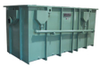
Description: The QT Series quench tanks are used for the uniform quenching of hot steels. They may be used with water, light weight polymer, or oil. They are not designed for use with brine. Water or polymer must have rust inhibitors (or else tank must be stainless steel.) Special versions are available
- Process Temperature: 50 to 60 C
- Height: 914.3995062242667 mm
- Width / Tube O.D.: 1,219.1993416323555 mm
- Length (Chamber / Tube): 914.3995062242667 mm






Find Suppliers by Category Top
More Information Top
 Indicates content that may require registration and/or purchase.

-
Quenching and Control of Distortion 2012: Proceedings of the 6th International Quenching and Control of Distortion Conference Including the 4th International...
Effect of Contamination on the Cooling Rate of Quench Oils .........................................
-
ZCP2012QCD05365L
Effect of Contamination on the Cooling Rate of Quench Oils .........................................
-
ASTM MNL64 - Intensive Quenching Systems: Engineering and Design
… which in some cases provides for the elimination of carburizing or a reduction of carburizing time • Minimizes quench distortion • Maximizes labor productivity • Reduces the number of manufacturing operations • Replaces expensive and flammable quench oils • Provides for an …
-
Handbook of Residual Stress and Deformation of Steel
Accelerated quenching oil .
-
ZASMHBA0001149
An improvement in quench oil wetting characteristics may be obtained with increasing bath temperature, which results in higher cooling rates.
-
ASTM MNL37 - FUELS AND LUBRICANTS HANDBOOK: Technology, Properties, Performance, and Testing
In industrial lubricants, however , formulation economics dictate very low additive treat levels, usually less than 2% for products such as hydraulic fluids, turbine oils, quenching oils , and other process fluids.
-
Tool Steels
Quenching Oil Oil .
-
Failure Analysis of Heat Treated Steel Components
If cracking occurred during quenching, remnants of quench oil can be found on the surface of the crack, and often, elevated-temperature scale is apparent.
-
Surface Hardening of Steels: Understanding the Basics
• The need to constantly monitor environmen- tal pollution issues, including air quality (for potentially hazardous gases such as CO and NOx), water quality (for contamination con- cerns such as oil, minerals, etc.), waste dis- posal ( quench oils ), and safety issues (e …
-
Quenching and Carburising
Correspondingly, manufacturers and suppliers of quenching oils have played the main role in the development of quenching technology and related testing methods and specifications.