
Products & Services
See also: Categories | Featured Products | Technical Articles | More Information-
Supplier: Hy-Lok USA, Inc.
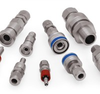
Description: applications, and gas distribution. Click the image to enlarge. Q, Keyed Q, and QF Series Quick Connectors are very easy to use. No tools are required to couple or uncouple Quick Connectors, and a minimum amount of equipment must be shut down. With Hy-Lok Quick
- English Size: 0.25 to 1 inch
- Material: Brass/Bronze, Stainless Steel
- Design Units: English
- Features: Quick Coupler
-
Supplier: DigiKey
Description: Quick Connect Connector
-
Supplier: G.L. Huyett
Description: Quick connect adapters are an effective way to bring versatility to grease guns. When multiple types of greasing tools are required for scheduled maintenance, quick connect allows for fast and easy changing of the tool to ensure proper lubrication of grease fittings.
- English Size: 0.4375 inch
- Material: Carbon & Alloy Steel, Stainless Steel
- Features: Coupling, Elbow, Hydraulic Fitting, Pipe Fitting, Push-to-Connect / Push-On, Quick Coupler, Swivel, Tube Fitting
- Design Units: English
-
-
Supplier: ODG (Origin Data Global)
Description: VIBRAKRIMP QUICK DISCONNECT, FEM
-
Supplier: RS Components, Ltd.
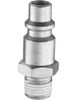
Description: ISO B8 Quick Release Adaptor 1/2 BSPM
- English Size: 0.5 inch
- Features: Coupling, Quick Coupler, Threaded
- Design Units: English
-
Supplier: Win Source Electronics
Description: Manufacturer: Molex Category: Connectors, Interconnects -Terminals- Quick Connects, Quick Disconnect Connectors Series: Krimptite Package: Tape & Reel (TR) Cut Tape (CT) Product Status: Active Base Product Number: 019008
-
Supplier: Clippard
Description: Quick Connect Valve, Body - 1/8" NPT
- English Size: 0.125 to 0.312 inch
- Material: Brass/Bronze
- Design Units: English
- Features: Hose Fitting, Pneumatic Fitting, Quick Coupler, Threaded
-
Supplier: Festo Corporation
Description: Bulkhead quick connector Sealing cap for plastic tube fittings and barbed fittings Multiple distributor Union nut for CK tube fitting Operating media: compressed air, vacuum, (water) Aluminum, steel, POM, or zinc
- Material: Aluminum
- Features: Quick Coupler
-
Supplier: WEH Technologies Inc.
Description: connection is made within seconds. The TW156 simplifies testing procedures and shortens test times. The quick connector may either be mounted directly to the existing test unit or connected by a hose to the test unit. When used with a hose, the connector must be securely
- English Size: 0.625 inch
- Material: Brass/Bronze, Stainless Steel
- Design Units: English
- Features: Quick Coupler
-
Supplier: Win Source Electronics
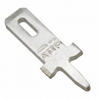
Description: Alternative Parts (Cross-Reference): Cross Manufacturer: TE Connectivity AMP Connectors Category: Connectors, Interconnects Terminals Quick Connects, Quick Disconnect Connectors Series: Faston Package: Bulk Product Status: Active Terminal Type: Standard Gender:
-
Supplier: WEH Technologies Inc.
Description: Connector for pressure and function tests on components with bead, rim, collar, flange, stub or external threads The type TW850 quick connector simplifies work procedures, shortens test times and improves productivity. Therefore the connector is ideal for high pressure
- English Size: 0.125 to 0.5 inch
- Metric Size: 10.000000000000002 to 30 mm
- Design Units: English, Metric
- Features: Push-to-Connect / Push-On, Quick Coupler
-
Supplier: Win Source Electronics
Description: Manufacturer: Molex Category: Connectors, Interconnects -Terminals-Quick Connects, -Quick Disconnect Connectors Series: Avikrimp Package: Bulk Product Status: Active Terminal Type: Angled - 90°, Flag Gender: Female Tab Width: 0.187" (4.75mm) Tab Thickness: 0.032" (0.81mm)
-
Supplier: Watts
Description: Quick-Connect union connectors - polysulfone. 3515B-08 - 3/8 in. CTS 3515B-10 - 1/2 in. CTS 3515B-14 - 3/4 in. CTS 3515B-18 - 1 in. CTS
- English Size: 0.375 to 1 inch
- Design Units: English
- Quick Coupler Valving: Non Valved
- Features: Push-to-Connect / Push-On, Quick Coupler, Union
-
Supplier: DigiKey
Description: QUICK FIT TERMINAL .240"
- Features: Other
-
Supplier: Superlok - Mako Products
Description: Features ■ Simple push-pull action to connect and disconnect lines-no tools required. ■ Plug and body are available valved or unvalved. valves automatically open when connected and shut off when disconnected to minimize the loss of liquids or gases.
- English Size: 0.125 to 0.5 inch
- Design Units: English
- Quick Coupler Valving: Non Valved, Single Shut-Off
- Material: Stainless Steel
-
Supplier: bisco industries
Description: Quick Connect Terminals
-
Supplier: Enting Water Conditioning, Inc.
Description: Nut-Quick Connect
-
Supplier: Enting Water Conditioning, Inc.
Description: Quick Connect Nut
-
Supplier: Watts
Description: Quick-Connect end stops - polysulfone. 3545B-08 - 3/8 in. CTS 3545B-10 - 1/2 in. CTS 3545B-14 - 3/4 in. CTS 3545B-18 - 1 in. CTS
- English Size: 0.375 to 1 inch
- Design Units: English
- Quick Coupler Valving: Non Valved
- Features: Push-to-Connect / Push-On, Quick Coupler
-
Supplier: STAUBLI Fluid Connectors
Description: SQC (Superior Quick Connect) is Stäubli’s upcoming quick-coupling solution engineered for semiconductor liquid-cooling applications and very low operating temperatures. Designed for clean-room, space-constrained tools and modular equipment architectures. Leak-free performance down
-
Supplier: Superlok - Mako Products
Description: Features ■ Proven ball - lock mechanism provids positive connection. ■ Simple push - pull action to connect and disconnect lines - no tools required. ■ Compact coupling offers full without orifice restrictions. ■ O-ring is easily replaced without disassembling body.
- English Size: 0.25 to 1 inch
- Material: Brass/Bronze, Stainless Steel
- Design Units: English
- Quick Coupler Valving: Non Valved
-
Supplier: Watts
Description: Quick-Connect female connectors - polysulfone. 3510B-0808 - 3/8 in. CTS x 1/2 in. NPS 3510B-1008 - 1/2 in. CTS x 1/2 in. NPS 3510B-1012 - 1/2 in. CTS x 3/4 in. NPS 3510B-1013 - 1/2 in. CTS x 3/4 in. Closet 3510B-1014 - 1/2 in. CTS x 3/4 in. FGHT 3510B-1412 - 3/4 in. CTS x 3/4 NPS
- English Size: 0.375 to 1 inch
- Design Units: English
- Quick Coupler Valving: Non Valved
- Features: Push-to-Connect / Push-On, Quick Coupler, Union
-
Supplier: Columbus McKinnon Corporation
Description: Ideal for use with synthetic slings, CM Quick Connect Hooks are the quickest and easiest way to add hooks to any synthetic sling by eliminating the need for additional hardware or assembly tools. Designed with a large bearing surface, these hooks prevent the sling from bunching, allowing the
-
Supplier: Nordson Medical
Description: Bayonet style female quick connect fitting
- English Size: 0.0938 inch
- Features: Barbed, Quick Coupler, Sanitary / Food Grade Fitting, Tube Fitting
- Design Units: English
- Coupling Type: Twist/Bayonet
-
Supplier: Watts
Description: Quick-Connect reducing tees - polysulfone. 3524RB-101004 - 1/2 x 1/2 x 1/4 in. OD 3524RB-141410 - 3/4 x 3/4 x 1/2 in. CTS 3524RB-181814 - 1 x 1 x 3/4 in. CTS
- English Size: 0.25 to 1 inch
- Design Units: English
- Quick Coupler Valving: Non Valved
- Features: Push-to-Connect / Push-On, Quick Coupler, Reducer, Tee
-
Supplier: TelephoneStuff.com
Description: Mini-Quick Quick Connect Control Connector is an industrial circular connector typically used for the installation and quick disconnect of solenoid valves, photo eyes, limit switches and 18 and 30 mm proximity switches. Features: - Nickel plated, brass coupling
-
Supplier: Enting Water Conditioning, Inc.
Description: O-Ring, Quick Connect
-
Supplier: Enting Water Conditioning, Inc.
Description: Tube Fitting - Quick Connect
-
Supplier: OMEGA Engineering, Inc.
Description: Quick Connect Surface Thermocouple Probe
- Base, Noble and Refractory Metal Type: E, J, K, T
- Configuration: Exposed Thermocouple, Grounded Thermocouple
- Process Connection: None or Hand held
- Probe Configuration: Penetration (Needle) Probe
-
Supplier: Nordson Medical
Description: Female open flow connector, 3/8" (9.5 mm) ID tubing, natural Acetal
- English Size: 0.375 inch
- Features: Barbed, Push-to-Connect / Push-On, Quick Coupler, Sanitary / Food Grade Fitting, Tube Fitting
- Design Units: English
- Quick Coupler Valving: Non Valved
-
Supplier: WEH Technologies Inc.
Description: Quick Connector for pressure testing difficult-to-access components with internal thread For pressure testing of components with internal threads with limited access, it is necessary to use test connectors with shaft extension. WEH are developing customer-tailored solutions for
- Connection Size: 0.5 inch
- Pressure Rating: 75 to 175 psi
- Sealing Method: Internal
- Actuation Method: Sleeve Actuation
-
Supplier: HUBER+SUHNER AG
Description: QLA 00 series contains connectors with a quick latch coupling mechanism: connection is achieved by simply pushing the plug into the jack. Three latching springs automatically engage, thereby securing the mated connectors against axial forces. No twisting action is required. The
- Frequency Range: 1.4 GHz
- Features: Circular / Cylindrical Connector, RF and Microwave Connector
-
Supplier: Accuris
Description: Quick Connector Test Procedures
-
Supplier: Suttner America Company
Description: For applications requiring quick exchange of different degree nozzles. To help choose the correct quick nozzle degree and orifice size, click the link above, "For help choosing the correct nozzle."
- Maximum Pressure: 4,000 psi
- Orifice Size: 7 mil
- Application: Cleaning / Blowoff
- Form: In-line
-
Supplier: Visual Sound, Inc.
Description: Vaddio The Quick-Connect Box converts Cat. 5 connection from the EZCamera Shoe back to the native power, S-video and composite video in a matchbox-sized box that sits back in the rack with the head end equipment. Converts Cat. 5 cable to native S-Video, composite video and power connections
- Connector Type: Audio / Video Connector












Find Suppliers by Category Top
Featured Products Top
-
 BATTLEFIELD TESTED WITH REAL USB 3.0 SPEEDS Omnetics New USB 3.0 Quick Lock Connector option delivers lightning speeds in a shell you might just recognize. On first glance you will notice Omnetics' all new Quick Lock USB 3.0 connector is a little different than the rest. Gone are (read more)
Browse Heavy Duty Rectangular Connectors Datasheets for Omnetics Connector Corporation -
Times Microwave Systems LMR® Cables, Connectors and Accessories Low-loss Cables With Quick Termination Connectors The LMR® cable solution features a full range of (read more)
Browse Coaxial Connectors Datasheets for PEI-Genesis -
. Available in Surface Mount as well as horizontal and vertical Thru Hole Mount configurations. The space saving design makes them ideal for use in dense PCB boards and offer easy access for connecting and disconnecting Quick-Fit female terminals (read more)
Browse Board Mount Connectors Datasheets for Keystone Electronics Corp. -
Keystone Electronics has introduced a new product line to its diverse selection of Quick-Fit PCB (read more)
Browse Board Mount Connectors Datasheets for Keystone Electronics Corp. -
Amphenol Sine Systems’ PRM Series™ (Panel Rack Mount) Connectors, available in both Plugs and Receptacles, are a quick-connect power connector solution for use in panel rack mount network applications. Our quick-connect design enables denser installations, faster deployments, and upgrades. (read more)
Browse Power Connectors Datasheets for DigiKey -
Chassis Mount Quick-Connect World Series™ Power Transformers Designed to meet both U.S. and international standards (read more)
Browse Power Transformers Datasheets for Triad Magnetics -
Cinch Connectivity Solutions, a Bel group company, now offers a 2.92 mm Quick Connect Adapter and High-Frequency SMA Quick Connect Adapters, designed to adapt from a standard threaded jack to a Quick Connect Plug. These adapters allow for rapid test connections to devices using 2.92 mm and SMA (read more)
Browse RF Adapters Datasheets for Heilind Electronics, Inc. -
With ratings up to 20A, 250V (UL), the range offers a variety of mounting styles and termination options, including flange mounting, snap-in and PCB mounting versions, together with 2.8 mm solder tabs, 4.8 mm and 6.3 mm quick-connect tabs, screw terminals and PCB pins. (read more)
Browse Circular Connectors Datasheets for DigiKey -
Cable configurator tool helps user select the best cable and connector solution for demanding high reliability applications Smiths Interconnect today announces the introduction of a new (read more)
Browse Electrical Connectors Datasheets for Smiths Interconnect, a Molex company -
Helium Leak Testing for Quick Connectors in Data Center Cooling Systems The rapid growth of global data consumption has driven a massive increase in data (read more)
Browse Leak Testing Equipment Datasheets for Marposs Corp
Conduct Research Top
-
The Basics of Quick Disconnects
Quick disconnect fittings (abbreviated as "QDCs" or "QDs") are used to provide fast and easy connection and disconnection of fluid lines. These fittings are also known as quick connects or quick release couplings. Typically quick disconnect fittings are operated by hand. They often are used
-
A Quick Guide to Common Fiber Optic Connectors
Connectors are supporting the processing of more data -- at faster speeds and in smaller footprints -- than ever before. Traditional approaches can 't keep up with this demand, which is why design engineers are turning to fiber optics as a solution. With the increased use of fiber optic
-
How To Connect An Actuator
Step-by-step instructions on how to quickly and easily connect a linear actuator.
-
A guide to the selection of quick clamping systems for plastic injection moulds
Fast and simple mould changing is vital to the efficient operation of many injection moulding installations. After operators have reduced mould changeover times by, for example, using quick release mould connectors, installing multi coupling plates and automatic mould transfer mechanisms
-
How to Connect a Cellular Modem to Your Accsense Pod
Accsense monitoring systems connect to the Internet to monitor several physical values such as temperature and humidity, and also provide phone and email alarming features. CAS DataLoggers provides this quick 3-step guide showing how to connect a cellular modem when you don't have Ethernet access
-
Protecting Against Surges: Circuitry for DIN Valve Connectors
an incredibly vital role: supplying power (and sometimes signal transmission) to end devices such as solenoid valves, transducers, cylinders, and pressure switches. The primary benefit for a DIN valve connector over a traditional hard-wired device is quick installation and ease of maintenance.
-
Five Key Benefits of Genderless Aseptic Connectors
Whether you have an upstream or downstream process, sterility assurance is critical. Genderless connectors, commonly used in single-use systems, allow bioprocessing manufacturers to make aseptic connections quickly and easily between single-use bag systems, tube sets and/or stainless process
-
Connecting to Our Cars: Molex Case Study
Learn how one company is helping automakers connect people with their cars, using Radient colorimeters to support the development of illuminated USB connectivity modules. With the ProMetric (R) I Imaging Colorimeter, Molex can captures all required data points on illuminated components at once
-
Application Note: Autocouple Devices
Coming up with ways to quickly connect products to test instruments and still maintain leak-tight seals is a common challenge facing test engineers.
-
HLC (R) Connector Studies -Optical Return Loss & Multiple Mates
to drop off very quickly after a connector is plugged in repeatedly.
-
A Quick Overview of the DeviceNet Communications Network.
DeviceNet is a low cost communications network that connects to various industrial devices such as limit switches, proximity switches, photoelectric sensors, valve manifolds, motor starters, process sensors, bar code readers, AC and DC drives, servo controllers, panel displays, operator interfaces
-
Connectors Tough Enough for OSP
When designing a next generation fiber network, ever service provider (SP) wants to build an extremely flexible and reliable infrastructure - and to do so as quickly as possible and at the lowest possible cost. To achieve all these objectives, carriers around the world increasingly rely
-
Improve The Cooling Performance Of Your Molds
with a pair of ultra-precision, immersion-style RTDs and a hand-held, dual-channel reader is a good method. The sensors can be mounted in a pair of tees with quick-connect fittings on the other ports.
-
It's Solder Time for Switches
Most switches require soldering. If they are PCB mount that is the only real option for assemblies. For wire harnesses there is the screw lug, the quick connect blade, and then there is the solder lug. They each have their pros and cons and what is ultimately best for a given application is up
More Information Top
 Indicates content that may require registration and/or purchase.

-
quick connectors - offers from quick connectors manufacturers, suppliers, exporters & wholesalers
quick connectors .
-
Chinese Quick Connectors, Chinese Quick Connectors Exporters, Chinese Quick Connectors Selling Leads from Chinese Quick Connectors Exporters, Manufacturers & S...
Search quick connectors .