
-
Supplier: Sartorius Lab Instruments GmbH & Co. KG
Description: ORP (redox) combination electrodes. This type of electrode has an Ag/AgCl reference. It is supplied with a permanently attached cable and a BNC connector.
- Operating Temperature: 23 to 212 F
- Electrode Configuration: Combination
- Body Material: Glass
- Mounting Options: Hand Held or Portable
-
Supplier: Automated Water & Effluent, Ltd.
Description: The 9086-10B is a sealed Redox electrode with a glass body, platinum band, an internal double junction, and a non fouling peripheric annular reference junction. The Redox electrode uses a polymerised salt bridge designed for use in temperatures up to 100ºC. A double
- ORP Range: -2,000 to 2,000 millivolts
- Operating Temperature: 32 to 212 F
- Junction Type: Double Junction
- Body Material: Glass
-
Supplier: Automated Water & Effluent, Ltd.
Description: fast response time and stable reading. As the Redox electrode offers a precise Redox measurement and is both stable and reliable the 9065-10B is a general purpose glass Redox electrode is most commonly paired with our redox controller range, where it can be
- ORP Range: -2,000 to 2,000 millivolts
- Operating Temperature: 32 to 140 F
- Body Material: Glass
- Mounting Options: In-Line (Insertion)
-
-
Supplier: Automated Water & Effluent, Ltd.
Description: budget Redox electrode and has a low impedance glass bulb, single junction reference and a silver chloride element. The mounting cap on the budget pH Electrode model 9016-10B is Ryton with a small flange for mounting the Redox electrode into our RES style inline
- ORP Range: -2,000 to 2,000 millivolts
- Operating Temperature: 32 to 122 F
- Body Material: Epoxy or Polymer
- Mounting Options: In-Line (Insertion)
-
Supplier: Nico2000, Ltd.
Description: For High Precision Applications. Platinum-Band (wrapped around a glass dome) ORP Electrode with Re-fillable Glass Body, Single Junction Ag/AgCl Solution Reference with annular Ceramic liquid junction.
- ORP Range: 250 to 700 millivolts
- Operating Temperature: 32 to 176 F
- Electrode Configuration: Combination
- Body Material: Glass
-
Supplier: Weiss Research, Inc.
Description: and long electrodes life. These long-lasting electrodes have no ceramic or fiber junction to clog. They are the ideal tools for viscous and dirty samples.
- Operating Temperature: 32 to 176 F
- Electrode Configuration: Combination
- Body Material: Epoxy or Polymer
- Mounting Options: In-Line (Insertion)
-
Supplier: Weiss Research, Inc.
Description: The common characteristics of Weiss detached cable combination, sealed Ag/AgCl single-junction (SJ) and Double-Junction (DJ) ORP Electrodes are: 1. Platinum rod sensor 2. Rugged epoxy body 3. Fast, accurate and incredibly stable 4. Long electrode life 5. Ready to use, no further
- Operating Temperature: 32 to 176 F
- Electrode Configuration: Combination
- Junction Type: Double Junction, Single Junction
- Body Material: Epoxy or Polymer
-
Supplier: Van London-pHoenix Company
Description: This series of steam sterilizable and autoclavable pH electrodes and ORP electrodes has been designed to retro-fit the Broadley James Corp. FERMPROBE® ELECTRODE HOLDER. These electrodes have been engineered as improved replacements using the same configuration as the
- pH Range: 0 to 13 ph
- Operating Temperature: 23 to 275 F
- Operating Pressure Range: 150 psi
- Junction Type: Double Junction
-
Description: pH & ORP (Redox) electrode, "TUFFTIP" bulb glass or flat glass or bulb glass, double or single junction, ½", ¾", 1" NPT, 10m cable with BNC connector
- pH Range: 0 to 14 ph
- Operating Temperature: 32 to 248 F
- Operating Pressure Range: 50.763195 to 101.52639 psi
- Junction Type: Double Junction, Single Junction
-
Description: ORP (Redox) electrode, platinum ring with a TEFLON junction, pt100 or pt1000 temperature sensor, 1 or 0.5 inch NPT connection, 10m cable with a BNC connector
- Operating Temperature: 140 F
- Operating Pressure Range: 43.51131 psi
- Mounting Options: In-Line (Insertion)
- Features: Temperature Sensor
-
Supplier: Extech
Description: Polycarbonate ORP electrode with platinum sensing surface and sealed reference
- Body Material: Epoxy or Polymer
- Mounting Options: In-Line (Insertion)
- Reference Solution Options: Sealed
-
Supplier: SWAN Analytical USA, INC.
Description: Combined electrode with gel filling for standard applications, PG13.5, screw plug. Features Maintenance-free pH electrode in mechanically and chemically inert plastic case (IP68) with excellent life time. Poisoning protected Ag/AgCl-reference system. Clogging of the reference system by
- pH Range: 1 to 13 ph
- Operating Temperature: 32 to 122 F
- Operating Pressure Range: 0 to 29.00754 psi
- ORP Range: -400 to 1,200 millivolts
-
Supplier: ABB Measurement & Analytics
Description: The AP121 is a highly process-resistant 12 mm combination pH / redox (ORP) electrode. It is equipped with a rugged solid electrolyte providing an effective shield to process poisons and fluctuating pressures. The electrode has all 3 measuring elements located closely together
- Form Factor: Hand Held
- Features: Measures ORP / Redox
- Measures pH: Measures pH
- User Controls: None
-
Supplier: SWAN Analytical USA, INC.
Description: Redox (ORP) sensor with platinum tip and free flowing electrolyte.
- ORP Range: -500 to 1,500 millivolts
- Operating Temperature: 32 to 122 F
- Body Material: Epoxy or Polymer
- Features: Other
-
Supplier: SWAN Analytical USA, INC.
Description: Swansensor ORP (Redox) with cable and calibration solution 475 mV (40 ml).
- pH Range: 1 to 13 ph
- Operating Temperature: 32 to 122 F
- Operating Pressure Range: 0 to 29.00754 psi
- ORP Range: -400 to 1,200 millivolts
-
Supplier: SWAN Analytical USA, INC.
Description: Redox sensor with platinum tip for use in combination with Swansensor Reference FL.
- ORP Range: -500 to 1,500 millivolts
- Operating Temperature: 32 to 122 F
- Body Material: Epoxy or Polymer
- Features: Other
-
Supplier: Metrohm USA, Inc.
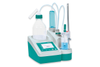
Description: The compact Eco Titrator with integrated magnetic stirrer and touch-sensitive User Interface is ideal for routine analysis. It provides GLP-compliant results with minimum space requirements at all times (DIN A4). The Eco Titrator Redox plus offers you the complete package for redox
-
Supplier: Sea Bird Electronics, Inc.
Description: The SBE 27 pH and O.R.P. (Redox) sensor combines a pressure-balanced, glass-electrode, Ag/AgCl reference probe and platinum O.R.P. electrode to provide in-situ measurements at depths to 1200 m. The replaceable pH probe is permanently sealed and is supplied with a soaker bottle
- pH Range: 0 to 14 ph
- pH Accuracy: 0.1 (+/- % FS)
- Response Time: 0.01 to 1 seconds
- ORP Range: -1,250 to 1,250 millivolts
-
Supplier: ABB Measurement & Analytics
Description: A well deserved reputation for ruggedness, longevity and accuracy hallmark the TBX561 series industrial hot-tap retractable pH / redox sensors. The sensors are easily applied to most industrial measurement needs. They are renowned for their ability to outperform conventional sensors in the
- pH Range: 0 to 14 pH
- ORP / Redox Range: 0 to 2,000 millivolts
- Operating Temperature: 32 to 284 F
- Form Factor: Hand Held
-
Oxidation Reduction Potential (ORP) Instruments - pH / redox (ORP) industrial Ryton sensor -- TBX551Supplier: ABB Measurement & Analytics
Description: The TB(X)5 series pH / redox (insertion, submersion, flow-through and hot-tap sensors) are easily applied to most industrial measurement needs. They are renowned for their ability to outperform conventional sensors in the industries' toughest process applications. Solid-state Next Step™
- pH Range: 0 to 14 pH
- ORP / Redox Range: 0 to 2,000 millivolts
- Operating Temperature: 32 to 284 F
- Form Factor: Hand Held
-
Oxidation Reduction Potential (ORP) Instruments - pH / redox (ORP) industrial Kynar sensor -- TBX556Supplier: ABB Measurement & Analytics
Description: A well deserved reputation for ruggedness, longevity and accuracy hallmark the TB(X)5 series pH / redox sensors. The sensors are easily applied to most industrial measurement needs. They are renowned for their ability to outperform conventional sensors in the industries' toughest process
- pH Range: 0 to 14 pH
- ORP / Redox Range: 0 to 2,000 millivolts
- Operating Temperature: 32 to 284 F
- Form Factor: Hand Held
-
Supplier: Van London-pHoenix Company
Description: This series of miniature steam sterilizable, combination pH and redox electrodes are designed for small bench top fermentors and culture apparatus. The electrodes are designed to fit all 12mm and 6mm electrode holders or rubber stoppers used in bench top fermentors.
- pH Range: 0 to 13 ph
- Operating Temperature: 23 to 266 F
- Electrode Configuration: Combination
- Junction Type: Double Junction
-
Supplier: Myron L Company
Description: Electrode 3 Calibration Options with Automatic Solution Recognition Automatic Temperature Compensation in Calibration Mode* Rugged, reliable, shock-resistant fully encapsulated electronics Durable body constructed of aircraft aluminum Simple one-button functions Temperature Readout High
- Operating Temperature: 32 to 131 F
- ORP / Redox Range: -1,000 to 1,000 millivolts
- Accuracy: -10 to 10 millivolts
- Process Media Temperature: 32 to 160 F
-
Supplier: Automation24, Inc.
Description: The Memosens CPS12E from Endress+Hauser with glass electrode is used for reliable redox measurement of water or wastewater in standard applications or for long-term monitoring in the process, water and wastewater industries. There are three different shaft lengths of 120, 225, and 360
-
Supplier: Instrumentation Northwest, Inc.
Description: The TempHion™ Smart Sensor is a submersible water quality sensor and datalogger capable of measuring pH, specific ions, redox, and temperature. Each unit comes with a thermistor based temperature element plus up to three pH, ISE, or redox elements. The TempHion™ comes with INW's
-
Description: Applies to analyzers, sensor units and electronic units used for the determination of oxidation reduction or redox potential values of aqueous solutions using relatively inert electron conducting electrodes.
-
Supplier: CSA Group
Description: Applies to analyzers, sensor units and electronic units used for the determination of oxidation reduction or redox potential values of aqueous solutions using relatively inert electron conducting electrodes.
-
Description: to present the background considerations which led to this compilation of potentials of the aqueous saturated calomel electrode compared to the cyclovoltametric data for a glassy carbon electrode in various solvent media. A tabulation of working potentials of this electrode pair
-
Supplier: CSA Group
Description: to present the background considerations which led to this compilation of potentials of the aqueous saturated calomel electrode compared to the cyclovoltametric data for a glassy carbon electrode in various solvent media. A tabulation of working potentials of this electrode pair









Find Suppliers by Category Top
Featured Products Top
-
 , Certification from an accredited organization: Key words that are increasingly important. The calibration of pH and Redox electrodes has never been easy. All calibration procedures assume that the labeled values of the calibration buffers are correct. But buffer values can change over time and so can your (read more)
Browse Inorganic Chemicals and Compounds Datasheets for Hamilton Company -
Features Include: FAST - one-touch measurements for Conductivity, Mineral/Salt Concentration, TDS, ORP (REDOX), Free Chlorine, pH and Temperature SIMPLE - user-intuitive prompts step you through Alkalinity, Hardness and LSI titrations (PS9 (read more)
Browse Water Quality Testing Instruments Datasheets for Myron L Company
More Information Top
 Indicates content that may require registration and/or purchase.

-
Encyclopedia of Applied Electrochemistry
In a redox electrode both reactants are chemically closely related with different states of oxidation being the discerning property: .
-
Electrochemical Dictionary
According to the nature of species participating in electrochemical equilibria and the realization of the equilibria we may speak of ! electrodes of the first kind, ! electrodes of the second kind, ! electrodes of the third kind, ! redox electrodes , and ! membrane electrodes.
-
Electrochemical Dictionary
redox electrodes , and .
-
Biosensing for the 21st Century
An efficient transfer of electrons from the redox electrode directly to the enzyme substitutes electron donors proteins.
-
Handbook of Nanoelectrochemistry
20 Nanostructured Transition Metal Oxides Produced by Electrodeposition for Application as Redox Electrodes for Supercapacitors................................................................................
-
Environmental Analysis by Electrochemical Sensors and Biosensors
– Potentiometric sensors, in which the potential of the indicator electrode (ion-selective electrode, redox electrode , metal/metal oxide electrode) is measured against a reference electrode.
-
Handbook of Reference Electrodes
According to the nature of species participating in electrochemical equilibria and the realization of the equilibria, we may speak of electrodes of the first kind, electrodes of the second kind, electrodes of the third kind, redox electrodes , and membrane electrodes.
-
Glass-based redox sensor
It could be shown that the measurement results obtained with these electrodes were comparable to those received with conventional noble metal-based redox electrodes .
-
Electroanalytical Methods
II.9.3.1 Redox Electrodes .
-
Molecular Catalysts for Energy Conversion
R. A. Marcus derived a formula for redox electrode reactions using classical electrostatic models [23,25].