
IC Timers Information
Last revised: October 3, 2024
Reviewed by: Scott Orlosky, consulting engineer
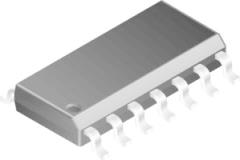 IC timers are programmable semiconductor circuits that generate or set timing for electronic circuits. These chips function as single or multi-function units. An IC timer works by charging and discharging an external capacitor. The larger the capacitor, the longer the time interval of the timer. Timer chips operate in three fundamental ways: Up counting; down counting; or bi-directional counting.
There are many different types of IC timers. Examples include a microPC1555 and a microPC617. Versions of the MicroPC1555 timer chip are the most popular timing chip in common use. It is used as a timing signal generator and can act as a stable and monostable generators. A MicroPC617 timer chip is used for driving lamps and relays and can act as a timing signal generator for this purpose. Other IC timers are commonly available.
How Do IC Timers Function?
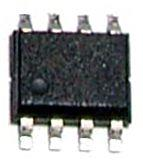 There are many instances of timer use in laptops, tablets, mobile devices, etc. Most common is an internal self-generated clock that keeps track of how long an event has lasted (elapsed time). This can be useful as a trigger to coordinate several sequential events. Then there is real time. This is universal or world time and they are precise to a few seconds a day. If more precision is needed, then the network timer can be used. Mobile devices may use a GPS signal and, at least in the US, power line cycles at 60 Hz are kept precisely tuned and can be a reliable reference.
IC timers work on the principle of elapsed time and real time. Elapsed and real time are used for activating the output signal when the signal achieves a preset time. This ensures that programmed operations run at a certain, controlled cadence. A MicroPC1555 IC timer requires a supply voltage of 4.5 to 16 volts and an operating current range of 3 mA. This electronic timer is stable to 0.005% per degree Celsius for semiconductor timers used for this function. A MicroPC617 should have an output current capacity of 200 mA. This semiconductor timer should also have rising and falling times of 100 nano seconds and a supply capacitive voltage of 5 volts. IC timers are designed and manufactured to meet these industry specifications.
Applications
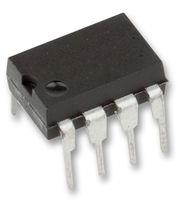 IC timers are used in count totalizers, batch counters, and interval delay timers. In addition, IC timers are also used in position indicators, tachometers, controllers, and frequency counters. IC timers should adhere to American National Standards Institute (ANSI) and Institute of Electrical and Electronics Engineers (IEEE) standards.
Related Standards
- DESC-DWG-83016 — Defense, Digital, N-Channel, Counter/Timer Unit, Monolithic Silicon
- MIL-M-38510/109 — Microcircuits, Linear, Precision Timers, Monolithic Silicon
IC Timers FAQs
What are some advanced features of modern IC Timers?
Modern IC Timers have evolved to include high precision in timing intervals, ensuring accurate and stable performance in various applications.
These timers can operate over a broad range of voltages, making them suitable for diverse applications and environments.
Advanced IC Timers are designed to consume minimal power, which is crucial for battery-operated devices and energy-efficient systems.
The ability to adjust time intervals allows for greater flexibility in designing circuits that require specific timing sequences.
Modern IC Timers can operate in multiple modes, including monostable (one-shot), astable (oscillating), and bistable modes, providing versatility for different applications.
Advanced IC Timers often integrate additional functionalities such as counters, comparators, and voltage regulators, reducing the need for external components and simplifying circuit design.
Improved noise immunity ensures reliable operation in noisy environments, which is essential for industrial and automotive applications.
Some modern IC Timers offer programmable features that allow users to customize timing parameters and functionalities through software interfaces.
Advanced IC Timers include temperature compensation mechanisms to maintain accuracy and stability across a wide range of temperatures.
The trend towards miniaturization has led to the development of smaller IC Timers with integrated functionalities, making them ideal for compact and portable devices.
These advanced features collectively contribute to the enhanced performance, reliability, and versatility of modern IC Timers, making them indispensable components in a wide range of electronic applications.
How do IC Timers compare to microcontroller-based timing solutions?
Both IC Timers and microcontroller-based timing solutions are widely used in various applications, but they have distinct characteristics and advantages.
Functionality and Flexibility
IC Timers, such as the 555 timer, are designed for specific timing functions like pulse generation, time delay generation, and oscillation. They are highly reliable for these tasks and are easy to implement in circuits. IC Timers can operate in multiple modes, including monostable, astable, and bistable modes, providing versatility for different applications
Microcontrollers offer programmable timing functions, allowing for more complex and customizable timing sequences. They can handle multiple timing tasks simultaneously through software programming.
Microcontrollers can perform a wide range of functions beyond timing, such as data processing, communication, and control, making them suitable for more complex applications.
Microcontrollers often integrate with other systems and peripherals, providing a more comprehensive solution for complex projects.
Accuracy and Stability
Modern IC Timers offer high precision in timing intervals, ensuring accurate and stable performance in various applications.
Advanced IC Timers include temperature compensation mechanisms to maintain accuracy and stability across a wide range of temperatures.
The timing accuracy of microcontroller-based solutions is often derived from external frequency sources like crystals and oscillators, which determine the timing accuracy of the RTC functions .
While microcontrollers can achieve high accuracy, software-based timing can introduce uncertainties due to variations in execution speeds and software delays.
Power Consumption
IC Timers are designed to consume minimal power, which is crucial for battery-operated devices and energy-efficient systems.
The power consumption of microcontrollers can vary depending on the complexity of the tasks they perform. However, many modern microcontrollers are designed to be energy-efficient
Ease of Use and Implementation
IC Timers are relatively simple to use and implement in circuits. They require minimal external components and are well-documented, making them accessible for beginners and straightforward applications.
Implementing timing functions with microcontrollers can be more complex due to the need for programming and configuring various peripherals. However, they offer greater flexibility and functionality for advanced users.
IC Timers are ideal for specific, straightforward timing tasks with high accuracy, low power consumption, and ease of use.
Microcontroller-Based timing solutions offer greater flexibility, programmability, and integration with other systems, making them suitable for more complex and customizable applications.
What are the different modes of operation for IC Timers?
IC Timers, such as the widely used 555 timer, can operate in several modes, each serving different applications. Here are the primary modes of operation:
Monostable Mode (One-Shot Mode)
In monostable mode, the IC Timer generates a single output pulse of a specified duration in response to an external trigger signal.
This mode is commonly used for generating precise time delays, pulse width modulation (PWM), and debouncing switches.
When triggered, the timer switches from its stable state to a temporary unstable state for a predetermined period before returning to its stable state.
Astable Mode (Oscillating Mode)
In astable mode, the IC Timer continuously oscillates between its high and low states, generating a square wave output without requiring an external trigger.
This mode is used for generating clock pulses, LED flashers, and tone generation.
The timer repeatedly charges and discharges a capacitor through resistors, creating a continuous oscillation.
Bistable Mode (Flip-Flop Mode)
In bistable mode, the IC Timer operates as a flip-flop, switching between two stable states (high and low) based on external trigger inputs.
This mode is used in applications requiring a toggle switch, such as digital logic circuits and memory storage.
The timer changes state with each trigger input, maintaining its state until the next trigger.
How can IC timers be used in different engineering applications
IC timers are versatile components used in various engineering applications due to their ability to measure and control time intervals. Here are some ways IC timers can be utilized in different engineering applications:
Process Control
Sequential operations: IC timers can be used to control the sequence of operations in industrial processes. For example, they can ensure that one operation completes before another starts, such as in automatic milling machines or industrial washing machines.
Timeout conditions: They can detect timeout conditions in processes. For instance, if a motor does not reach a certain speed within a specified time, the timer can stop the motor and alert an operator.
Consumer Electronics
Household appliances: IC timers are used in various household appliances to control functions like cooking times in microwaves or washing cycles in washing machines.
Industrial Equipment
Process regulation: In industrial settings, IC timers assist in process regulation by controlling the timing of operations such as opening valves or running mixers for specified periods.
Usage recording: They are installed in industrial equipment to record usage and age, helping in maintenance scheduling and lifecycle management
Digital and Pulse-Train Conditioning
Counting applications: IC timers are used in counting applications where they can measure frequency and count pulses. They often use an internal or external oscillator and can handle multiple channels for complex counting tasks.
Safety and Monitoring
Alarm systems: IC timers can be part of safety systems, triggering alarms or shutting down equipment if certain conditions are not met within a specified time frame.
Recreational Use
Consumer gadgets: They are used in various consumer gadgets for timing functions, such as in sports timers or interval training devices.
Mechanical and Electromechanical Applications
Automatic Control: Mechanical timers are used in applications requiring automatic control based on time, such as periodic lubrication systems or staged start-up of pumps.
Industrial Settings: Electromechanical timers are commonly used in factories to control operations like opening valves or running mixers for specific durations.
These examples illustrate the broad applicability of IC timers across different fields, from industrial automation to consumer electronics, highlighting their importance in modern engineering.