The OpenVMS User's Guide, Second Edition
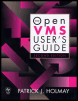
A broad introductory overview of OpenVMS that focuses on command procedures, text editing and system utilities.
 TABLE OF CONTENTS
 The OpenVMS operating system is an interactive, virtual memory operating system. When a user logs on the system, OpenVMS creates an environment from which you can enter commands and run programs. Within this environment you and the system conduct a dialogue using the Digital command language (DCL).
DCL is a traditional and consistent user interface to OpenVMS that supports batch and interactive operations. You enter a DCL command by typing it from your keyboard and pressing the Return key. OpenVMS will respond by executing the command or by displaying an error message on the screen if it cannot interpret what you entered.
The DCL command language is a set of Englishlike instructions that tell the OpenVMS operating system to perform specific actions or tasks. Table 1.1 lists examples of computing tasks and some of the DCL commands that perform those tasks.
DCL provides over 200 commands and functions that offer an easy-to-use interface between users and the many OpenVMS services. When you enter a DCL command, it is read and translated by the DCL interpreter. The type of command entered determines how the command interpreter responds to a command. Table 1.2 lists some commonly used DCL commands, or command verbs. As you can see from the table, the results describe the actions attributable to the command.
Like a spoken language, DCL is made up of words (vocabulary) and word order (syntax or format). The vocabulary consists of commands, parameters, and qualifiers, that are combined...