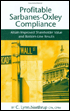
Profitable Sarbanes-Oxley Compliance: Attain Improved Shareholder Value and Bottom-Line Results
Managing information in the age of information is a never-ending challenge. Sarbanes-Oxley has changed the playing field and has created many unanswered questions. The legislation has attempted to improve accountability and communication from publicly traded companies. Improved accounting and communication require a foundation that is heavily driven by utilization of information systems and technology. Business transactions are the results of processes that create documentation of invoices, purchase orders, payments, and other output. E-mail and other elements of electronic communication are also components of the challenge. Reliable financial reporting and compliance with laws and regulations require efficient and effective information technology and management. Deficiencies and weaknesses in the IT infrastructure will obviously impact the internal control system.
Sarbanes-Oxley established clear objectives to enhance corporate governance through information and communication. However, the guidance surrounding the area of IT is not detailed and lacks specific direction. The Public Company Accounting Oversight Board (PCAOB) wanted stronger internal controls and corporate accountability. The framework provided as being acceptable to the Securities and Exchange Commission (SEC) was the COSO Framework. The PCAOB makes it clear that auditors need to understand management's information and communication, including the systems and processes. They will also need to understand the flow of transactions, including how they are initiated, authorized, recorded, processed, and reported. This means understanding the extent of IT involvement in each period-end financial reporting process. Without providing detailed steps for how this is to be accomplished, the oversight board recognized the importance of this critical element. The...