Distribution Switchgear

Covering general principles of the Switchgear function, this invaluable reference discusses topics such as interruption techniques, fault level calculations, switching transients and electrical insulation.
 TABLE OF CONTENTS
 As the name implies, primary switchgear is the first stage in the process of conducting electrical power from the grid to the end user. The importance of the strategic position of a primary substation and its switchgear within the system means that the layout, design and operation must ensure maximum availability and reliability.
As the system impedance is lower at the primary substation than further into the network, the fault level tends to be higher, usually between 25 and 50 kA.
Until the 1960s, primary switchgear was invariably of the oil type, with most installations being very large by today's standards. An example of the size and complexity of these substations can be seen in Figure 9.1, which shows a Ferguson Pailin type VRP, 33 kV, 13.1 kA substation installed in the Swansea area in 1930.
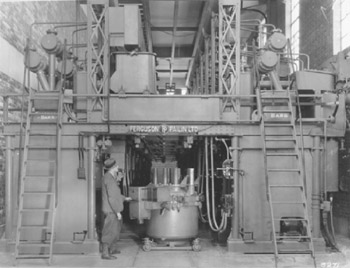
The scale of the switchboard in the photograph can be judged by the relative size of the figure in the foreground. This oil switchgear, which was equipped with duplicate busbars, can be compared to its modern vacuum equivalent, shown in Figure 9.2. The modern equipment is much less than half the size and has more than twice the short circuit rating of its predecessor.

Although the manufacture of oil switchgear in the UK has been discontinued in favour of non-oil types,...