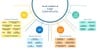
Intangible Management: Tools for Solving the Accounting and Management Crisis

Today, intangibles dominate the inputs and outputs of the production process. Service workers dominate employment and service industries dominate in their contribution to gross domestic product. In the manufacturing age, financial (tangible) cost management was a major determinant of an organization's profitability. Now, however, intangible cost management is the major determinant of organizational profitability and sustainability.
Intangible cost analysis when applied to everyday activities arms executives with powerful tools to manage and control according to the new principles of the Intangible Economy.
Around the world, concern is growing that employees are not using time productively. Management guru Peter Drucker has found that staff can be nonproductive, or be engaging in tasks that create little, if any, value, for up to 70% of each workday.
... the people who actually do most of the knowledge and service work in organizations...carry a steadily growing load of busy work, additional activities that contribute little or no value and that have little or nothing to do with what these people are qualified and paid for. Peter Drucker, Managing for the Future
James Field, a noted management consultant, also supports this stance:
The average worker is productive only 55 per cent of the time. Los Angeles Times
Consider an organization where 1000 employees are capable of generating $250,000,000 of revenue each year. Let us assume that staff are only operating at 55% productivity. Hence, actual revenue generation of $137.5 million is therefore significantly below total potential revenue of $250...