Network Tutorial, Fifth Edition
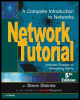
This text is written for those trying to get up to speed or stay current with the complex challenges of designing, constructing, maintaining, upgrading, and managing the network infrastructure.
 TABLE OF CONTENTS
 In its most generic sense, the term application applies to a task. For example, a widget maker needs to take orders and transmit these orders to a warehouse where the widgets are shipped to customers. The widget factory and warehouse must exchange inventory information. This whole procedure might be called an order entry and inventory control application. In this sense, other applications include list management, accounting, design, marketing, and sales the tasks of any enterprise.
More specifically, the term application refers to the computer software used to get a job done. Thus, database management packages such as dBase IV, Paradox, and Oracle are called application software, as are other types of software such as WordPerfect, Co/Session, and 1-2-3. In this sense, application software is distinguished from system software, which is the software that makes computers and networks operate. Think of the application software running on top and taking advantage of the system software and hardware.
Finally, application refers to programs written to perform a specific task. For example, many users have written applications in the dBase language. These customized applications are written by and for end users, not by software vendors. This can get tricky, because some value-added resellers and system integrators write such customized programs to sell. The difference is they are not selling generic applications software as Microsoft, Borland and Lotus do. They, like the end-users themselves, are creating customized programs using the software of developers such as Borland and Microsoft.
Network operating system software, such as...