Network Tutorial, Fifth Edition
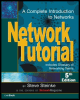
This text is written for those trying to get up to speed or stay current with the complex challenges of designing, constructing, maintaining, upgrading, and managing the network infrastructure.
 TABLE OF CONTENTS
 No matter what security measures you have in place, every network suffers from one serious weakness: human gullibility. Trojan Horses take advantage of this, hiding a malicious program inside something apparently harmless. If software has been installed in good faith, it can get around almost any firewall, authentication system, or virus scanner.
Trojans vary in the nefarious acts they perform once inside a machine. They can be harmless pranks that display an obscene or political message, or logic bombs that erase data and try to damage hardware. Some are coupled with viruses, spreading between systems by e-mail. The most insidious are stealthier, and often have a purpose beyond wreaking havoc. As well as hacking, Trojans have been used to spy on people, and have acted as the culprits in some spectacular frauds.
No one is safe. In fall 2000, Microsoft suffered a much-publicized attack in which hackers downloaded, and perhaps changed, the source code of a future operating system. This was the result of a Trojan concealing a worm a program that copies itself onto other machines throughout a network. Once installed on a Microsoft machine, the code spread until it found a computer containing secrets worth stealing. The Trojan then signalled its presence to a hacker, opening a backdoor to the network.
So, how can you avoid becoming the next Microsoft? Short of banning all users from your network, you can't. But there are ways to minimize the risk, starting with vigilance and education. Regular backups are a...