Microwave Measurements, 3rd edition

Doug Skinner
Disclaimer
Every effort has been made to ensure that this chapter contains accurate information obtained from many sources that are acknowledged where possible. However, the NPL, ANAMET and the Compiler cannot accept liability for any errors, omissions or misleading statements in the information. The compiler would also like to thank all those members of ANAMET who have supplied information, commented on and given advice on the preparation of this chapter.
The importance of the correct use of coaxial connectors not only applies at radio and microwave frequencies but also at DC and low frequency. The requirement for 'Traceability to National Standards' for measurements throughout the industry may depend on several different calibration systems 'seeing' the same values for the parameters presented by a device at its coaxial terminals. It is not possible to include all the many different types of connector in this guide and the selection has been made on those connectors used on measuring instruments and for metrology use.
It is of vital importance to note that mechanical damage can be inflicted on a connector when a connection or disconnection is made at any time during its use.
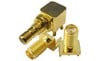
The common types of precision and general-purpose coaxial connector that are in volume use worldwide are the Type N, GPC 3.5 mm, Type K, 7/16, TNC, BNC and SMA connectors. These connectors are employed for interconnection of components and cables in military, space, industrial and domestic applications.
The simple concept of a coaxial connector comprises an...