Microwave Measurements, 3rd edition

James Miall
This is a brief introduction to guided-wave power measurements in the approximate range of a few MHz to several hundreds of GHz, some devices that can be used to measure RF power and the techniques for calibrating these devices.
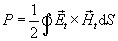
The instantaneous incident power due to an electromagnetic field can be written as[1]
where
and
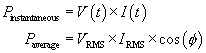
are the electric and magnetic fields at a time t, and S is the surface over which the power is being measured. In terms of voltage ( V) and current ( I) in a transmission line, power can be written as
where ? is the phase angle between the voltage and current waveforms. In many situations V( t) and I( t) are sinusoids and in this case the instantaneous power will vary at twice the frequency of the sinusoid. However, these are not particularly useful definitions at RF and microwave frequencies because the instantaneous voltage, current and field distributions are not easily measured. At RFs and above power becomes the only convenient measure of signal strength.
In practice RF and microwave power is usually measured using substitution techniques based on its heating effect, or by rectification.
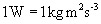
The unit of power is Watt (W), where
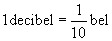
Power ratios are often more conveniently expressed in decibels where given
and
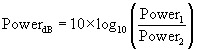
the power ratio in decibels is therefore
A power in dBm is defined as the ratio with respect to 1...