9.5 Methods for Detection of Data Collinearity
The general mathematical model for parameter estimation (for use in the least squares method or regression) can be written as
| (9.25) | 
|
Here, the regressors x j, j = 1, 2, ..., n are the state and input variables or their combinations, y is the dependent variable and ? 0, ..., ? n are unknown parameters.
Using measured data for y and x, eq. (9.25) can be written as
| (9.26) | 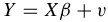
|
Here, Y is the measurement vector, X the matrix of regressors and 1 s (1 s are to account for the constant term in any regression equation), and ?, the unknown parameter vector. The least squares estimates of the parameters ? can be obtained using
| (9.27) | 
|
Generally, the regressors X are centred and scaled to unit length. If Xj # denotes the columns of the normalised matrix, collinearity means that for a set of constants k j not all equal to zero
| (9.28) | 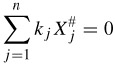
|
Collinearity could cause computational problems due to ill-conditioning of the matrix in eq. (9.27) and this would result in inaccurate estimates of the parameters. Three commonly used methods for assessing the collinearity among regressors are discussed next [2].
9.5.1.1 Correlation Matrix of Regressors
The presence of the collinearity can be ascertained by computing the correlation matrix of the regressors. If the correlation coefficients are greater than 0.5, then it indicates the presence of collinearity. However, if...


 TABLE OF CONTENTS