An Introduction to Nuclear Waste Immobilisation

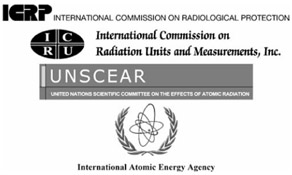
The nuclear power generation industry is mature and more highly regulated than any other. Laws and regulations for the nuclear industry typically require licensing various aspects of its activities including implementation of technical and environmental standards for protecting people from radiological and other hazards. National and international bodies (Fig. 7.1) provide recommendations on radiation protection and the most influential of the latter are:
ICRP - International Commission on Radiological Protection,
ICRU - International Commission on Radiological Units and Measurements,
UNSCEAR - United Nations Scientific Committee on the Effects of Atomic Radiation and
IAEA - International Atomic Energy Agency.
Recommendations made by these organisations eventually become internationally acknowledged legal standards. Governments are responsible for enforcing national regulations through a system that includes a Regulatory Authority or similar body. Regulatory authorities such as the Environmental Protection Agency (EPA) in the USA or Gosatomnadzor in Russia establish a system of regulatory documents and define levels for radionuclides that are accepted as safe. Some international recommendations often serve as the basis for many of the regulations on radiation protection adopted by national regulatory bodies.
Radiation and radioactive substances are natural and permanent features of the environment, and thus the risks associated with radiation exposure can only be restricted, not eliminated entirely. The acceptance by society of risks associated with radiation and radioactive materials must be conditional on the benefits to be gained from...