Configuring Citrix MetaFrame for Windows 2000 Terminal Services
Helps administrators get up to speed on MetaFrame, including designing solutions, installing the software, and configuring remote client access.
 TABLE OF CONTENTS
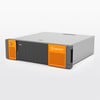
 Mainframe computers are considered to be a notch below supercomputers and a step above minicomputers in the hierarchy of processing. In many ways, mainframes are considerably more powerful than supercomputers because they can support more simultaneous programs. Supercomputers are considered faster, however, because they can execute a single process faster than a typical mainframe. Depending on how a company wants to market a system, the same machine that could serve as a mainframe for one company could be a minicomputer at another. Today, the largest mainframe manufacturers are Unisys and (surprise, surprise) IBM.
Mainframes work on the model of centralized computing. Although a mainframe may be no faster than a desktop computer in raw speed, mainframes use peripheral channels (individual PCs in their own right) to handle Input/Output (IO) processes. This frees up considerable processing power. Mainframes can have multiple ports into high-speed memory caches and separate machines to coordinate IO operations between the channels. The bus speed on a mainframe is typically much higher than a desktop, and mainframes generally employ hardware with considerable error-checking and correction capabilities. The mean time between failures for a mainframe computer is 20 years, much greater than that of PCs.
| Note | Mean Time Between Failures (MTBF) is a phrase often used in the computing world. MTBF is the amount of time a system will run before suffering a critical failure of some kind that requires maintenance. Because each component in a PC can have a separate MTBF,... |