Configuring Citrix MetaFrame for Windows 2000 Terminal Services
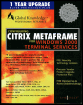
Helps administrators get up to speed on MetaFrame, including designing solutions, installing the software, and configuring remote client access.
 TABLE OF CONTENTS
 We ve covered a lot of ground in this chapter. From the dawn of main-frame computing through the thin-client models of today, there have been numerous changes to the world of computing and the requirements of users. Windows 2000 Terminal Services and Citrix MetaFrame both combine a melding of the mainframe computing, distributed computing, remote control, and remote node models that have dominated the network design world.
Thin-client computing has seen a real boom in recent years as administrators search for solutions that centralize both the support and maintenance issues involved in a computer network. The benefits of thin-client computing can be considerable in the right environment. Users work from a centralized server, much like the old mainframe model. Client computer requirements for thin clients are typically far less than those of their fat client counterparts.
Windows 2000 Terminal Services is a thin-client solution developed by Microsoft and based on their proprietary RDP 5.0 protocol. Using the RDP client, remote computers can access a centralized Windows 2000 server system and receive a virtual Windows 2000 desktop. The client is available for older hardware and operating systems, which allows administrators to save on hardware costs and upgrade frequency. Terminal Services requires separate client licensing than the base Windows 2000 server license, and we covered the various license types available for Terminal Services users.
Terminal Services can be an appropriate solution for some thin-client environments. If you need to present your users with a standardized Windows 2000 desktop on various client platforms,...