Configuring Citrix MetaFrame for Windows 2000 Terminal Services
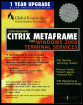
Helps administrators get up to speed on MetaFrame, including designing solutions, installing the software, and configuring remote client access.
 TABLE OF CONTENTS
 Microsoft and Citrix have been quick to see the limitations imposed by mainframe computing, distributed computing, remote control, and remote access yet all of the models presented to this point have had features that could make them desirable to an organization. A mainframe has a central server that handles applications processing, distributed computing gives each user a customizable desktop and applications set, remote control computing lets older clients access newer software, and remote access computing lets multiple users connect to a single access point. So why not take the best of all worlds?
That s what Windows 2000 Terminal Services and MetaFrame do. By offering a combination of all of those benefits, the two packages allow remote users to connect to a server, open a virtual desktop, and perform remote control computing without the necessity of a local PC. The server handles all applications processing and sends only screen updates to the client. There is some variation in how the two services work, which we will discuss later in this chapter. One key point is that MetaFrame uses Windows 2000 Terminal Services as the underlying structure of its computing environment.
Two important terms to learn for this section are fat clients and thin clients. The terms thin and fat refer to the bandwidth requirements that a client places on the network. A fat client is a machine or application that requires a large amount of bandwidth to function. Fat clients are typically run on self-contained...