The Control Techniques Drives and Controls Handbook
This handbook contains technical information for practicing drive and electrical engineers, covering the technology underlying drives, motors, and control units and modern practical applications.
 TABLE OF CONTENTS
 All the motors described earlier have the characteristic that they can be operated, albeit at essentially fixed speed, when fed by an appropriate D.C. or A.C. supply. In this section we consider a group of drive systems where the motor can only be used in conjunction with its specific power converter and control, and consequently only overall characteristics are relevant.
Switched-reluctance drive systems are of growing importance notably in applications where high low-speed torque is required, and less importance is placed on smoothness of rotation. Although considerable advances have been made in improving the noise characteristic of this drive, it can still be a limiting factor where a broad operating speed range is required.
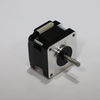
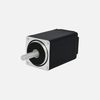
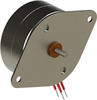
Stepper-motor systems are somewhat in decline. Their operating characteristic of being controlled by a computer pulse train is now a common feature of many modern servo-drives. Also, where rapid settling times are required, stepper drives, which are inherently open loop, are not ideal in both fundamental performance and the fact that varying mechanical friction has a significant impact. This variability can make stepper drives unacceptable in applications where the transient performance is important.
Like the stepper motor, the switched-reluctance motor (SRM) produces torque through the magnetic attraction which occurs between stator electromagnets (formed by winding coils on salient poles) and a corresponding set of salient poles formed on a simple rotor made only of electrical steel (or other ferromagnetic material). The stepper and...