The Control Techniques Drives and Controls Handbook
This handbook contains technical information for practicing drive and electrical engineers, covering the technology underlying drives, motors, and control units and modern practical applications.
 TABLE OF CONTENTS
 All A.C. and D.C. drives use power semiconductor devices to convert and control electrical power. The devices operate in the switching mode (either on or off) which causes the losses to be reduced and conversion efficiency to be improved compared to operation in linear mode.
The practically important power semiconductor devices in relation to motor drives can be considered as follows:
diode rectifier
thyristor (includes phase control, fast and asymmetric types)
gate turn-off thyristor (GTO)
bipolar junction transistor
MOSFET
insulated-gate bipolar transistor (IGBT)
integrated-gate commutated thyristor (IGCT)
other devices
This section reviews the important characteristics of these devices. The electronic gate drive circuits for operating many of them are, in general, complex with integration of many protection features such as overcurrent. For this reason, details of these circuits have been, for the most part, limited to a description of the requirements to gate the devices.
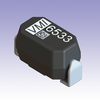
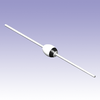
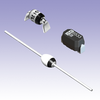
The PN junction diode, Figure 2.1, is the simplest of all semiconductor devices. It may be considered as an electronic switch the conduction state of which depends on the polarity of an externally applied voltage. When a sufficiently high positive voltage is applied to the anode with respect to the cathode, current will flow in a forward direction, the device acting as a closed switch. The forward voltage drop across the device is typically one to two volts. Conversely, when a negative voltage is applied, current flow is prevented and the diode is able to block voltages up...