The Control Techniques Drives and Controls Handbook
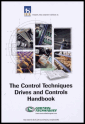
This handbook contains technical information for practicing drive and electrical engineers, covering the technology underlying drives, motors, and control units and modern practical applications.
 TABLE OF CONTENTS
 Thus far this book has dealt largely with the theory of variable-speed drives. The capability of commercially available drives deviates from the theory, both in regard to practical limitations of performance at the motor shaft and also in regard to issues like control input performance. It is important to also recognise the importance and value of additional features that are incorporated in modern commercial products. This chapter deals with some of these practical aspects by describing commercial products, taking as examples variable-speed drives manufactured by Control Techniques.
Before considering the detail of specific drive products, it is worth considering a few aspects of commercial drives which may be considered common. When considering the theory of drives it is convenient to limit the control aspects to torque, speed and possibly position loops. In reality a large number of other features are built in to modern digital drives as standard. As highlighted in the Preface, the purpose of this book is not to endorse or promote the products from this manufacturer. Equally the publisher does not endorse products from Control Techniques or any other manufacturer.
Typically, the following functionality is incorporated in the software structure:
selection between different types of speed and torque reference
programming of analogue and digital inputs/outputs
selection of different ramp functions
setting up of the drive speed and current loops
monitoring of drive status parameters, trip log
programming of special application features such as different types of torque control mode, digital lock function etc.
programming of...