Lee's Loss Prevention in the Process Industries,: Hazard Identification, Assessment and Control, Volume 1, Third Edition

15.9: Pipeline Rupture

15.9 Pipeline Rupture

Another situation that can lead to a large release of gas or vapour is rupture of a pipeline. Pipelines that may give rise to such a release are principally those carrying either high pressure gas or liquefied gas. In each case, while the determination of the initial emission rate is relatively straightforward, the situation then becomes rather more complex.

15.9.1 Gas pipelines

Accounts of emission from pipelines containing high pressure gas have been given by R.P. Bell (1978), D.J. Wilson (1979b), Picard and Bishnoi (1988, 1989) and J.R. Chen, Richardson and Saville (1992).

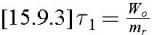
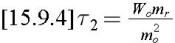
An empirical model for flow from a pipeline rupture has been given by R.P. Bell (1978). This model may be written as


with


where A is the cross-sectional area of the pipeline, d is the diameter of the pipeline, f is the friction factor, l is the length of the pipeline, m o is the initial mass flow from the pipeline, m r is a steady-state, or reference, flow from the pipeline defined by Equation 15.9.2, N is a correction factor, P is the absolute pressure, W o is the initial mass holdup in the pipeline, ? is the density and t 1 and t 2 are time constants. The friction factor f is evidently the Darcy friction factor f D (=8 ).

For the correction factor N, Bell gives the empirical formula


He also states that he used...

UNLIMITED FREE
ACCESS
TO THE WORLD'S BEST IDEAS

SUBMIT
Already a GlobalSpec user? Log in.

This is embarrasing...

An error occurred while processing the form. Please try again in a few minutes.

Customize Your GlobalSpec Experience

Category: Hot Tapping Machines
Finish!
Privacy Policy

This is embarrasing...

An error occurred while processing the form. Please try again in a few minutes.