40 Principles Extended Edition: TRIZ Keys to Technical Innovation, Volume 1

("Matrioshka") [1]

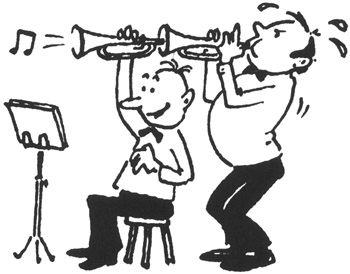
One object is placed inside another. That object is placed inside a third one. And so on....
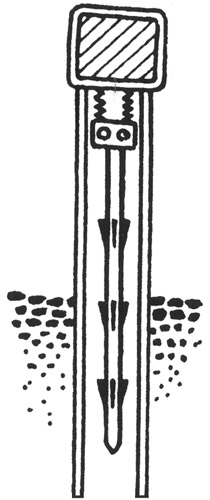
| To set a hollow concrete pipe into the ground, a vibrator is installed inside the pipe. |
|
![]() |
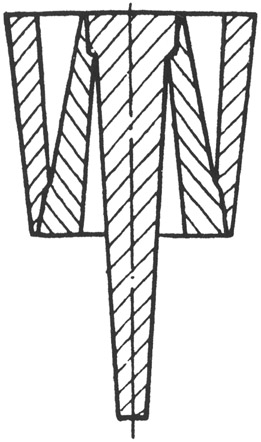
| An ultrasonic concentrator is nested, like "Matrioshka, " to reduce its effective length. |
|
![]() |
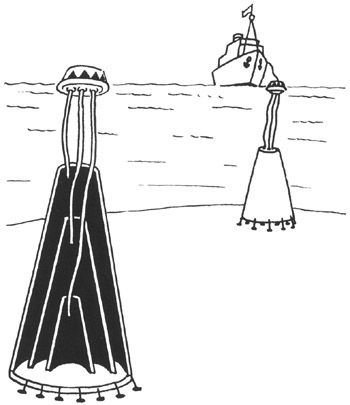
One object passes through a cavity in another object.
| Suspended reservoir for oil storage can store different products in a single unit. |
|
![]() |
Principle Number: 7
Principle Name: Nesting
Principle Description:
Nesting is the quality of being made to fit close, fit together, or fit inside each other.
Hints on Usage:
Nesting is often rejected because it violates the status quo. Observe and manage any internal assumption. Think beyond the limits of "a system must be uniform inside" or "nothing can be inside the system."
Assess a system for how value can be added based on nesting. Consider nesting with different orientations such as horizontal, vertical, rotated, or containment. The common rationales for nesting include space utilization and weight of the objects being nested. In many cases, nesting is used to save space, protect objects from damage, and ease movement through a process/system. Nesting can also be used to create multiple and distinct functionalities from the same object by nesting objects with different functions into the same object.
Examples:
Spoons are nested in a drawer.
The Swiss Army knife is the classic example of nesting multiple functionalies within the same object.
Packaging materials like paper plates, plastic cups, and...