40 Principles Extended Edition: TRIZ Keys to Technical Innovation, Volume 1


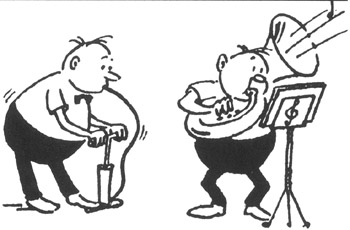
Preload countertension to an object to compensate excessive and undesirable stress.
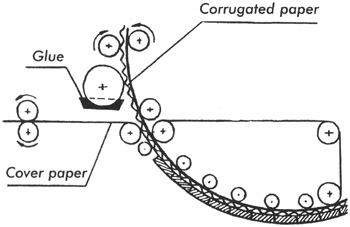
| During production of corrugated cartons, corrugated paper is bent in the opposite direction of the cover paper. When the glue dries, the cartons become flat. |
|
![]() |
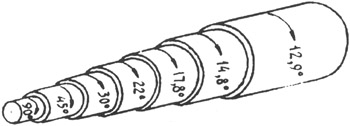
| A composite turbine shaft consists of several pipes twisted in the opposite direction from the shaft rotation. The strength of the shaft increases while allowing double the weight reduction. |
|
![]() |
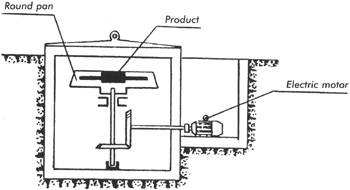
| A new technology is offered for making a pre-stressed product. The product is placed on a rotating pan. During rotation, while the product cools off, it gains internal compressed tension, similar to pre-stressed concrete. When cured, it can handle high tensile forces. |
|
![]() |
Principle Number: 9
Principle Name: Prior Counteraction
Principle Description:
Understand what might go wrong in advance and take action to eliminate, reduce, or prevent its occurrence.
Hints on Usage:
This principle is used to eliminate, reduce, or prevent future occurrences of undesirable functions, events, or conditions. For example, even when there is a process to perform useful functions, realize useful events, or create useful conditions something can still go wrong upon achievement of the desired results.
The key to understanding what might go wrong in advance is to model potential failure modes. These can include: review known failures; intentionally invent new failures by looking for weak points in a system; identify potentially dangerous conditions; assess devices, components and mechanisms for potential failure modes; assess how nature or human interaction (resulting from change, stress, interruptions, crisis, boredom, etc. ) might...