Poultry, and broilers in particular, are the most widely grown farm animal on earth. Two major challenges face the poultry industry: (1) keeping food safe from human pathogens carried by poultry in small numbers that could multiply, sometimes to dangerous levels, during processing, handling, and meal preparation; and (2) developing environmentally sound, economical waste management facilities. Innovative engineering and refrigeration are a part of the solutions for these issues.
PROCESSING
Processing is composed of three major segments:
-
Dressing, where the birds are placed on moving line, killed, and defeathered.
-
Eviscerating, where the viscera are removed, the carcass is chilled, and the birds are inspected and graded.
-
Further processing, where the largest portion of the carcasses are cut up, deboned, and processed into various products. The products are packaged and stored chilled or frozen.
A schematic processing flowsheet is described in Figure 1; equipment layout for the dressing area is given in Figure 2 and for the eviscerating area in Figure 3. The space needed in the production area for the various activities is shown in Figure 4. A modern, highly automated poultry processing plant processes 1 to 3 million birds per week. In the 1970s, a standard U.S. plant was processing 1500 birds per hour (2 shifts, 5 days), or close to 120,000 birds per week. Barbut (2000) describes processing in detail.
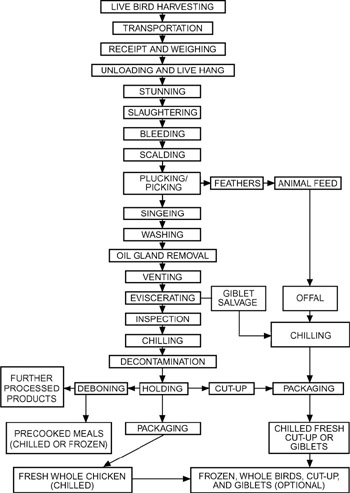 Figure 1: Processing Sequence of Fresh Poultry
 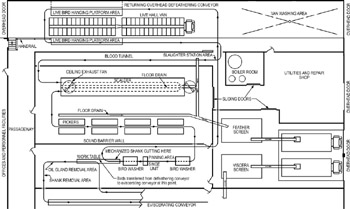 Figure 2: Typical Equipment Layout for Live Bird Receiving, Slaughtering, and Defeathering Areas
 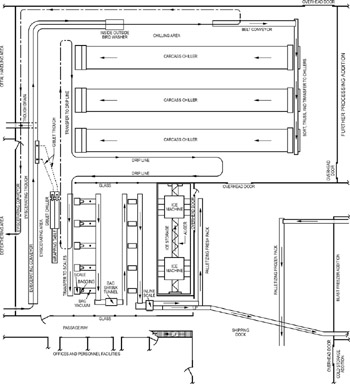 Figure 3: Typical Equipment Layout...
Copyright The American Society of Heating, Refrigerating and Air-Conditioning Engineers, I 2006 under license agreement with Books24x7


 TABLE OF CONTENTS