Buried Pipe Design, 2nd Edition

There are several types of thermoplastics that are used in the manufacture of pipe. A brief discussion of thermoplastics and design bases is contained in Chap. 4. There are four principal thermoplastics used to make pipe: polyvinyl chloride (PVC), acrylonitrile-butadiene-styrene (ABS), polyethylene (PE), and polybutylene (PB). Pipes made from other thermoplastics command an extremely small market and are primarily used for specialty applications, such as styrene rubber (SR) and cellulose-acetate-butyrate (CAB).
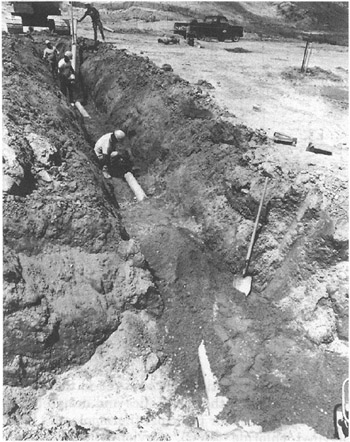
PVC pipe is available for both pressure and gravity applications (Fig. 7.1). For gravity sewer applications, it is available in both solid-wall and profile-wall varieties. Size ranges are as follows:
PVC pressure pipe: to 36 in
PVC solid-wall gravity pipe: 2 to 27 in
PVC profile-wall sewer pipe: 4 to 48 in
The above listed sizes are generally available. However, sizes outside the listed ranges may be available on special order from the manufacturer.
Polyvinyl chloride is manufactured from ethylene and chlorine. Ethylene is extracted from natural gas or crude oil, usually from natural gas. It is also possible to use coal; however, that process is much more expensive. Chlorine is manufactured via electrolysis from saltwater. Vinyl chloride monomer is produced by oxychlorination (a reaction of ethylene with chlorine). The vinyl chloride monomer (VCM) is polymerized to make polyvinyl chloride resin. PVC resin is a white, powdery substance having the consistency of table...