Buried Pipe Design, 2nd Edition

Thermoset Plastic Pipe

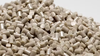
Thermosetting resins give off heat during the curing process (exothermic). Such resins cannot be melted and reformed as thermoplastics can. Epoxy, polyester, and phenolic resins are part of the thermosetting resin family. Pipes made from such resins are usually fiber-reinforced, and the fiber is normally E-type glass. The glass may be continuous strands or rovings placed in a winding process, or it may be chopped and placed in a centrifugal casting process. Glass fabric and glass mats may also be used.

There are two broad classes of reinforced thermoset pipes: (1) reinforced plastic mortar (RPM) pipe and (2) reinforced thermosetting resin (RTR) pipe. This type has been referred to as fiberglass-reinforced plastic (FRP) pipe. The thermoset resin used in either may be filled or unfilled. The filler in the resin is used as a resin extender and will usually influence the chemical and physical properties.

Reinforced thermoset plastic pipe is available in a wide range of sizes. Because of the high tensile strength of the reinforced plastic, a smooth-wall pipe may have low pipe stiffness, especially in large diameters. To overcome this, some pipes are made stiffer by molding external ribs which run circumferentially and are spaced along the length. The pipe stiffness is determined with the assumption that the pipe wall and wall stiffeners act integrally as a unit. Such pipes are often designed and manufactured for the specific job with different designs along the installation in response to varying conditions. Table 7.30 gives selected standards...

UNLIMITED FREE
ACCESS
TO THE WORLD'S BEST IDEAS

SUBMIT
Already a GlobalSpec user? Log in.

This is embarrasing...

An error occurred while processing the form. Please try again in a few minutes.

Customize Your GlobalSpec Experience

Category: Thermosets and Thermoset Resins
Finish!
Privacy Policy

This is embarrasing...

An error occurred while processing the form. Please try again in a few minutes.