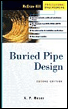
Buried Pipe Design, 2nd Edition

This chapter briefly discusses a number of the more common requirements of installation, omitting precise details that vary in individual installations. Also included are some safety aspects of pipeline construction; however, a general treatise on safety is outside the scope of this text. The use of trenchless methods for installing pipe and rehabilitating pipe is becoming more common, and some information on techniques used is included in this chapter.
The construction of a pipeline depends on many controlling factors, including pipe materials, trench depth, topography, soil conditions, and operating conditions. The properties of the soil being excavated and the soil used as backfill in the pipe zone are particularly important. How the pipe is handled and installed can have huge effects on its external load-carrying capacity and can be a controlling factor in the design of the pipe. How the pipe supports the loads from handling, soil cover, and water must be determined when the pipe installation is designed. If the cover or other external load on the pipe is high, the degree and uniformity of bedding support can have a substantial influence on the required pipe strength.
Delivery of the pipe to the job site is usually considered part of the installation process. Requirements for packaging, stowing, restraining pipe during transit, unloading, and handling during the installation process are all important considerations. Transporting by railroads, on water via ships, or by trucks presents complications, but they can be overcome if given the proper consideration in advance of...