Burn-In Testing: Its Quantification and Optimization
In the preceding chapter, the observed failure patterns during burn-in or in the early life period were examined and their inherent physical mechanisms were explored quantitatively. This chapter presents useful math models for the statistical description of the failure process during burn-in, and techniques for their parameters' estimation.
It has been shown [1; 2] that, if N identical components or equipment, from a mixed population which is composed of n different subpopulations, such as, N 1, N 2, ... , N n, undertake a mission of T duration, starting the mission at age zero, the reliability function for this mixed population can be expressed by
| (5.1) | |
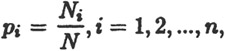
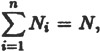
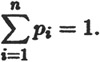
where
and
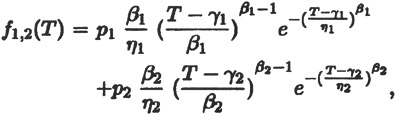
The probability density function, or the distribution, of the times to failure for this mixed population is given by
| (5.2) | |
The corresponding failure rate function is given by
| (5.3) | |
If only two subpopulations are involved, as is often the case encountered in burn-in tests, and the times to failure for each one of the subpopulations may be represented by an individual Weibull distribution, Eqs. (5.1) through (5.3) may be written as
| (5.4) | |
| (5.5) | |
and
| (5.6) | |
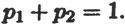
Since only two subpopulations are considered here, then
| (5.7) | |
The bathtub curve is a very effective way of describing the life characteristics of a population during the burn-in process. In Chapter 14, Volume 1 of [1], mathematical models covering the whole reliability bathtub curve, or parts thereof, are presented and...