Change-Based Test Management: Improving the Software Validation Process

The five objectives of CBTM help you reduce the number of tests you run and therefore increase your effectiveness and efficiency. The most compelling change CBTM has on your testing is test prioritization. As mentioned before, this is the area where you benefit most from CBTM. Prioritized testing under CBTM should also result in earlier defect discovery because you are selecting tests to run based on probability for failure.
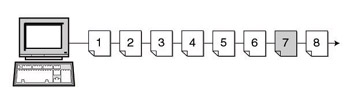
Figure 2.9 shows a serial testing scheme running eight tests. Each test starts after the previous test finishes. All eight tests target a component that has had recent changes made to it. Without any prioritization scheme, the tests run sequentially and Test 7 finds a defect.
Unfortunately, the defect shows up near the end of the testing, so the development team has less time to fix the defect before submitting the next version for testing and the developers might not implement the fix in time for the next round of testing.
Figure 2.10 shows the same eight tests, this time using CBTM to rank them in decreasing order of probable defect detection. Although all eight tests target the same component, Test 7 specifically targets an area that underwent a relatively significant amount of change. Now, rather than finding the defect at the end of the cycle, you find it at the beginning of the cycle. This allows your development team more time to ascertain the root cause and correct the defect before...