Change-Based Test Management: Improving the Software Validation Process

Now that your validation effort has concluded it is time to look back at the process and identify both good and bad areas. This looking back, sometimes called a postmortem, can be one of the most effective tools to help improve the effectiveness of your testing. The term post mortem literally means after death, but it is often used in the business world to mean after completion of the project. The term retrospective also describes this stage of the validation process. We use these terms interchangeably in this chapter.
There is no perfect validation cycle. No matter how much effort you put into planning and execution, invariably, at some point, you will encounter a problem. The key to improving the cycle is to use this problem as a learning experience and not to view it as a totally damaging event. While you may lose some productivity dealing with this new problem, the lessons learned will only serve to make your validation effort stronger in the future.
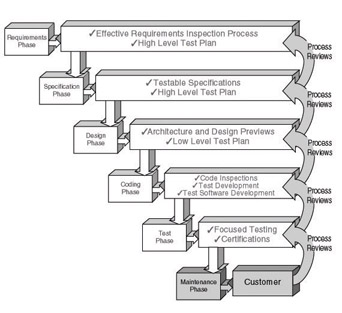
The feedback cycle, naturally, occurs at the end of your effort and involves all the participants of the software life cycle. These participants include marketing, development, validation, and the customer. If you establish a forum for these participants to communicate, you can use your collective intelligence to improve the validation process moving forward. During the planning phases of your validation effort, you should also have installed mechanisms to provide feedback between phases during the effort. Figure 8.1 shows the feedback phase.