Civil Engineering Survey Review, 3ed
Including many examples and problems with solutions, this detailed guide will help to prepare for the Special Civil Engineer (CE) Exam which is required for all civil engineer examinees.
A traverse is a series of consecutive lines or courses on which the lengths and directions have been determined. A traverse which comes back to its starting points is called a closed traverse. Closed traverses provide checks on the angles and distances. An open traverse is a series of lines which do not return to the starting point. Open traverses are sometimes used on route survey.
Meridian: The direction of a line may be expressed as an angle from an established reference line. This reference line is called reference meridian and may be expressed as one of the following:
Magnetic meridian (influenced by magnetic pole).
True meridian (passing the north and south pole).
Assumed meridian (arbitrarily chosen).
Bearing: The bearing of a line is the ACUTE horizontal angle between a reference meridian and the line.
Bearing AB: N 30 E
Bearing BA: S 30 W
Back Bearing of AB: S 30 W
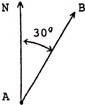
Azimuth: Azimuth is angle measured clockwise from a reference meridian.
Azimuth is from 0 to 360 .
Azimuth AB (from the south): 30
Azimuth AB (from the north): 210

Back Azimuth AB (from the north): 30
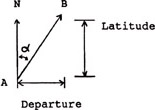
Latitude: The projection of a course on the north-south direction.
Departure: The projection of a course on the east-west direction.
Latitude = L (cos ?)
Departure = L (sin ?)
L = length AB
? = bearing or azimuth
| Angle | Adjustment |
The first step in traverse calculation is to balance the angles. The sum of the interior angles of...

 TABLE OF CONTENTS