Computer Arithmetic Algorithms, Second Edition
Although the conventional binary number system with two s complement representation of negative numbers is commonly used in arithmetic units, there are several other number systems which have proven to be useful for certain applications. These include the negative radix and signed-digit number systems, both of which are described in this chapter. Other unconventional number systems, including the sign-logarithm number system and the residue number system, are discussed in Chapters 10 and 11, respectively.
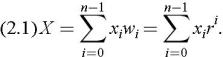
Conventional number systems are fixed-radix systems for which the weight w i of the ith digit, x i , is r i , the range of each digit is {0, 1, , r ?1} and the interpretation rule for calculating the numerical value of the sequence ( x n ?1, x n ?2, , x 0) is
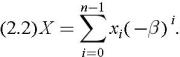
The radix r is normally selected to be a positive integer. However, it is not necessary to restrict r to positive values, and we may select r= ? ?, where ? is a positive integer. The digit set remains the same; i.e., x i ? {0, 1, , ? ?1}. The value of the n-tuple ( x n ?1, x n ?2, , x 0) in this negative-radix system is
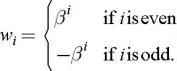
In other words, the weight w i satisfies
The negative-radix number system with ?=10 is called the nega-decimal system. Consider the following...