Condition Monitoring of Rotating Electrical Machines

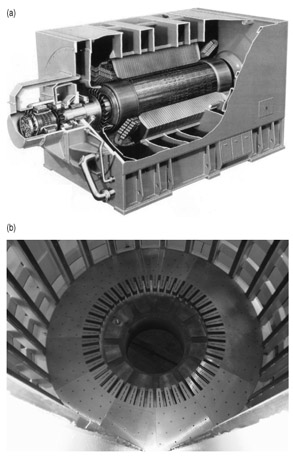
The basic constructional features of the electrical machine are shown in Figure 2.2(a). The rotor, which usually has a relatively high inertia, is normally supported on two bearings, which may be mounted on separate pedestals or incorporated into the enclosure of the machine, as shown in Figure 2.2(a). Some larger, slower-speed machines incorporate a single non-drive end bearing and rely on the prime mover or driven plant and its bearings for the remaining support. Rolling element bearings are used on smaller-size machines where shaft peripheral velocities are low, and sleeve bearings with hydrodynamic oil films are used for larger machines. Vertically mounted machines will incorporate a thrust bearing usually at the low end of the enclosure. This may be a relatively modest angular contact ball bearing for a small, vertically mounted pump motor but could be a large hydrodynamic oil film thrust pad Michell-type bearing for a hydro-type generator where the rotor may weigh 100 tonnes or more (see Figure 2.6(b)).